How to Avoid Poor Vineyard Tour Experiences: A 2026 Strategy Guide
The proliferation of viticultural tourism has transformed the vineyard from a site of pure agricultural production into a complex theater of hospitality. As global travel patterns in 2026 lean increasingly toward “educational immersion,” the discrepancy between high-marketing luster and actual operational quality has widened. For the discerning visitor, a vineyard visit is no longer a simple afternoon diversion but an investment of time, capital, and sensory focus. Yet, many find themselves trapped in formulaic, retail-heavy encounters that prioritize bottle turnover over genuine horticultural or oenological insight.
Navigating this landscape requires more than a cursory glance at digital review aggregates. The systemic issue lies in the “Hospitality-Production Friction”—the inherent tension between a working farm’s seasonal demands and a tourist’s desire for a curated, sanitized experience. When these two forces are misaligned, the result is often a generic “scripted” tour that glosses over the complexities of terroir and climate in favor of simplistic anecdotes. To achieve a high-fidelity experience, one must understand the underlying mechanics of vineyard operations and the various “filters” through which these estates present themselves to the public.
This analysis moves beyond surface-level advice to provide a definitive framework for audit and selection. We will examine the structural cues that signal a property’s commitment to authentic education versus transactional tourism. By deconstructing the “Anatomy of the Tour,” we can identify the specific markers of quality that are often invisible to the untrained eye. This is a study in “Operational Literacy,” equipping the reader to discern which estates offer a deep connection to the land and which merely offer a backdrop for photography.
Understanding “how to avoid poor vineyard tour experiences”
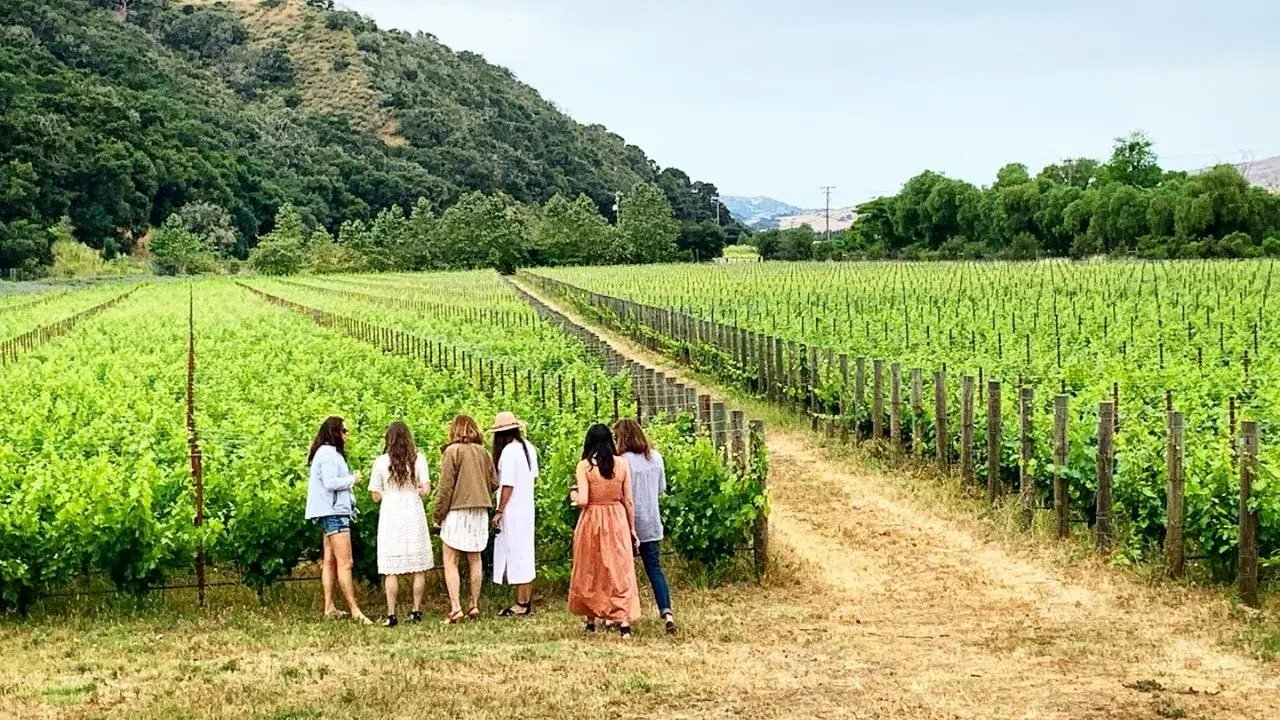
To master how to avoid poor vineyard tour experiences, one must first dismantle the “Visual-Quality Correlation.” In the viticultural sector, an aesthetically stunning tasting room or a meticulously manicured entrance often serves as a distraction from a lack of substantive educational depth. A multi-perspective view reveals that “quality” is defined by the proximity of the guest to the actual decision-making centers of the winery. From the estate owner’s perspective, a tour is an expensive diversion of labor; from the guest’s perspective, it is a primary product. The failure often occurs in the “Middle Management of Hospitality,” where seasonal staff are given scripts that they do not fully understand.
A common misunderstanding in this space is the “Size Fallacy.” It is frequently assumed that small, boutique wineries provide more authentic experiences than large, corporate-backed estates. However, larger estates often have the resources to employ dedicated educators with deep viticultural backgrounds, whereas a small winery might force an overworked cellar hand to lead a tour during a critical production window. The oversimplification risk lies in judging an experience based on the winery’s production volume rather than its “Hospitality Infrastructure.”
The true risk of a poor experience is “Sensory Dilution.” This occurs when the tour is so detached from the soil and the cellar that the final tasting lacks context. Without the technical bridge—understanding the impact of diurnal temperature shifts or soil minerality—the wine becomes a mere commodity rather than a narrative of the land. Authority in selection is defined by the ability to identify estates that integrate their agricultural reality into their visitor program.
Historical and Systemic Evolution of Viticultural Tourism
The trajectory of the vineyard tour has moved through four distinct phases of accessibility and intent:
1. The Industrial Secret (Pre-1970s)
Vineyards were closed ecosystems. If a visitor gained entry, it was usually via personal connection or a professional interest. Tours were technical, unpolished, and conducted by the winemakers themselves. The “mistake” in this era was the lack of any formal hospitality, often resulting in dangerous encounters with heavy machinery or unventilated fermentation rooms.
2. The Birth of “The Room” (1970s–1990s)
The Napa Valley model pioneered the dedicated “Tasting Room.” This separated the hospitality from the farm, creating a sanitized environment for sales. While this increased safety and comfort, it introduced the first major systemic failure: the “Decoupled Experience,” where the visitor never saw a single vine or barrel.
3. The Lifestyle Monument (2000s–2020)
Architecture became the draw. Estates hired celebrity architects to build monuments to luxury. The tour became a walk through a museum rather than a farm. During this era, the “poor experience” evolved into a purely aesthetic one, devoid of any agricultural grit or technical honesty.
4. The Regenerative Immersion (2020s–Present)
The modern era emphasizes “The Living Soil.” Travelers now demand to see the cover crops, the compost piles, and the weather stations. The contemporary challenge is navigating the “Greenwashing of Hospitality,” where estates claim deep ecological integration but deliver a surface-level narrative of sustainability.
Conceptual Frameworks and Mental Models
When evaluating a potential vineyard engagement, apply these mental models to filter for high-value operations.
1. The “Distance to Dirt” Ratio
This framework measures the physical and intellectual distance the guest travels from the sanitized hospitality center into the actual agricultural blocks. A high-quality tour involves physical presence in the vine rows, touching the trellis systems, and observing the soil profile. If the “Distance to Dirt” is zero—meaning you never leave a paved surface—the experience is likely a retail-masked tour.
2. The “Staff-to-Soil” Competency Model
Evaluate the primary occupation of your guide. A guide who only works in the tasting room will have a scripted understanding of the vineyard. A guide who spends part of their week in the vineyard or the cellar possesses “Tacit Knowledge.” When booking, ask: “Is our guide involved in production?”
3. The “Vintage-Variance” Test
A poor tour presents a static story that could be told in any year. A superior tour focuses on “The Current Challenge”—the specific frost events, heat waves, or rainfall patterns of the current growing season. If the guide cannot discuss the metabolic state of the vines at that moment, the experience is generic.
Key Categories of Vineyard Tours and Strategic Trade-offs
Selecting the correct “Tour Architecture” is essential for aligning expectations with reality.
Realistic Decision Logic: The “Harvest Filter”
During the harvest window, the best tours are often those that allow for “Observational Distance.” Any winery offering “Hands-on Picking” as a tourist activity during the actual commercial harvest is likely prioritizing tourism over wine quality. A serious estate will allow you to watch the sorting line from a safe distance, but they will not interrupt the critical flow of fruit for a photo opportunity.
Detailed Real-World Scenarios and Operational Realities
The “Bus-Tour” Saturation
A guest arrives at a highly rated estate in the Tuscany region. They find three 50-passenger buses in the lot. The failure mode here is “Throughput Over Thoughtfulness.” The guides are forced to use microphones and move groups on a strict 15-minute timer. Avoidance Strategy: Specifically look for estates that “Prohibit Commercial Bus Traffic” in their booking terms.
The “Off-Season” Ghost Town
A traveler visits Bordeaux in January. They expect a deep tour but find the estate is undergoing construction, and the guide is a temp hire. Avoidance Strategy: January is “Dormancy” in the vineyard and “Maintenance” in the cellar. Only book tours in this period if the estate offers a specific “Winter Pruning” or “Barrel Tasting” program, which signals they have a year-round educational strategy.
The “Scripted Sommelier”
In a high-end Napa tasting, the guide recites the same “family story” found on the back of the bottle. When asked about the impact of the Vaca Mountains’ volcanic soil on the tannin structure, the guide falters. Avoidance Strategy: Use a “Pre-Tour Probe”—email the estate with a technical question about their viticulture. Their response (or lack thereof) will signal the depth of their visitor program.
Planning, Cost, and Resource Dynamics
The economics of a vineyard tour are rarely transparent. One must account for the “Total Cost of Engagement.”
The Variability of “Free” Tours: Some estates offer complimentary tours with a minimum purchase. This is often a “Retail Trap.” A paid tour ($75+) generally signals that the winery treats the educational experience as a standalone product, which usually correlates with higher quality and less sales pressure.
Tools, Strategies, and Support Systems
To systematically optimize your itinerary, utilize these professional-grade “Selection Filters”:
-
Topographic Mapping: Use satellite imagery to verify the property’s “Vine-to-Building” ratio. If the vineyard is a tiny patch surrounded by parking lots and event spaces, it is a lifestyle center, not a working farm.
-
Guide-Specific Booking: Some high-end platforms allow you to request guides by name. Research local viticultural consultants or retired winemakers who lead tours.
-
The “Third-Party” Vetting: Utilize specialized wine travel consultants who have “feet on the ground” in the region.
-
Weather-Adjusted Scheduling: Do not book a “Vineyard Walk” if the forecast is 95°F+. Heat-stressed guides and heat-stressed guests result in truncated, poor experiences.
-
Digital “Deep-Dives”: Review the winery’s “Technical Sheets” (tech sheets) on their website. If they don’t publish them, they likely don’t expect their guests to care about the details.
-
The “Reverse-Peak” Strategy: Book the first appointment of the day (usually 10:00 AM). Guides are freshest, the winery is cleanest, and the group sizes are typically at their lowest.
Risk Landscape and Failure Modes
A vineyard tour is a fragile service product subject to “Compounding Failures.”
-
The “Sensory Overload” Risk: Visiting more than three wineries in a single day. By the fourth stop, the “Poor Experience” is a result of the guest’s own palate fatigue rather than the estate’s failure.
-
The “Alcohol-Only” Focus: When the tour is just a preamble to get to the drinking. This encourages “Binge-Tourism” rather than appreciation.
-
The “Mechanical Failure”: Wineries are industrial sites. A pump breaking or a tractor stalling can derail a tour. A quality estate will have a “Contingency Narrative” for when production goes awry.
-
The “Marketing-over-Truth” Risk: Guides being instructed to hide “bad news” (e.g., crop loss due to smoke taint). An authentic experience is honest about the failures of the vintage.
Governance, Maintenance, and Long-Term Adaptation
For the frequent wine traveler, maintaining a “Logistical Ledger” is necessary to avoid repeating mistakes.
The Annual Review Cycle:
-
Pruning (Q1): Re-evaluate your “Preferred Estate” list. Which properties have recently been sold to large conglomerates? (Ownership change is the #1 predictor of a shift toward generic, scripted tours).
-
Bud Break (Q2): Check the “Guide Turnover.” High guide turnover usually indicates a move toward seasonal, lower-skilled labor.
-
Veraison (Q3): Monitor social media “Geotags” for your target estates. If the tags are dominated by wedding parties and bachelorette groups, the tour experience has likely been compromised by “Event-Center Gravity.”
-
Post-Harvest (Q4): This is the time for “Deep Research” into the next year’s technical tours.
Measurement, Tracking, and Evaluation
How do you objectively grade a vineyard tour after the fact?
-
Leading Indicator: “The Question-to-Answer Latency.” How quickly and accurately did the guide answer a non-scripted question?
-
Lagging Indicator: “Information Retention.” One week later, can you explain the specific trellis system or the aging protocol of that estate?
-
Qualitative Signal: “The Soil Sample.” Did the guide pick up a handful of earth? Did they encourage you to do the same? This is a primary indicator of “Agricultural Connection.”
-
Documentation: Keep a “Tour Log” that records the guide’s name, the duration of the vineyard portion vs. the retail portion, and the specific viticultural challenge discussed.
Common Misconceptions and Industry Myths
-
Myth: “The winemaker is the best person to lead the tour.”
-
Correction: Winemakers are often poor communicators of basic concepts. A professional “Wine Educator” is frequently a better guide for those who aren’t already industry professionals.
-
-
Myth: “A more expensive tour is always better.”
-
Correction: High fees often just pay for the “Luxury” of the glassware or the rarity of the snacks.
-
-
Myth: “You need to visit during harvest to see the action.”
-
Correction: Harvest is the worst time for a deep tour. Staff is exhausted, and the winery is a hazardous, high-stress zone.
-
-
Myth: “Old World (European) tours are more authentic.”
-
Correction: Europe has its own version of “Disney-fied” wine tourism. Authenticity is a property-level commitment, not a regional one.
-
-
Myth: “You should always buy wine to thank the guide.”
-
Correction: A professional guide at a high-end estate would rather you join the mailing list or write a detailed, technical review than buy a single “pity bottle.”
-
Ethical and Practical Considerations
The “Poor Experience” often stems from a lack of respect for the labor involved in viticulture. As guests, we must recognize that the vineyard is someone’s livelihood, not just a set for a vacation. Ethical tourism involves supporting estates that pay their vineyard workers a living wage and practice sustainable farming—even if that means the vineyard looks “messier” than a chemical-heavy, perfectly manicured neighbor. Practically, this means favoring estates that discuss their “Human Capital” and their “Labor Practices” as part of the tour narrative.
Conclusion: The Synthesis of Presence and Pedagogy
Mastering how to avoid poor vineyard tour experiences is an exercise in intentionality. It requires moving past the “Headline Amenities” to examine the agricultural heart of the operation. The most rewarding visits dissolve the barrier between the guest and the land. In these moments, the dirt clings to your boots, the vintage reveals its technical reality, and the wine in the glass emerges as the logical conclusion of a complex biological story.
By applying the frameworks of “Distance to Dirt” and “Vintage Variance,” you transition from a passive tourist to an active participant in the viticultural narrative. In the end, a great vineyard tour is not measured by the bottles purchased, but by the depth of understanding gained. It is the difference between seeing a landscape and understanding an ecosystem.