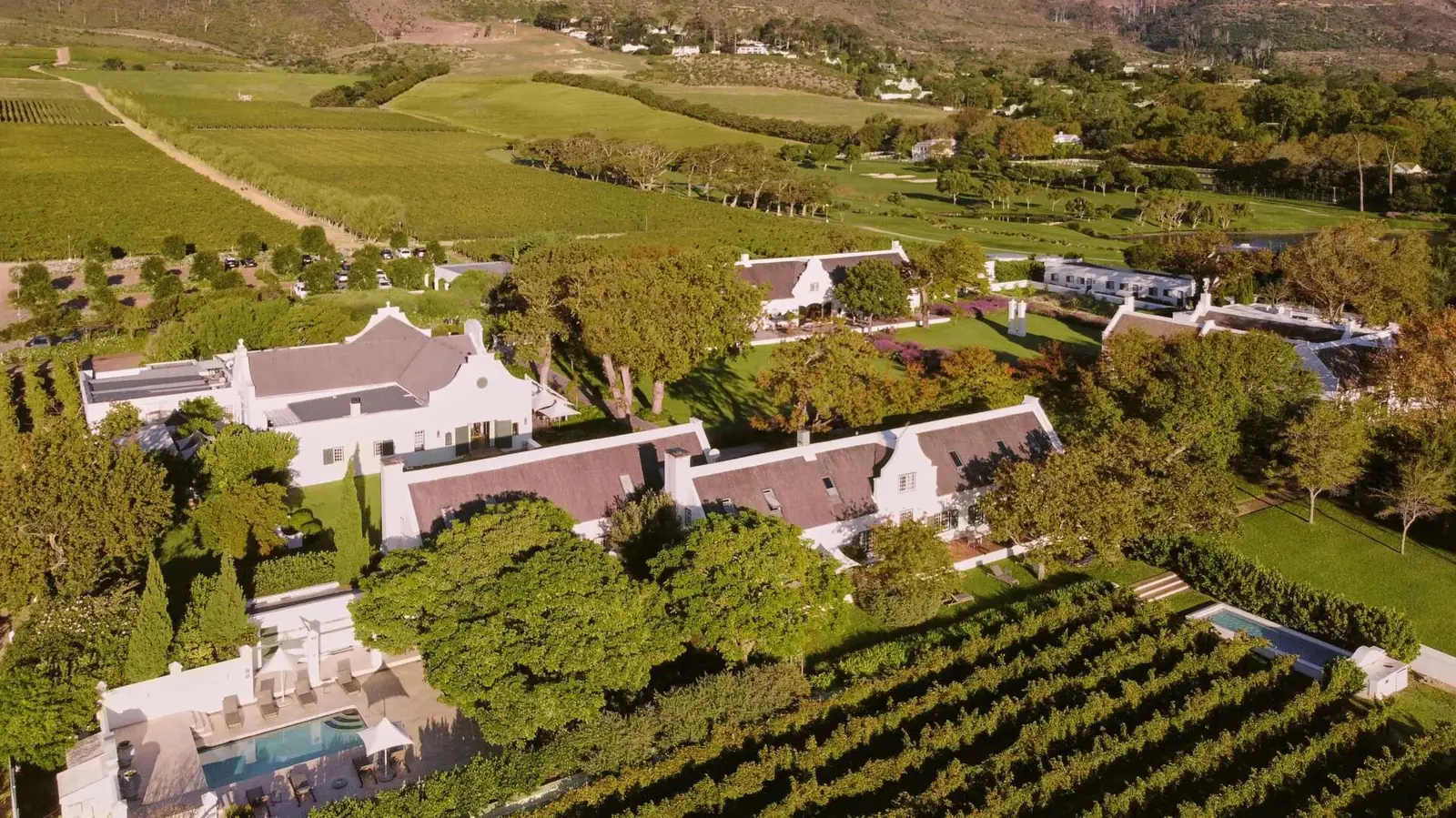
How to Reduce Vineyard Hotel Costs: An Operational & Architectural Guide
The structural economics of a vineyard hotel are defined by a high degree of “operational tethering”—a state where the financial health of the hospitality wing is inextricably linked to the biological and industrial cycles of the vineyard. In 2026, the pursuit of fiscal efficiency in this sector has shifted from simple cost-cutting to “Metabolic Optimization.” This approach treats the estate as a single organism where waste in one department (such as thermal energy from the winery) becomes a resource in another (such as heating for guest suites). To effectively manage these costs, an operator must look past the superficial expenses of hospitality and address the underlying systemic frictions that inflate the “Cost Per Available Room” (CPOR).
The primary driver of cost inflation in vineyard hotels is the “Harvest Peak Multiplier.” Unlike standard urban hotels, vineyard properties face extreme seasonal labor and utility spikes that are dictated by the grapes, not the guests. When the harvest begins, the competition for local labor intensifies, and the winery’s refrigeration needs can triple the estate’s energy load overnight. A sophisticated strategy for cost reduction does not focus on reducing guest amenities; instead, it focuses on decoupling the hotel’s utility and labor needs from these volatile agricultural cycles through architectural and technological intervention.
Furthermore, the “Luxury-Agricultural Conflict” creates invisible costs through land-use trade-offs. Every square foot dedicated to a hotel garden or a swimming pool is a square foot that cannot produce high-value fruit. To reduce costs in a meaningful, long-term way, developers must apply “Non-Extractive Design” principles. This ensures that the hotel footprint does not degrade the soil quality or disrupt the vineyard’s hydrology, both of which would otherwise manifest as “Biological Depreciation” on the estate’s balance sheet decades down the line.
Understanding “how to reduce vineyard hotel costs”
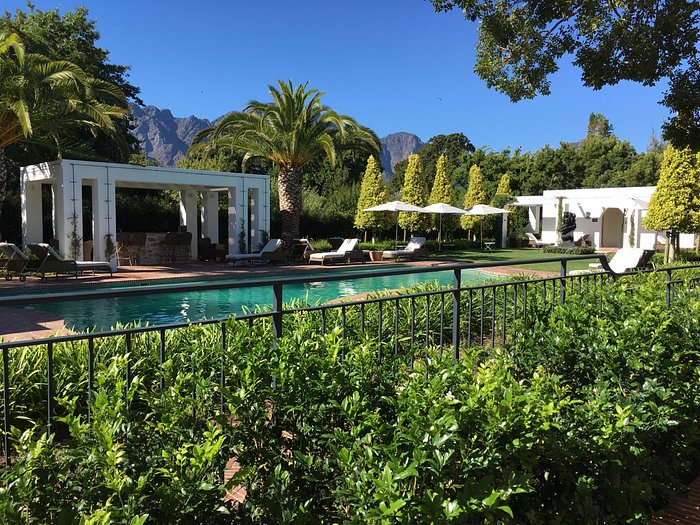
To accurately determine how to reduce vineyard hotel costs, one must first distinguish between “Structural Savings” and “Operational Erosion.” Operational erosion involves cutting staff or reducing the quality of guest linens—tactics that inevitably damage the brand’s premium positioning and lead to a “death spiral” of declining rates. Structural savings, conversely, involve re-engineering the relationship between the building and the land to eliminate permanent waste. For instance, using subterranean heat exchange to stabilize room temperatures utilizes the earth’s thermal mass, reducing the lifelong utility burden without ever impacting the guest’s sensory experience.
A common misunderstanding in this space is the “Labor Silo” fallacy. This is the belief that hotel staff and vineyard staff should remain entirely separate. In high-efficiency models, cost reduction is achieved through “Cross-Functional Synergy.” During the low season for hospitality, hotel maintenance teams can be deployed for vineyard trellis repair, and during the harvest peak, hospitality staff can transition into specialized “harvest concierge” roles, ensuring that the estate’s total human capital is utilized at a consistent 85%–90% capacity year-round.
Oversimplification in cost analysis often ignores the “Micro-Climate Tax.” A hotel built with excessive glass in a high-heat vineyard zone creates a “Thermal Island” that not only drives up cooling costs but can also overheat the surrounding vines, reducing their yield. True mastery of cost reduction requires a “Bioclimatic” lens—understanding that the building’s physical presence is a variable in the vineyard’s own production costs.
Historical and Systemic Cost Evolution
The financial architecture of vineyard lodging has moved through three distinct phases of efficiency:
The Vernacular Efficiency (Pre-Industrial)
Early vineyard lodging was cost-effective because it was purely opportunistic. Farmworkers and owners shared existing stone structures that used thick walls for natural insulation. Costs were low because the “hotel” was an incidental use of agricultural space.
The Resort Expansion (1990s–2015)
This era saw the rise of luxury “stand-alone” hotels on vineyard land. These were often financially inefficient, relying on high nightly rates to cover the massive overhead of maintaining separate power, water, and waste systems from the winery. Costs were high due to “Infrastructure Redundancy.”
The Integrated Metabolic Era (2020s–Present)
Modern estates now focus on “Symbiotic Infrastructure.” By sharing resources—such as a single high-efficiency greywater treatment plant for both the winery wash-down and the hotel laundry—operators can reduce capital expenditure (CAPEX) by 20% and operational expenditure (OPEX) by 15%. This era is defined by the elimination of the “Agricultural-Hospitality Divide.”
Conceptual Frameworks for Financial Resilience
When a senior editor evaluates a cost-reduction plan for a flagship estate, they apply specific mental models to test for systemic logic.
1. The “Energy Cascading” Model
This framework posits that energy should be used at its highest quality first (electricity for lighting) and then “cascaded” down to lower-quality needs (waste heat from servers or winery chillers used to pre-heat water for guest showers). This reduces the total BTU requirement of the property.
2. The “Biological Depreciation” Filter
Every cost-saving measure in the hotel must be filtered through its impact on the soil. If a cheaper laundry detergent increases the cost of treating greywater for vineyard irrigation, the “saving” is an illusion. True savings are “Biology-Neutral.”
3. The “Labor Elasticity” Ratio
This model measures how quickly an estate can transition its workforce between agricultural and hospitality tasks. A high ratio indicates a property that can survive extreme seasonal volatility without the high cost of seasonal “temp-agency” markups.
Key Categories of Cost Reduction Strategies
The geography and scale of the estate dictate which cost-saving categories will yield the highest ROI.
Realistic Decision Logic: The “Harvest-Hospitality Intersect”
Choosing which strategy to deploy requires analyzing the “Peak Overlap.” If your region’s harvest coincides with its peak tourism season (e.g., Napa in October), you cannot use Labor Fusion effectively. In this scenario, you must prioritize Passive Thermal and Energy Co-Gen to reduce the massive utility spike that occurs when the winery and hotel are both at 100% capacity.
Detailed Real-World Scenarios and Operational Failures
The “Laundry-Leach” Failure
A luxury estate in Tuscany switched to a lower-cost laundry service to save $40,000 annually. However, the off-site service used high-sodium detergents. When the estate’s circular water system returned this “recycled” water to the vines, the soil salinity spiked, leading to “Vine Stress” that reduced the vintage value by $150,000. This is a classic example of “Siloed Cost Cutting.”
The “Shadow-Yield” Opportunity
An Oregon estate designed its hotel wings to act as “Wind Breaks” for a vulnerable block of Pinot Noir. By reducing wind chill on the vines, they increased the local temperature by 2°C in spring, accelerating bud break. The “cost reduction” here was achieved by using the hotel’s physical mass to replace expensive vineyard frost-protection fans.
The “Thermal Siphon” Success
A modernist winery in Spain’s Rioja region built its guest suites directly above the fermentation cellar. During the harvest, the natural heat produced by fermentation was siphoned through floor vents to heat the suites. This eliminated the hotel’s heating bill for three months, precisely when guest occupancy was highest.
Planning, Cost, and Resource Dynamics
The financial modeling for reducing vineyard hotel costs must account for the “Agricultural Burn Rate.” Unlike an urban hotel, a vineyard hotel is part of a 4-year revenue cycle (from planting to bottle sale).
Tools, Strategies, and Support Systems
The successful reduction of costs in 2026 relies on an “Agritech-Hospitality” stack that bridges the two industries:
-
VFDs (Variable Frequency Drives): Essential for winery pumps and hotel HVAC to prevent “Peak Demand” charges on the electric bill.
-
Predictive Maintenance Platforms: Software that uses vibration sensors on vineyard tractors and hotel chillers to predict failure before it becomes an emergency.
-
DTC (Direct-to-Consumer) Portals: Reducing the “Commission Tax” by shifting hotel bookings toward the winery’s existing wine club database.
-
On-Site Composting (Closed-Loop): Transforming hotel food waste into vineyard fertilizer, eliminating both trash-hauling fees and nitrogen-purchase costs.
-
Geothermal Exchange Loops: Using the stable temperature of the vineyard’s deep soil to regulate hotel climates.
-
Unified PMS/POS: A single system for the “Tasting Room” and “Front Desk” to eliminate redundant software licensing fees.
Risk Landscape and Failure Modes
The primary risk in cost reduction is “Brand Dilution.” If a hotel becomes too “efficient,” it risks losing the “Rustic Luxury” that justifies its high nightly rate.
The “Austerity Trap”
When a property cuts maintenance on the “back-of-house” vineyard equipment to save the hotel’s bottom line, it risks a harvest-day mechanical failure. If the grapes rot because the tractor broke down, the hotel’s cost-savings are irrelevant.
Regulatory “Circular” Risk
Many local zoning laws do not yet allow for the “Circular Hydrology” mentioned above. An estate that builds a greywater system without proper permits faces “Legal Stranded Assets”—an expensive system they are not allowed to turn on.
Governance and Long-Term Adaptation
Effective cost management requires a “Stewardship Committee” that meets quarterly, comprising the Vineyard Manager, the Hotel GM, and the Lead Winemaker.
The Adaptation Checklist:
-
Phase 1 (Diagnostic): Weekly energy-load monitoring during the “Crush” to identify peak-demand triggers.
-
Phase 2 (Intervention): Installing sub-meters for every guest wing to identify “phantom” electricity draws.
-
Phase 3 (Review): Annual “Biology-Audit” to ensure hotel operations aren’t degrading the soil pH or microbial health.
Measurement, Tracking, and Evaluation
How do we prove that a cost-reduction strategy is working without hurting the asset?
-
Leading Indicator: “The Resource-to-Revenue Ratio.” Measuring how many gallons of water or kWh of electricity are used per dollar of total estate revenue.
-
Lagging Indicator: “CPOR (Cost Per Available Room).” This should trend downward as circular systems (like composting and water recycling) mature.
-
Qualitative Signal: “Staff Retention Rate.” High-efficiency, cross-trained teams should have lower turnover because the work is more varied and stable.
Common Misconceptions and Industry Myths
-
Myth: “Solar panels are the best way to save energy.”
-
Correction: In a vineyard, “Passive Cooling” (thermal mass and shading) is often 3x more cost-effective than active solar generation.
-
-
Myth: “Automation replaces the need for high-end staff.”
-
Correction: Automation replaces repetitive labor, allowing your expensive staff to focus on high-margin guest interactions.
-
-
Myth: “Cutting the landscaping budget saves money.”
-
Correction: Hotel landscaping in a vineyard is “Productive Biomass.” If it dies, the local microclimate worsens, increasing cooling costs.
-
-
Myth: “Outsourcing laundry is always cheaper.”
-
Correction: In remote vineyard regions, the “Carbon and Logistics Tax” of hauling linens 50 miles away often makes on-site circular laundry more profitable over 5 years.
-
Conclusion: The Future of Efficient Terroir Hospitality
Reducing costs in a vineyard hotel is not a task of subtraction, but of integration. The most profitable estates of the future will be those that effectively erase the boundary between the “Front-of-House” luxury and the “Back-of-House” agriculture. By applying metabolic design, cross-functional labor models, and circular resource management, an operator can create a property that is not only cheaper to run but also more resilient to the volatile climate and economic shifts of the next decade.
The ultimate goal is “Economic Symbiosis”—a state where the hotel acts as a financial stabilizer for the vineyard, and the vineyard acts as a structural utility for the hotel. When these two forces are in balance, the question of how to reduce vineyard hotel costs is answered not by spreadsheets alone, but by the very architecture of the land.