Top Rated Winery Hotels America: The 2026 Editorial Reference Guide
The evolution of viticultural hospitality in the United States has transitioned from a peripheral service—once defined by modest bed-and-breakfasts adjacent to tasting rooms—into a sophisticated, multi-billion-dollar architectural and sensory ecosystem. In 2026, the concept of a “winery hotel” has shed its secondary status. It is no longer a mere convenience for the wine-tasting traveler but a primary driver of regional identity and agricultural preservation. These properties represent a structural shift in how the American landscape is consumed, moving away from transient visitation toward what industry analysts now call “Vertical Immersion.”
The complexity of these destinations lies in the inherent friction between industrial agriculture and luxury hospitality. A functioning winery is, fundamentally, a factory. It involves heavy machinery, nocturnal harvest schedules, and the pungent, chemical realities of fermentation. The success of a winery hotel is measured by its “Atmospheric Stewardship”—the degree to which it can translate these industrial necessities into a narrative of luxury without sanitizing the grit of the vintage. This balance requires a level of operational precision that distinguishes a standard resort from a high-fidelity viticultural asset.
As the domestic market faces structural shifts, with consumers increasingly prioritizing authenticity over “sameness,” the benchmark for a top-tier destination has shifted. It is no longer sufficient to provide an opulent room with a vineyard view. The modern authority in this space is defined by its “Regenerative Transparency”—the ability to demonstrate soil health, water conservation, and labor integrity as core components of the guest experience. This article serves as a systemic deconstruction of the winery hotel sector, providing a definitive framework for understanding how these properties function as long-term cultural and economic anchors.
Understanding “top-rated winery hotels in America.”
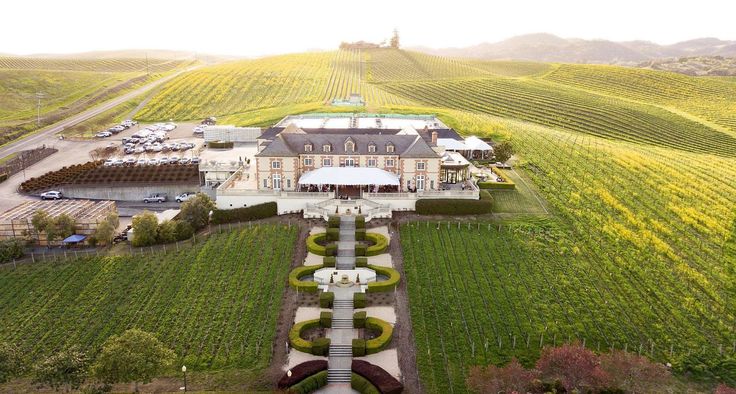
To accurately assess top-rated winery hotels in America, one must move beyond the “Scenic Fallacy”—the belief that a hotel’s value is proportional to its proximity to grapevines. In a professional editorial context, these properties are better understood as “Biophilic Production Hubs.” This means the lodging is not just near the production; it is an active participant in the brand’s agricultural narrative. A true winery hotel allows the guest to experience the “Metabolic Rhythm” of the estate, from the dormant silence of winter pruning to the high-stakes adrenaline of the autumn crush.
From a multi-perspective view, these destinations must satisfy three distinct operational demands:
-
The Agricultural Imperative: The hotel must not hinder the viticultural team. If a guest’s desire for a quiet patio conflicts with the need for a tractor to spray organic sulfur at 4:00 AM, the property’s design has failed.
-
The Sensory Mandate: The experience must provide “Clarity of Place.” If the interior design of a hotel in the Willamette Valley could be swapped with one in Napa without the guest noticing, the property lacks regional authority.
-
The Economic Reality: In 2026, these hotels are the primary engines for Direct-to-Consumer (DTC) growth. They are “Relationship Incubators” where a one-night stay is expected to convert into a decade-long wine club membership.
Oversimplification in this sector often results in “Resort-Washing,” where a generic luxury hotel adds a small, decorative vineyard to its grounds to claim the title. A top-rated asset, by contrast, is one where the hospitality staff is as literate in the estate’s soil pH and clonal selections as they are in room service protocols. The risk for the traveler is choosing a property that offers “Viticultural Vaudeville”—a performance of winemaking—rather than a genuine integration into a working agrarian landscape.
The Systemic Evolution of Viticultural Lodging
The American winery hotel has evolved through several distinct epochs, mirroring the maturation of the domestic wine industry.
The Era of “Accidental Hospitality” (1970s–1985)
During this period, lodging was almost entirely transactional. Winery owners kept spare rooms or guest cottages for distributors, journalists, and close friends. There was no “lifestyle” marketing; it was a matter of logistical necessity in rural areas like the Finger Lakes or the early Napa Valley, where hotels were scarce.
The Mediterranean Emulation (1986–2005)
As American wine achieved global parity, developers began building grand, European-style estates. This was the era of the “Tuscan Villa” in California. While these properties brought high-end service standards to the vineyard, they were often “Architecturally Displaced”—built with materials and styles that had no geological or historical connection to the American site.
The Modernist Vernacular (2006–2020)
A shift toward “Vernacular Honesty” saw the rise of glass, steel, and local stone. Architects began to prioritize the view and the light, creating “Pavilions in the Vines.” This phase established the winery hotel as a site for high-design living, where the building was meant to disappear into the landscape rather than dominate it.
The Regenerative Era (2021–Present)
Today, the most significant properties are “Circular Ecosystems.” They are judged by their carbon footprint, their greywater reclamation for irrigation, and their ability to function as a sanctuary for local biodiversity. The luxury is now found in “Environmental Integrity”—the guest wants to know that their stay is contributing to the health of the AVA (American Viticultural Area).
Conceptual Frameworks and Mental Models for Evaluation
To move beyond superficial “Best Of” lists, apply these frameworks to evaluate the depth of a winery hotel.
1. The “Crush-to-Quiet” Ratio
This measures how a property manages the seasonal volatility of the vineyard. A top-tier hotel provides a compelling narrative during the “dormant” months (January–March) through pruning workshops or cellar library tastings. If a property feels “empty” or irrelevant when the vines are bare, it is a seasonal resort, not a winery hotel.
2. The “Sommelier-as-Concierge” Model
In this model, the wine program is the primary interface for the guest. The staff doesn’t just suggest a bottle; they curate a “vertical” experience that spans decades of the estate’s history. The luxury is defined by “Intellectual Access”—the ability of the guest to speak with the winemaker or the viticulturist.
3. The “Liminal Boundary” Framework
Architecture in this sector is evaluated by its “porosity.” How easily can a guest move from their climate-controlled suite to the dusty vineyard rows? A premier destination uses “liminal spaces”—patios, outdoor showers, and floor-to-ceiling sliding walls—to minimize the psychological distance between the guest and the crop.
Key Categories and Operational Variations
The diversity of the American landscape has created several distinct models for winery hotels.
Decision Logic: Technical vs. Atmospheric
When selecting a destination, one must choose between “Technical Immersion” (learning the science of the vintage) and “Atmospheric Respite” (using the vines as a backdrop for relaxation). The most resilient top-rated winery hotels in America offer a sliding scale, allowing the guest to move between these modes as their interest fluctuates.
Detailed Real-World Scenarios and Failure Modes
The “Harvest Intrusion”
A traveler books a flagship suite in September, expecting silence, but is met with the noise of frost fans and the smell of fermenting grape skins.
-
Success Mode: The hotel provides a “Harvest Survival Kit” (high-end earplugs, technical briefing on why fans are running, and an invite to a midnight “crush” viewing).
-
Failure Mode: The hotel attempts to hide the farm activity, leading to guest frustration and a loss of “Agricultural Authenticity.”
The “Smoke Taint” Adaptation
A destination in a fire-prone region (e.g., Napa or Rogue Valley) faces a poor AQI event.
-
Operational Response: Authoritative properties have installed medical-grade HVAC and “smoke-proof” tasting pavilions. They pivot the guest experience to the “Sub-Cellar,” focusing on the science of filtration and vintage resilience.
-
Second-Order Effect: Guests who experience this resilience become more loyal “Brand Ambassadors” than those who only visit during perfect weather.
Planning, Cost, and Resource Dynamics
Allocation Scarcity dictates the economics of the winery hotel. Because zoning laws throttle the supply of prime viticultural land available for hospitality, the estate commands a premium based on its finite, irreplaceable footprint.
Development cannibalizes production. Every acre the estate converts into a hotel extinguishes a corresponding acre of vineyard, forcing a permanent shift in the property’s metabolic output. The top-rated properties are those that solve this through “Vertical Density”—building up or into hillsides to preserve the maximum amount of “Productive Soil.”
Tools, Strategies, and Support Systems
To maximize the “Return on Experience,” the following systems are essential in a modern winery hotel:
-
DTC (Direct-to-Consumer) Lockers: On-site climate-controlled storage that allows guests to ship their “finds” directly from the hotel to their home cellar.
-
Terroir Mapping Apps: Digital guides that allow guests to walk the vineyard and see the soil composition and vine age of the specific block they are standing in.
-
Acoustic Buffer Design: Landscaping strategies (earth berms, specific tree species) to mitigate the sound of vineyard machinery without blocking the view.
-
Sommelier-on-Demand: A messaging service where guests can request specific bottle prep (decanting/chilling) 30 minutes before returning to their room.
-
Micro-Climate Monitoring: Real-time data feeds in the room showing the current “Diurnal Shift” (temp difference), helping guests understand the physiological state of the vines.
Risk Landscape and Failure Modes
The “Winery Hotel” is subject to specific compounding risks:
-
The “Luxury Drift”: When a property becomes so focused on five-star service that it loses its connection to the farm. When a valet fails to identify the grape in the current harvest, they expose the ‘Winery’ title as a hollow facade. Authentic hospitality demands that every employee—from the gate to the guestroom—functions as a knowledgeable steward of the estate’s metabolic cycle.
-
Ecological Fatigue: Over-tourism can deplete groundwater or damage the soil microbiology. A hotel that doesn’t track its “Nitrogen Footprint” is structurally unsustainable.
-
Regulatory “NIMBYism”: Tension between new luxury residents and the industrial needs of the vineyard can lead to lawsuits that stifle the agricultural core.
Governance, Maintenance, and Adaptation
Maintaining authority requires “Generational Governance.”
-
Agricultural Easements handcuff the land to its viticultural roots. These legal frameworks forbid subdivision and guarantee that vines—not residential sprawl—encircle the hotel in perpetuity, securing the estate’s metabolic boundary forever.
-
Annual “Terroir Audits”: Reviewing how guest foot traffic is impacting soil compaction and vine health.
-
Service Recovery Protocols: Training staff to handle the “Unpredictability of Nature”—from unexpected frost to late harvests—without breaking the luxury experience.
Measurement, Tracking, and Evaluation Signals
How do we quantify the success of a winery hotel?
-
Leading Indicator: “The Biodiversity Index.” A healthy destination will see an increase in native species within the vineyard rows over time.
-
Lagging Indicator: “Club Conversion Rate.” The percentage of hotel guests who join the winery’s allocation list. A high rate indicates the stay was “Transformative” rather than just “Comfortable.”
-
Qualitative Signal: “Staff Longevity.” Do the winemakers and hospitality leads stay for decades? High turnover is a signal of a “shallow” brand that prioritizes marketing over substance.
Common Misconceptions and Industry Myths
-
Myth: “The best hotels are only in Napa.”
-
Correction: In 2026, some of the most “Innovative” models are in the Walla Walla Valley (WA), the Texas Hill Country (TX), and the Leelanau Peninsula (MI).
-
-
Myth: “Harvest is the best time to visit.”
-
Correction: Harvest is loud, dusty, and the winemakers are too busy to talk. For “Deep Access,” the “Dormant Season” (Winter) offers more intellectual intimacy.
-
-
Myth: “Vineyards are quiet.”
-
Correction: They are industrial zones. The “Luxury” is found in the rhythm of the noise, not the absence of it.
-
Conclusion: The Synthesis of Earth and Sanctuary
The trajectory of the American winery hotel is moving toward a “State of Total Integration.” The properties that stand as true pillars of authority are those that refuse to separate the guest from the ground. These estates reject ‘Lifestyle’ as a standalone product. Instead, they recognize it as the natural byproduct of a healthy, functioning agricultural system—an organic output that emerges only when the underlying biology thrives.
In the coming decades, the measure of luxury will be “Resilience.” As the climate shifts and consumer desires move toward the “Radically Authentic,” the ability to inhabit a landscape that is both productive and restorative will be the ultimate destination. For the traveler, the goal is to find a place where the vintage in the glass is a true reflection of the integrity of the hotel—and the land—that produced it.