Vineyard Hotel Overview: The 2026 Reference for Viticultural Stays
The maturation of the American viticultural landscape has facilitated a profound shift in the architecture of leisure. No longer content with the transactional nature of the traditional tasting room, a sophisticated class of travelers now seeks a “biological immersion” into the provenance of the wines they collect. This evolution has transformed the vineyard hotel from a peripheral accommodation into a primary cultural anchor—a site where agricultural production, architectural intent, and ecological stewardship converge. To engage with this sector is to navigate a complex intersection of land-use policy, micro-climatic management, and high-fidelity hospitality.
At its core, a vineyard hotel represents a delicate structural paradox. It is a sanctuary of luxury grafted onto a working industrial farm. A functioning vineyard is a site of constant metabolic activity: heavy machinery operates at nocturnal hours to preserve fruit acidity, fermentation generates heat and distinctive olfactory profiles, and the relentless pressure of the harvest cycle dictates the rhythm of the entire estate. The success of such a destination depends on “Atmospheric Stewardship”—the ability to frame these industrial necessities as a narrative of authenticity rather than an intrusion on the guest experience.
As we move deeper into the mid-2020s, the criteria for “authority” in this space have shifted. The market is moving away from the sanitized “resort-washing” of the previous decade in favor of properties that demonstrate “Vertical Integrity.” This involves a commitment to regenerative agriculture, the technical transparency of the cellar, and an architectural vernacular that respects the geology of the specific American Viticultural Area (AVA). This article serves as a systemic deconstruction of the sector, providing a definitive framework for understanding the vineyard hotel as a sophisticated long-term asset.
Understanding “vineyard hotel overview”
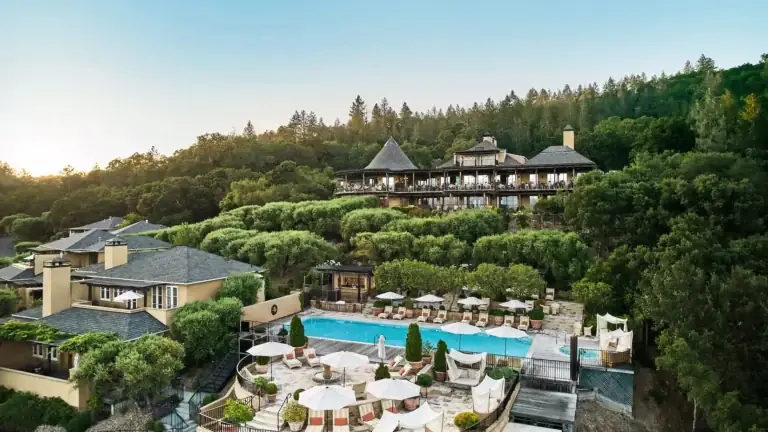
A rigorous vineyard hotel overview must begin by dismantling the “Scenic Fallacy”—the assumption that a hotel’s value is proportional to the aesthetic beauty of the grapevines visible from a guest’s terrace. While visual appeal is a component, the true value of a viticultural stay is derived from “Operational Proximity.” This refers to the degree of integration between the hospitality service and the agricultural labor. A misunderstood vineyard hotel treats the vines as decorative wallpaper; a high-fidelity property treats them as the primary operational stakeholder.
From a multi-perspective view, these destinations must satisfy three distinct imperatives:
-
The Agrarian Imperative: The hotel must function as a “Permeable Membrane,” allowing guests to witness the labor of the vintage without disrupting the viticultural team’s efficacy.
-
The Technical Imperative: The property must provide “Intellectual Access.” This involves moving beyond marketing scripts to offer technical insights into soil pH, clonal selections, and the chemical kinetics of aging.
-
The Ecological Imperative: In 2026, a vineyard hotel is a site of resource management. It must govern its water table, carbon footprint, and soil microbiology with the same precision it applies to guest services.
Oversimplification in this sector leads to the “Resort-Washing” trap, where generic luxury properties plant a few rows of decorative vines to claim the title. A true authority asset is distinguished by its “Contextual Honesty.” This means the hotel’s design, wine list, and culinary program are all derivatives of the specific geology—whether it be the volcanic soils of Oregon or the alluvial fans of Napa. If the experience could be replicated in any other region without fundamental changes, it lacks the systemic depth required for long-term authority.
Historical and Systemic Evolution of Viticultural Lodging
The trajectory of the vineyard hotel in America has transitioned through four distinct epochs, reflecting the broader maturation of the domestic wine industry.
The Accessory Era (1970–1985)
Initially, viticultural lodging was incidental. Winery owners maintained small cottages or spare rooms primarily for trade partners and personal friends. There was no “lifestyle” marketing; hospitality was a matter of logistical necessity in rural areas where commercial hotels were scarce. The “experience” was the bottle; the bed was an afterthought.
The Mediterranean Inversion (1986–2005)
Following the global success of California wines, developers began building grand, European-style estates. This was the era of the “Palazzo” model—grand villas that prioritized European aesthetics over regional honesty. While these properties brought high-end service standards, they often felt “Architecturally Displaced,” using materials that had no geological connection to the American site.
The Modernist Vernacular (2006–2020)
A shift toward “Vernacular Honesty” saw the rise of glass, steel, and local stone. Architects began to prioritize the view and the light, creating “Pavilions in the Vines.” This phase established the vineyard hotel as a site for high-design living, where the building was meant to disappear into the landscape rather than dominate it.
The Regenerative Epoch (2021–Present)
The current paradigm is defined by “Circular Ecosystems.” Today’s leading destinations are judged by their greywater reclamation for vineyard irrigation, their carbon sequestration strategies, and their ability to function as a sanctuary for local biodiversity. The luxury is now found in “Environmental Integrity”—the guest wants to know that their stay is contributing to the health of the AVA.
Conceptual Frameworks and Mental Models for Evaluation
To move beyond superficial reviews, one must apply specific mental models to assess the quality of a viticultural destination.
1. The “Crush-to-Quiet” Ratio
This framework measures how a property manages the volatility of the vineyard season. A high-fidelity hotel provides a different, yet equally compelling, narrative during the “dormant” winter season—focusing on pruning and cellar library education—as it does during the chaotic harvest. If a property feels “empty” or conceptually irrelevant when the vines are bare, it is a seasonal resort, not a vineyard hotel.
2. The “Sommelier-as-Curator” Model
In this model, the wine program is not a list, but a narrative arc. An authoritative destination will have a wine director whose knowledge of the neighborhood’s soil chemistry matches the winemakers’. The hospitality staff should be as literate in the estate’s phenological stages as they are in room service protocols.
3. The “Biophilic Boundary” Framework
Luxury in this sector is defined by how the building interacts with the outside. This framework evaluates the “liminal spaces”—patios, floor-to-ceiling glass, and thermal stone flooring that retains the day’s heat. The goal is to minimize the psychological distance between the guest and the vineyard while maintaining thermal and acoustic comfort.
Key Categories and Operational Variations
The diversity of the American landscape has created several distinct models for viticultural hotels, each with specific trade-offs.
Decision Logic: Technical vs. Atmospheric
When selecting a destination, one must choose between “Technical Immersion” (learning the science of the vintage) and “Atmospheric Respite” (using the vines as a backdrop for relaxation). The most resilient assets offer a sliding scale, allowing the guest to move between these modes as their interest fluctuates.
Detailed Real-World Scenarios and Operational Realities
The “Harvest Intrusion”
A guest stays at a top-tier retreat in the Willamette Valley during the peak of harvest.
-
The Constraint: Harvesting must happen at 3:00 AM for temperature control.
-
Failure Mode: The noise of the tractors wakes the guest, leading to negative reviews and friction.
-
Success Mode: The hotel provides a “Harvest Survival Kit” (high-end earplugs and a technical briefing) and hosts a midnight “Crush Viewing,” turning the nuisance into an educational asset.
The “Smoke Taint” Risk Management
A vineyard hotel in a fire-prone region faces a sudden wildfire threat that doesn’t endanger the building but impacts air quality.
-
The Conflict: The air quality is poor, and the vineyard is at risk.
-
Response: Authoritative properties utilize medical-grade HVAC and “smoke-proof” pavilions. They pivot the guest experience to the “Sub-Cellar,” focusing on the science of filtration and vintage resilience, preserving the educational value of the stay.
Planning, Cost, and Resource Dynamics
The economics of a vineyard hotel are driven by “Allocation Scarcity.” There is only a finite amount of prime viticultural land that can be zoned for hospitality.
The Opportunity Cost of Development: For every acre of land used for a hotel, an acre of vineyard is often lost. The most sophisticated properties solve this through “Vertical Density”—building up or into hillsides to preserve the maximum amount of “Productive Soil.”
Tools, Strategies, and Support Systems
To navigate a viticultural stay at an authoritative level, the following systems are essential:
-
DTC (Direct-to-Consumer) Lockers: On-site climate-controlled storage that allows guests to ship their “finds” directly from the hotel to their home cellar.
-
Terroir Mapping Apps: Digital guides that allow guests to walk the vineyard and see the soil composition and vine age of the specific block they are standing in.
-
Acoustic Buffer Design: Using earth berms and specific tree species to mitigate the sound of vineyard machinery without blocking the view.
-
Sommelier-on-Demand: A messaging service where guests can request specific bottle prep (decanting/chilling) 30 minutes before returning to their room.
-
Micro-Climate Monitoring: Real-time data feeds in the room showing the current “Diurnal Shift” (temp difference), helping guests understand the physiological state of the vines.
Risk Landscape and Failure Modes
The “Vineyard Ecosystem” is fragile and subject to specific compounding risks:
-
The “Disney-fication” Decay: When a property becomes so focused on “Experience” that it loses its agricultural soul. If the winemaking becomes mediocre, the hospitality brand will eventually collapse.
-
Ecological Fatigue: Managing too many guests can degrade the soil microbiology or over-extract the local aquifer. A hotel that doesn’t track its “Nitrogen Footprint” is structurally unsustainable.
-
Succession Risk: Many top estates are tied to a single family. When ownership changes, the “Institutional Knowledge” of the land can vanish if not properly documented and governed.
Governance, Maintenance, and Long-Term Adaptation
Maintaining authority over decades requires a “Multi-Layered Governance” model.
-
Agricultural Easements: Legal structures that prevent the vineyard land from being subdivided, ensuring the hotel remains surrounded by productive land forever.
-
Annual Terroir Audits: Reviewing how guest foot traffic and construction are impacting the health of the vines and the soil.
-
Adaptive Architecture: The ability to modify buildings to account for changing climate patterns—such as increased cooling needs or enhanced smoke filtration systems.
Measurement, Tracking, and Evaluation Signals
How do we quantify the success of a vineyard hotel beyond financial returns?
-
Quantitative Signal: “Club Conversion Rate.” The percentage of hotel guests who join the winery’s allocation list. A high rate indicates the stay was “Transformative” rather than just “Comfortable.”
-
Qualitative Signal: “Staff Tenure.” In a sector defined by high turnover, an estate where the “Gamekeeper” or “Cellar Master” has a 10-year tenure is a sign of operational stability.
-
Leading Indicator: “Bio-Diversity Index.” A healthy destination will see an increase in native species within the vineyard rows over time.
Common Misconceptions and Industry Myths
-
Myth: “The best hotels are only in Napa.”
-
Correction: In 2026, some of the most innovative models are in the Walla Walla Valley (WA), the Blue Ridge Mountains (VA), and the Leelanau Peninsula (MI).
-
-
Myth: “Harvest is the best time to visit.”
-
Correction: Harvest is loud, dusty, and the winemakers are too busy to talk. For “Deep Access,” the “Dormant Season” (Winter) offers more intellectual intimacy.
-
-
Myth: “A vineyard hotel is just a fancy resort.”
-
Correction: A resort is a place you visit; a vineyard stay is a place you “Inhabit.” The focus is on agricultural immersion, not just relaxation.
-
Ethical and Practical Considerations
The expansion of luxury lodging in agricultural valleys raises questions about “Land Concentration.” As luxury estates take over agricultural land, the price of “Productive Acreage” often skyrockets, making it difficult for independent farmers to compete. The most ethical properties are those that implement “Permeable Boundaries”—offering educational programs for local schools or functioning as regional “Climate Labs” that share agricultural findings with neighboring smaller farms.
Conclusion: The Synthesis of Earth and Sanctuary
The trajectory of the Vineyard Hotel is moving toward a “State of Total Integration.” The properties that stand as true pillars of authority are those that refuse to separate the guest from the ground. These estates reject ‘Lifestyle’ as a standalone product. Instead, they recognize it as the natural byproduct of a healthy, functioning agricultural system—an organic output that emerges only when the underlying biology thrives.
In the coming decades, the measure of luxury will be “Resilience.” As the climate shifts and consumer desires move toward the “Radically Authentic,” the ability to inhabit a landscape that is both productive and restorative will be the ultimate destination. The vineyard hotel is no longer just a place to sleep; it is a portal into the “Deep Time” of the landscape, where the vintage in the glass is a true reflection of the integrity of the soil.