Vineyard Hotel Planning Tips: A 2026 Reference for Viticultural Stays
The conceptualization of a viticultural hospitality asset is a complex exercise in dual-system management. At its core, the developer is not merely building a hotel but is attempting to graft a sensitive service environment onto an active, industrial-scale agricultural operation. This juxtaposition creates a unique set of structural frictions that do not exist in standard resort development. A vineyard is a living, biological clock governed by soil chemistry, diurnal shifts, and the relentless pressure of the harvest cycle, while a hotel demands consistency, silence, and refinement.
Successfully navigating this intersection requires a departure from traditional hospitality tropes. The most authoritative properties in the American landscape are those that treat the “vineyard” not as a decorative backdrop, but as a primary operational stakeholder. Every architectural decision—from the orientation of guest room fenestration to the chemical composition of the paving materials—must be weighed against its impact on the surrounding micro-climate and the technical requirements of the winemaking team.
As we examine the landscape in 2026, the benchmark for “quality” has shifted from superficial opulence toward systemic integrity. Discerning travelers and stakeholders are increasingly prioritizing properties that offer “Technical Transparency”—the ability to witness and understand the agrarian process without it being sanitized into a performance. This article serves as a definitive reference for the structural, financial, and philosophical underpinnings of viticultural lodging, providing a framework for those seeking to master the nuanced art of integrated estate development.
Understanding “vineyard hotel planning tips”
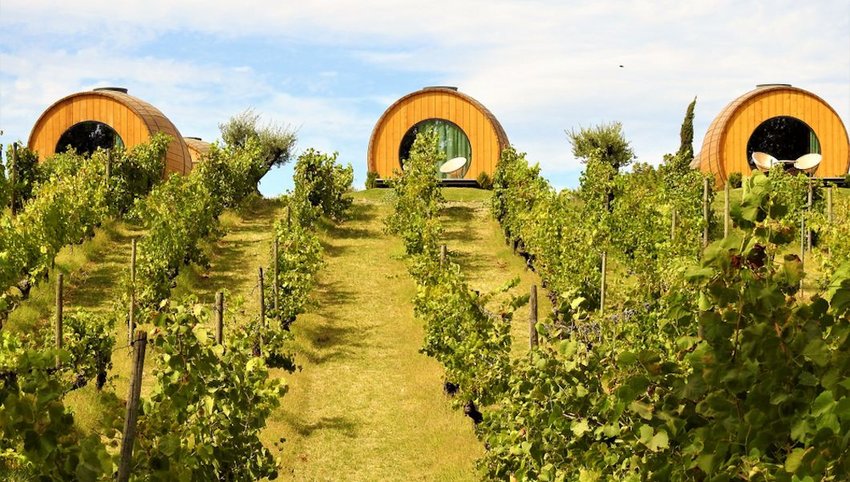
When discussing vineyard hotel planning tips, it is critical to move past the “Scenic Fallacy”—the assumption that a hotel’s value is derived solely from the proximity of grapevines. In a professional editorial context, these properties are better understood as “Biophilic Production Hubs.” This means the lodging is not merely near the production; it is an active participant in the agricultural narrative. The misunderstanding of this sector often arises from a failure to recognize the operational friction between hospitality and land management.
To view a vineyard hotel accurately, one must satisfy three distinct perspectives:
-
The Agrarian Perspective: The hotel must function within the constraints of a working farm. This includes managing noise from frost fans, the smells of fermentation during the autumn “crush,” and the movement of heavy machinery.
-
The Architectural Perspective: The buildings must act as a “Permeable Membrane,” allowing the specific terroir of the valley or hillside to influence the indoor environment through light, thermal mass, and material choice.
-
The Economic Perspective: The hotel is a driver for Direct-to-Consumer (DTC) growth. It is a “Relationship Incubator” where a short stay converts a guest into a long-term wine club member.
Oversimplification in this domain is a significant risk. It is tempting to prioritize aesthetic “Instagram-ability” over functional viticulture. However, a property that prioritizes views over vineyard health eventually loses its “Authority of Place.” True planning excellence lies in “Atmospheric Governance”—the ability to manage the friction between luxury service and agricultural necessity. If the smell of sulfur sprays (necessary for organic farming) interrupts a guest’s sunset dinner, the property’s master plan has failed to achieve the necessary “Operational Seamlessness.”
Historical and Systemic Evolution of the Sector
The American vineyard hotel has transitioned through distinct phases, mirroring the maturation of the domestic wine industry and changing societal values regarding land use.
The Accessory Era (1970–1985)
In the early days of the Napa and Sonoma boom, lodging was almost entirely incidental. Winery owners maintained small cottages primarily for trade partners and personal friends. There was no “lifestyle” marketing; it was a matter of logistical necessity in rural areas where commercial hotels were scarce.
The Mediterranean Inversion (1986–2005)
As American wine achieved global parity, developers began building grand, European-style estates. This era was characterized by the “Palazzo” model—grand villas that prioritized European aesthetics over American regional honesty. While these properties brought high-end service standards, they often felt “Architecturally Displaced.”
The Modernist Integration (2006–2020)
A shift toward “Vernacular Honesty” saw the rise of glass, steel, and local stone. Architects began to prioritize the view and the light, creating “Pavilions in the Vines.” This phase established the vineyard hotel as a site for high-design living, where the building was meant to disappear into the landscape rather than dominate it.
The Regenerative Epoch (2021–Present)
Today, the most significant properties are “Circular Ecosystems.” They are judged by their carbon footprint, their greywater reclamation for vineyard irrigation, and their ability to function as a sanctuary for both humans and local biodiversity.
Conceptual Frameworks and Mental Models
When evaluating the sophistication of a vineyard destination, these frameworks help categorize the depth of the engagement.
1. The “Crush-to-Quiet” Ratio
This model measures how a destination manages the seasonality of the vineyard. A high-fidelity hotel provides a different, yet equally compelling, narrative during the “dormant” winter season—focusing on pruning and cellar library education—as it does during the chaotic harvest.
2. The “Sommelier-as-Curator” Model
In this model, the wine program is not a menu, but a narrative arc. An authoritative destination will have a wine director whose knowledge of the neighborhood’s soil chemistry matches the winemakers’.
3. The “Biophilic Boundary” Scale
This model evaluates the architectural relationship between the living quarters and the environment. Does the building act as a fortress against nature, or is it a “Permeable Membrane”? The best hotels use “Passive Engagement” strategies, such as thermal stone flooring that retains the day’s heat.
Key Categories and Operational Variations
The American landscape offers several distinct variations of the vineyard model, each with its own operational trade-offs.
Decision Logic: Technical vs. Atmospheric
Choosing the right planning path requires a “Resource Alignment” check. If the visitor seeks “Technical Depth”—access to labs, barrel rooms, and winemakers—the Monopole Estate is the logical choice. Conversely, if the visitor seeks “Atmospheric Respite,” the Architectural Pavilion provides a minimalist backdrop where the landscape takes precedence.
Detailed Real-World Scenarios and Operational Realities
The “Harvest Intrusion” Paradox
A guest stays at a top-tier retreat in the Willamette Valley during the peak of harvest.
-
The Constraint: Harvesting must happen at 3:00 AM for temperature control.
-
Failure Mode: The noise of the tractors wakes the guest, leading to negative reviews.
-
Success Mode: The hotel includes a “Harvest Night” kit—high-end earplugs, a technical briefing, and an invitation to a 4:00 AM breakfast with the cellar crew.
The “Smoke Taint” Risk Management
A vineyard hotel in a fire-prone region faces a sudden wildfire threat.
-
The Conflict: The air quality is poor, and the vineyard is at risk.
-
Response: Authoritative properties have installed medical-grade HVAC and “smoke-proof” tasting pavilions. They pivot the guest experience to the “Sub-Cellar,” focusing on the science of filtration and vintage resilience.
Planning, Cost, and Resource Dynamics
Entry into high-fidelity viticultural travel involves high capital and significant opportunity costs.
Resource Variability: The “True Cost” of these stays is often found in the “Expertise Upsell.” While the room may have a base price, access to the “Master Viticulturist” or the “Estate Historian” is the resource that defines the authority of the stay.
Tools, Strategies, and Support Systems
To maximize the “Return on Experience,” the following systems are essential:
-
LiDAR Topographical Maps: Used by guests at large estates to understand elevation changes for hiking and technical vineyard spotting.
-
DTC (Direct-to-Consumer) Lockers: On-site climate-controlled storage that allows guests to ship their “finds” directly from the hotel to their home cellar.
-
Digital “Land-Use” Dashboards: Real-time data feeds showing which fields are being harvested or mowed.
-
Heritage Seed Libraries: Hotels that allow guests to participate in horticulture through the tracking of rare cultivars.
-
Acoustic Buffer Design: Using earth berms and specific tree species (like Cypress) to naturally dampen tractor noise.
Risk Landscape and Failure Modes
The “Vineyard Ecosystem” is fragile and subject to compounding risks:
-
The “Disney-fication” Decay: When an estate focuses too much on guest experience at the expense of its primary agricultural purpose. If a working farm stops actually farming, it becomes a theme park.
-
Ecological Overshoot: Managing too many guests can degrade the soil or water table. Compaction of soil in a vineyard block or over-extraction of an aquifer are common failure modes.
-
Succession Risk: Estates are often tied to the vision of a single family. When that ownership changes, the “Soul” of the destination can vanish if the governance wasn’t institutionalized.
Governance, Maintenance, and Long-Term Adaptation
Long-term viability requires a “Multi-Layered Governance” model:
-
Environmental Audit: Annual reviews of soil health, water purity, and biodiversity indices.
-
Agricultural Easements: Legal structures that prevent the vineyard land from being subdivided into small residential lots.
-
The Adaptation Checklist:
-
Quarterly “Friction Review” (Where do guests and farm operations clash?).
-
Decadal “Master Plan” (How does the estate respond to 50-year climate projections?).
-
Staff “Institutional Knowledge” Transfer (Ensuring the head gardener’s 30 years of experience is documented).
-
Measurement, Tracking, and Evaluation
How do we measure the “Excellence” of a vineyard hotel?
-
Quantitative Signal: “Renewal of Allocation.” The percentage of hotel guests who join or renew their commitment to the winery’s allocation list.
-
Qualitative Signal: “Staff Tenure.” In a sector defined by high turnover, an estate where the “Gamekeeper” or “Cellar Master” has a 10-year tenure is a sign of operational stability.
-
Leading Indicator: “Bio-Diversity Index.” The return of a “Keystone Species” (like a specific bird of prey) is a better indicator of success than any financial metric.
Common Misconceptions and Industry Myths
-
Myth: “The best wineries are always in Napa.”
-
Correction: While Napa is the pioneer, true lifestyle innovation is currently happening in “Challenger Valleys” like the Walla Walla (WA) and the Shenandoah (VA).
-
-
Myth: “Harvest is the best time to visit.”
-
Correction: Harvest is loud, dusty, and the winemakers are too busy to talk. For “Deep Access,” the “Silver Season” (Spring) offers more intellectual intimacy.
-
-
Myth: “A vineyard stay is just a fancy resort.”
-
Correction: A resort is a place you visit; a vineyard stay is a place you “Inhabit.” The focus is on agricultural immersion.
-
Ethical and Practical Considerations
The expansion of luxury stays in agricultural regions raises questions about “Land Concentration.” As luxury estates take over agricultural land, the price of “Productive Acreage” often skyrockets, making it difficult for independent farmers to compete. The most “Ethical” hotels are those that implement “Permeable Boundaries”—offering educational programs for local schools or functioning as regional “Climate Labs.”
Conclusion: The Synthesis of Earth and Sanctuary
The future of the American vineyard hotel lies in “Integrity over Iconography.” The destinations that will thrive are those that reject the superficial trappings of luxury in favor of a deep, often challenging, engagement with the land. Whether it is the patient aging of a Cabernet or the decadal restoration of a native prairie, the vineyard hotel is ultimately a testament to the power of long-term thinking.
The guest rejects the silk of the sheets as the primary metric of luxury. Instead, they anchor their expectations in the integrity of the soil, demanding a high-fidelity connection to the land’s metabolic health rather than its textile count. As the world becomes more digitized and transient, the ability to inhabit a landscape that is both productive and restorative becomes the new standard of wealth.