How to Manage Dining Costs at Winery Hotels: A 2026 Strategic Guide
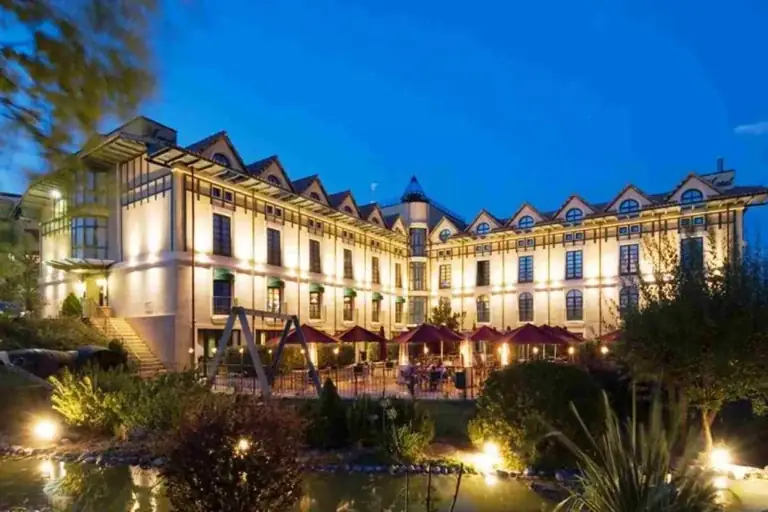
The intersection of luxury viticulture and high-end hospitality creates a unique economic environment often referred to as the “estate premium.” For the traveler, staying at a winery hotel offers an unparalleled immersion into the source of production, but it also introduces a captive market dynamic. Unlike urban hospitality centers where a variety of external dining options are within walking distance, winery hotels are frequently situated in remote agricultural tracts. This geographic isolation grants the estate a functional monopoly over the guest’s immediate nutritional needs, leading to a pricing structure that reflects convenience and exclusivity rather than just the cost of ingredients.
Mastering the fiscal logistics of these stays requires a move beyond simple budgeting toward what oenological professionals call “Integrated Value Planning.” The challenge is not merely to spend less, but to navigate the systemic pricing tiers inherent in estate-grown menus. As we progress into 2026, the rise of “farm-to-fork” movements and the inflation of labor costs in rural areas have compounded the difficulty of finding middle-ground dining. The gap between the complimentary tasting and the thousand-dollar tasting menu has widened, leaving a void that the savvy traveler must fill through strategic foresight.
This analysis deconstructs the mechanics of estate dining economics. We will examine the hidden drivers of menu pricing, the psychological traps of “house wine” markups, and the logistical maneuvers necessary to maintain culinary standards without succumbing to estate-driven price gouging. To approach this topic with the necessary depth, one must view the winery hotel not just as a place of leisure, but as a complex retail environment designed to maximize spend-per-guest.
Understanding “how to manage dining costs at winery hotels.”
To accurately address how to manage dining costs at winery hotels, one must first dismantle the “all-inclusive” fallacy. Unless explicitly stated, winery hotels operate on a high-margin unbundled model. A multi-perspective view reveals that “cost” is not just the price on the menu; it is the “Access Tax” associated with the hotel’s location. From the hotelier’s perspective, the restaurant is often a loss-leader for the brand’s prestige, but for the guest, it is a significant overhead that can easily double the nightly room rate.
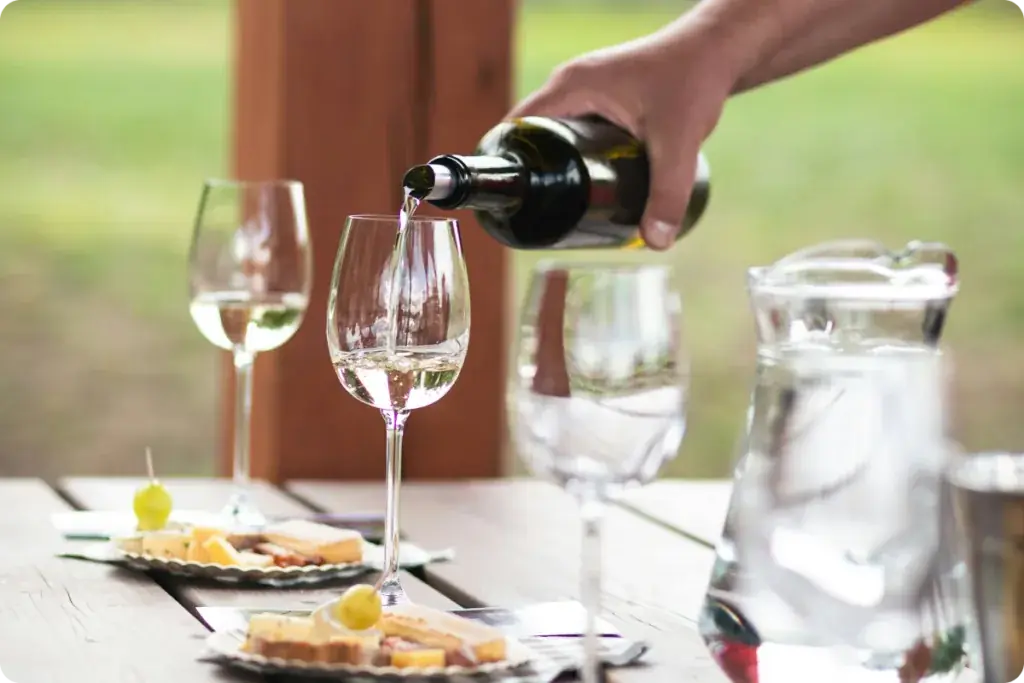
A common misunderstanding in this sector is that the “house wine” at a winery hotel will be the most economical choice. In reality, estates often price their entry-level bottles in the dining room at a 300% to 400% markup over the cellar door price. This creates a cognitive dissonance where the guest feels they should be saving by drinking at the source, yet they are paying a premium for service and glassware. Managing these costs requires a “Silo Approach”—separating the wine purchase from the dining experience through corkage strategies or pre-dining retail acquisitions.
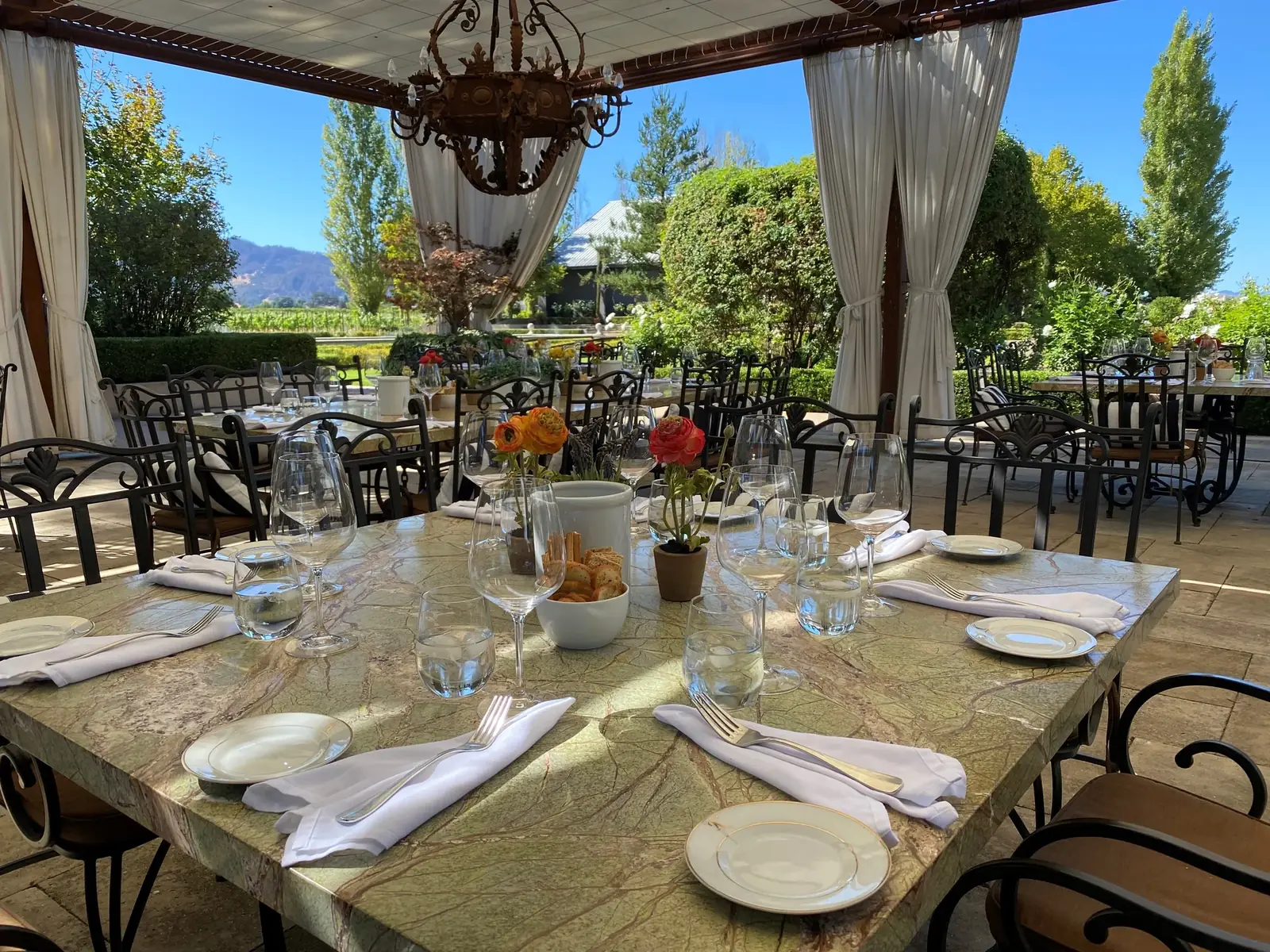
Oversimplification risk is highest when guests assume that “casual” dining options on-site will be reasonably priced. In the context of a vineyard estate, a “bistro” or “terrace menu” often carries the same labor and logistics costs as the fine-dining room, resulting in $30 sandwiches and $15 side dishes. Authority in this space is defined by the ability to recognize these “convenience traps” and utilize external supply chains or alternative meal-timing strategies to circumvent the estate’s monopoly.
Historical and Systemic Evolution of Estate Hospitality
The evolution of dining at winery hotels has moved through three distinct technological and cultural epochs:
1. The Era of the Vignerons’ Table (Pre-1980s)
Historically, winery lodging was functional and intimate. Dining was often a communal affair at the owner’s table, with costs either included in a modest room rate or offered as a simple, fixed-price family meal. There was little to no “management” of costs required because the commercialization of the experience was secondary to the agricultural production.
2. The Rise of the “Destination Restaurant” (1990s–2010s)
The Napa Valley and Bordeaux models shifted the focus toward Michelin-starred aspirations. Winery hotels became “Lifestyle Monuments.” During this era, dining costs skyrocketed as estates sought to justify their luxury branding. The restaurant became a theater, and the guest became the audience, paying high “ticket prices” for multi-course pairings.
3. The Regenerative and Hyper-Local Era (2020s–Present)
Today, we see a peak in “Vertical Integration.” Hotels grow their own produce and raise their own livestock. While this sounds sustainable, it introduces a “Boutique Farming Tax.” The labor-intensive nature of small-scale estate farming is passed on to the diner. In 2026, the primary cost driver is no longer just the wine, but the specialized labor required to maintain a five-star culinary program in a rural, often labor-scarce, environment.
Conceptual Frameworks and Mental Models
To master estate dining economics, planners should employ these specific mental models:
1. The “Radius of Spontaneit.y”
This model evaluates the distance to the nearest non-winery dining hub. If the radius exceeds 15 minutes of driving, the hotel’s pricing power increases exponentially. Planners must calculate the “Fuel-Time vs. Menu-Save” ratio. Often, a $50 round-trip rideshare to a local town is still cheaper than the $150 premium of a two-person dinner on-site.
2. The “Vertical Integration Arbitra.ge”
The goal here is to identify where the winery’s production exceeds its hospitality capacity. Wineries often have surplus “tasting room snacks” or “deli cases” that are priced for daytime tourists. By utilizing these daytime retail assets for an informal evening “charcuterie dinner,” the guest bypasses the service-heavy costs of the formal dining room.
3. The “Service-to-Sustenance” Ratio
This framework separates the cost of the food (sustenance) from the cost of the experience (service). In winery hotels, the “service” component—the white tablecloths, the sommelier’s time, the panoramic view—often accounts for 60% of the bill. Understanding this allows the guest to choose “sustenance-heavy” options, like room service or picnic baskets, which retain high food quality but shed the experiential markup.
Key Categories of Dining Logistics and Trade-offs
Choosing how to eat on an estate involves a series of tactical trade-offs between immersion and economy.
Realistic Decision Logic: The “One-Night Splurge” Rule
In a three-night stay, the most efficient logic is the “1-1-1” model: one night of full-estate immersion (fine dining), one night of village exploration, and one night of “Provisions” (in-room dining with local market finds). This maintains the “romance” of the trip while capping the dining budget at a sustainable level.
Detailed Real-World Scenarios and Operational Realities
The Captive Audience Trap
A guest stays at a remote luxury estate in the Douro Valley. The only dinner option is a $180 prix-fixe menu. By failing to check the menu before booking, the guest is forced into a $720 dining bill for a two-night stay. Management Strategy: Pre-book a “Market Basket” from a nearby town on the drive in, utilizing the room’s terrace for one evening.
The Sommelier’s Upsell
During a mid-tier dinner at a Sonoma estate, the sommelier suggests a “Reserve” pairing. The hidden failure mode here is that these pairings often include small pours of ultra-premium wines that the guest may not even prefer. Management Strategy: Order a single bottle of the estate’s mid-tier wine from the retail shop earlier in the day and pay the corkage fee. This provides four full glasses for the price of two “Reserve” pours.
The Breakfast Inflation
Winery hotels often charge $40+ for “Vineyard Breakfasts.” Management Strategy: Check if the room rate includes a “Continental” option. Often, the difference between the included fruit/pastry and the paid hot meal is $30, which can be better spent on a high-quality lunch elsewhere.
Planning, Cost, and Resource Dynamics
The dining budget at a winery hotel is rarely linear; it is a series of spikes and lulls.
The Opportunity Cost of Time: Spending two hours driving to a “cheap” restaurant in town may save $100, but costs $100 worth of “vacation time.” Planners must determine their hourly value of leisure to decide if the “Provisions Model” (staying on the terrace) is a better value than the “Village Hybrid” (leaving the estate).
Tools, Strategies, and Support Systems
Modern budget management in wine country relies on a specific “Logistics Stack”:
-
Direct Cellar-Door Procurement: Buying wine at the winery’s retail counter before checking into the hotel.
-
Corkage Policy Verification: Always call ahead to confirm if the hotel allows “outside” wine from the same region (some have protectionist policies).
-
Local “Provender” Mapping: Identifying high-end deli and grocery hubs within 10 miles of the estate.
-
Wine Club Benefits: Many wineries offer 15-20% off dining for their club members, not just wine.
-
The “Happy Hour” Buffer: Utilizing the winery’s afternoon “tasting window” to consume high-protein snacks (cheese, nuts) to reduce the volume of the evening meal.
-
Loyalty Tier Leveraging: Using credit card “concierge” services to find hotels with “Breakfast Included” or “Dining Credits” (e.g., Amex Fine Hotels & Resorts).
Risk Landscape and Failure Modes
Three primary risks can cause a dining budget to collapse:
1. The “Alcohol-Induced Apathy.”
As guests consume wine throughout the day, their fiscal discipline diminishes. This leads to the “Late-Night Room Service” failure, where a $20 burger becomes a $60 expense after tax, tip, and delivery fees.
2. The Lack of “Food-to-Wine” Balance
High-acidity or high-tannin wines require specific food pairings to avoid palate fatigue. Guests trying to save money by eating “light” (e.g., just bread and olive oil) often end up feeling unwell, leading to a “Recovery Day” that wastes a significant portion of the trip’s value.
3. The “Holiday Premium” Surcharge
Visiting during harvest (September/October) or major holidays often triggers “Seasonal Menus” with significantly higher price floors. Adaptation: Visit during the “Dormancy” period (winter) when estates are more likely to offer “Stay and Dine” packages.
Governance and Long-Term Adaptation
If you travel to wine regions frequently, you should treat your dining strategy as a “Living Model.”
The Multi-Stay Checklist:
-
Audit Phase: Review your last trip’s folio. Where did the “Incidentals” spike? (Usually bottled water and coffee).
-
Adjustment Phase: For the next trip, bring a reusable water bottle and a high-end travel coffee kit. This saves an average of $25 per day.
-
Review Cycle: Every 12 months, check if your preferred wine clubs have updated their dining discounts.
Measurement, Tracking, and Evaluation
How do you know if your strategy worked? Look at these three indicators:
-
The “Markup Ratio” (Lagging): Total Dining Spend ÷ Total Retail Value of Food/Wine consumed. A successful “Managed” stay should be under 2.0; an unmanaged stay is often 3.5+.
-
The “Palate Vitality” (Qualitative): Did you feel physically over-saturated or nutritionally deprived? High-cost dining often leads to over-eating; successful management prioritizes quality over volume.
-
The “Service-to-Savor” Index: How many hours did you spend in high-pressure service environments versus relaxed, self-paced settings?
Common Misconceptions and Industry Myths
-
Myth: “Room service is always the most expensive.”
-
Correction: In winery hotels, a room service club sandwich is often cheaper than the cheapest entry on the formal dining room menu.
-
-
Myth: “Winery food is just an afterthought.”
-
Correction: In 2026, most winery restaurants are separate profit centers with their own high-cost overheads.
-
-
Myth: “Buying a bottle at dinner is the best way to support the winery.”
-
Correction: The winery makes a much higher margin if you buy a case at the cellar door and take it home.
-
-
Myth: “You have to eat on-site to get the full experience.”
-
Correction: The “full experience” is the terroir, which can be enjoyed with a local market picnic just as well as with a five-course meal.
-
-
Myth: “Complimentary breakfasts are universal in luxury.”
-
Correction: This is increasingly rare in the US and Europe; always verify the “Inclusion Clause” in your booking.
-
Ethical and Practical Considerations
Managing dining costs should not come at the expense of the local ecosystem. While saving money is important, the restaurants at winery hotels often support local artisanal producers who cannot survive on retail alone. A balanced approach—the “Symmetric Splurge”—involves saving on incidentals and routine meals to ensure you can fully participate in the estate’s flagship culinary experience once per stay. This supports the estate’s mission while maintaining your fiscal boundaries.
Conclusion: The Synthesis of Logic and Leisure
The ability to manage dining costs at winery hotels is the hallmark of the mature traveler. It represents a transition from being a passive consumer of luxury to being an active curator of value. By understanding the radius of spontaneity, the vertical integration of the estate, and the service-to-sustenance ratio, you reclaim control over the “Estate Premium.”
In the end, the goal of a winery trip is the sensory connection to the land. This connection is not improved by overpaying for convenience. True luxury is the freedom to choose your own dining narrative—one that balances the elegance of the estate with the pragmatic discipline of the informed traveler. By applying these frameworks, you ensure that the memories of the vintage outlast the impact on your balance sheet.