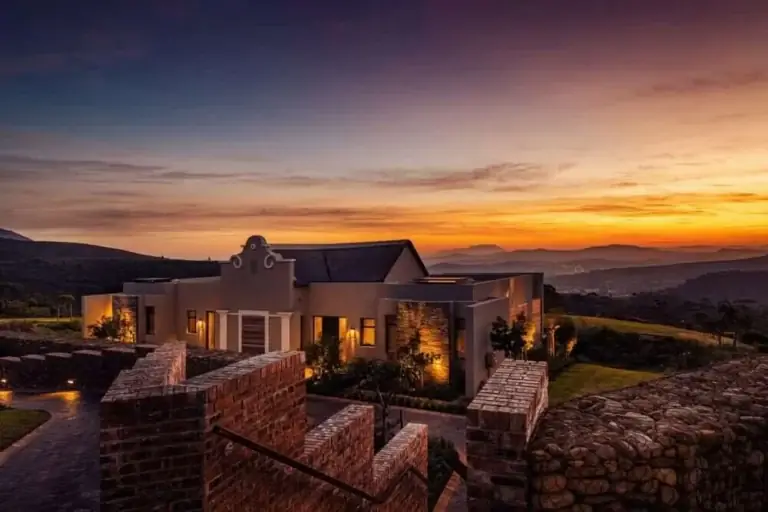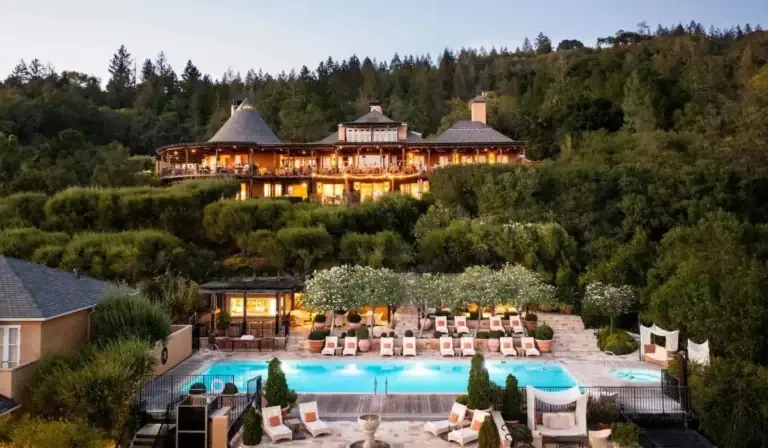
How to Plan a Luxury Vineyard Stay on a Budget: A Strategic Guide
The intersection of viticultural excellence and hospitality has created a specialized travel sector often perceived as a playground for the ultra-wealthy. The traditional “estate” experience, characterized by sweeping views of trellised vines and Michelin-starred dining, carries a price tag that reflects both the scarcity of the land and the high operational costs of rural luxury. However, as the global wine tourism industry matures in 2026, a new logistical paradigm has emerged. Sophisticated travelers are increasingly utilizing structural market efficiencies to access these premier experiences without the corresponding premier expenditure.
Navigating this terrain requires an analytical shift from passive consumption to active logistical orchestration. The core challenge is not merely “finding a deal,” but rather understanding the seasonal metabolism of a working vineyard and the occupancy algorithms of regional hospitality. A winery is, first and foremost, an agricultural business; its hospitality wing is subject to the fluctuations of the harvest cycle, labor availability, and regional tourism ebbs. By aligning one’s travel schedule with these agricultural and economic rhythms, the barrier to entry for luxury viticultural immersion is significantly lowered.
This analysis moves beyond surface-level frugality to examine the systemic levers of the wine travel industry. We will explore how “Geographic Arbitrage,” “Shoulder-Season Logistics,” and “DTC (Direct-to-Consumer) Loyalty Leveraging” can be synthesized into a coherent strategy. For those seeking to master how to plan a luxury vineyard stay on a budget, the objective is “Value-Density”—maximizing the sensory and aesthetic quality of the stay while minimizing the “Prestige Tax” typically associated with high-profile wine regions.
The following framework deconstructs the luxury vineyard stay into its constituent parts: lodging, logistics, and oenological access. By isolating these variables and applying rigorous planning models, the traveler can construct an itinerary that maintains the high-fidelity experience of a luxury tour while adhering to a disciplined fiscal structure.
Understanding “how to plan a luxury vineyard stay on a budget”
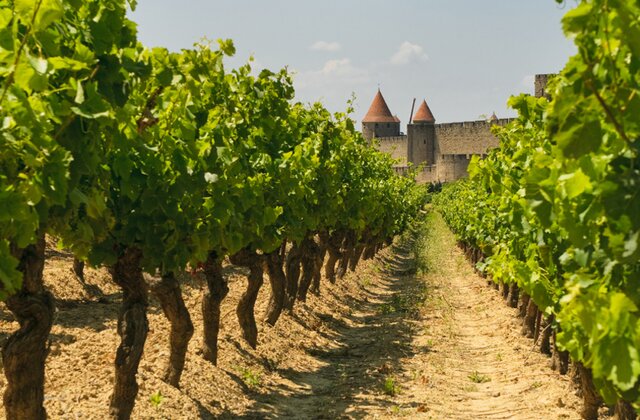
To accurately address the methodology of how to plan a luxury vineyard stay on a budget, one must dismantle the “Binary Luxury Fallacy.” This is the mistaken belief that luxury is an all-or-nothing proposition. In the context of a vineyard, luxury is often modular. One can enjoy the “Luxury of Place” (the view, the terroir, the architecture) without necessarily paying for the “Luxury of Service” (private butlers, on-site chauffeurs). A multi-perspective view reveals that the budget-conscious traveler is essentially an unbundler of services.
A common misunderstanding in this space is that “budget” implies a sacrifice in wine quality or accommodation comfort. In reality, the most expensive components of a vineyard stay are often “Convenience Fees”—the premium paid for staying on the valley floor during peak harvest or booking through high-commission third-party aggregators. Effective management involves shifting from “Reactive Booking” to “Structural Planning,” where the traveler identifies undervalued geographic pockets or temporal windows where the supply of luxury exceeds the immediate demand.
Oversimplification risk is highest when travelers focus solely on the “Nightly Rate.” A comprehensive budget must account for “Incidental Leakage,” which includes tasting fees, transportation in remote rural areas, and the “Monopoly Pricing” of estate-owned restaurants. Authority in this sector is defined by the ability to calculate the “Total Landed Cost” of the experience, ensuring that a cheap room does not lead to an expensive, isolated logistical trap.
Historical and Systemic Evolution of Viticultural Tourism
The architecture of the wine stay has moved through three distinct evolutionary phases:
1. The Era of Exclusive Proximity (Pre-1990s)
Historically, staying on a vineyard was a privilege reserved for industry insiders or personal guests of the proprietor. There was no “market” for these stays; they were social transactions. The “cost” was personal network capital rather than currency.
2. The Rise of the “Lifestyle Monument” (2000s–2020)
As regions like Napa, Bordeaux, and Tuscany became global lifestyle brands, vineyards invested heavily in ultra-luxury “lodges.” This era saw the institutionalization of high pricing, as hospitality became a primary revenue driver alongside wine production. This created the high-barrier market we see today.
3. The Decentralized Access Era (Present–2026)
We are currently in a period of “Granular Access.” Digital platforms and a surge in boutique, “agricultural-first” accommodations have broken the monopoly of the major estates. Travelers now have the tools to bypass the “Grand Marque” hotels in favor of high-design cottage stays or guest houses located on premier acreage but managed with lower overhead.
Conceptual Frameworks and Mental Models
When evaluating an itinerary, industry-leading planners use specific mental models to identify value.
1. The “Radius of Spontaneity”.
This model dictates that as the distance from the “Primary Landmark” (e.g., the town of St. Helena or the village of Barolo) increases, the price drops at a non-linear rate. Moving just 15 minutes into the surrounding hills or a “Secondary Valley” can reduce lodging costs by 40% while still offering the same climactic and geological “Luxury of Place.”
2. The “Metabolic Window” of the Vineyard
A vineyard’s beauty and cost are tied to its biological cycle.
The “Visual Peak” (veraison/harvest) is the “Price Peak.” However, the “Dormancy Period” (winter) offers a stark, architectural beauty and the lowest possible rates. The “Shoulder Window” (late spring/early summer) provides the best balance of visual appeal and fiscal efficiency.
3. The “DTC Loyalty Loop.”
Direct-to-Consumer (DTC) models have changed the economics of wine travel. Many luxury wineries now offer “Member-Only” lodging or waive tasting fees (often $100+ per person) for club members. This model treats the “Cost of Subscription” as a “Down Payment” on the travel experience, often resulting in a net saving when the stay is fully realized.
Key Categories of Vineyard Lodging and Trade-offs
Selecting the right “lodging vehicle” is the most significant decision in the budget-luxury synthesis.
Decision Logic: The “Spontaneity vs. Security” Trade-off
If the goal is to visit “Cult” wineries, the Member-Exclusive Villa is the most logical choice, as the subscription facilitates the booking. If the goal is general immersion, the Estate Guest House in a secondary valley offers the highest “Value-Density.”
Detailed Real-World Scenarios and Operational Realities
The “Zone-Two” Optimization
A group wants to stay in the heart of the Willamette Valley during the post-harvest “Celebration Season.” Instead of booking a flagship resort in Dundee, they secure a high-design modern cottage 20 minutes south.
-
Result: 50% reduction in nightly lodging.
-
Failure Mode: Forgetting to book a dedicated driver, which consumes the savings.
-
Correction: Use the savings to hire a local car service, still netting a 20% overall saving.
The “Club-Leveraged” Long Weekend
A couple joins the wine club of a premier Napa estate six months before their trip. Their membership grants them access to a hidden cottage on the estate for $400/night (vs. $1,200 for a comparable public hotel).
-
Result: Immersion in a “Legacy Estate” at a fraction of the cost.
-
Second-Order Effect: They receive ship-home wine at a discount, covering their annual gifting needs.
The “Transatlantic Arbitrage”
A traveler chooses the Alentejo region of Portugal or the Valle de Guadalupe in Mexico over traditional European or Californian hubs.
-
Result: A “Five-Star” experience (infinity pools, world-class architecture) at a “Two-Star” price point.
-
Constraint: Requires longer travel time and higher initial flight costs.
Planning, Cost, and Resource Dynamics
The financial modeling of a vineyard stay is often skewed by the “Tasting Fee” variable.
The Opportunity Cost of “Free” Tastings: Often, “free” tastings are tied to poor-quality, high-volume wineries. The professional planner ignores “free” and looks for “waived-with-purchase” or “member-included” at high-quality estates to ensure the budget doesn’t degrade the oenological experience.
Tools, Strategies, and Support Systems
The “Planning Stack” for 2026 involves several specific digital and social tools:
-
DTC Club Aggregators: Tools that compare membership perks across multiple wineries to find the best lodging/tasting fee waivers.
-
AVA-Specific Maps: Using geological maps to find “Border Properties”—estates that share the same soil as famous neighbors but lack the famous ZIP code.
-
Local Concierge Credits: Utilizing high-end credit card portals (Amex FHR, Chase Sapphire) to secure “Property Credits” that offset the high cost of estate dining.
-
The “Reverse-Itinerary” Strategy: Booking lunch at the luxury estate (to enjoy the view/vibe) but staying in a boutique hotel in the nearest “Service Town.”
-
Direct-to-Owner Outreach: For guest houses, contacting the winery directly often yields “Unlisted” availability or “Mid-week” discounts that OTAs don’t show.
-
“Corkage” Logistics: Researching local restaurant corkage policies to avoid the 300% markup on wine lists.
Risk Landscape and Failure Modes
Budget-luxury planning is a “High-Precision” activity; small errors can lead to compounding costs.
-
The “Logistical Desert” Risk: Choosing a remote, cheap vineyard stay,y but finding that Uber/Lyft do not operate in the area. This forces an expensive “Panic Hire” of a private driver.
-
The “Palate Fatigue” Failure: Booking too many tastings to “maximize value,” leading to sensory exhaustion and a wasted trip.
-
The “Minimum Purchase” Trap: Joining a club to get a cheap room, only to realize the mandatory quarterly shipments exceed the savings on the stay.
-
The “Event Saturation” Risk: Booking during a regional “Wine Auction” or festival. Prices for everything—from gas to groceries- have increased by 200%.
Governance, Maintenance, and Long-Term Adaptation
For the frequent wine traveler, a “Personal Vineyard Registry” is essential.
The Annual Review Cycle:
-
Monitoring: Track the “Emerging AVA” lists. When a region gets its first Michelin star, its “Value Window” is closing.
-
Adjustment: Review club memberships. If a winery changes ownership to a large conglomerate, lodging perks are often the first to be cut.
-
Review: Use a “Post-Trip Audit”—did the savings on the room lead to a better wine-buying budget? If not, the “Logistics-to-Experience” ratio was off.
Measurement, Tracking, and Evaluation
Success in this sector is measured by “Experiential ROI.”
-
Leading Indicator: “Booking Lead Time.” For luxury on a budget, 6–9 months is the “Sweet Spot.”
-
Lagging Indicator: “Total Landed Cost per Bottle/Experience.” Calculating the all-in cost (flight + hotel + tastings) divided by the number of high-quality “Memorable Moments.”
-
Qualitative Signal: “Transactional Friction.” Did the effort of saving money ruin the “Zen” of the vineyard? If the answer is yes, the budget was too tight.
-
Documentation: Keep a “Vintage Ledger” of which estates provided the best member-exclusive lodging access for future reference.
Common Misconceptions and Industry Myths
-
Myth: “Harvest is the best time to visit.”
-
Correction: Harvest is the most expensive, loudest, and most stressful time. Vignerons are busy. The best “Luxury” access happens during the “Quiet Season” (Feb–May).
-
-
Myth: “You have to stay at the winery to see the vineyard.”
-
Correction: “Walking rights” are often open to anyone with a tasting reservation. You can stay off-site and still walk the rows.
-
-
Myth: “Wine clubs are a scam.”
-
Correction: For the luxury traveler, they are a “Facility Access Pass.”
-
-
Myth: “Third-party sites have the best rates.”
-
Correction: In rural wine country, “direct” is king. Wineries prefer to keep the 15-20% commission for themselves and will often pass that saving to the guest.
-
Conclusion: The Synthesis of Logic and Luxury
Planning a luxury vineyard stay on a budget is an exercise in “Intellectual Hospitality.” It requires the traveler to move beyond the glossy pages of travel magazines and into the operational reality of the vineyard. The highest form of luxury in the world of wine is not a gold-plated faucet, but rather “Presence”—the ability to stand in the vines, speak with the producer, and understand the vintage without the distraction of financial stress.
By applying the “Radius of Spontaneity,” leveraging “DTC Loyalty,” and respecting the “Metabolic Window” of the vines, the traveler can construct an experience that is both fiscally responsible and aesthetically profound. Luxury is not about what you spend; it is about where you are and how much of the terroir you can perceive. In 2026, the most sophisticated guest is the one who understands that value is the ultimate vintage.