Best Vineyard Hotels in the US: A Definitive 2026 Guide to Estate Stays
The intersection of viticulture and luxury hospitality in the United States has undergone a fundamental transformation over the last three decades. Once characterized by modest bed-and-breakfasts or generic hotels located near agricultural centers, the sector has evolved into a sophisticated network of estate-integrated resorts. These properties do not merely exist adjacent to grapevines; they are functionally woven into the agricultural cycle of the land. For the discerning traveler, identifying the premier establishments requires an analytical look at how a property balances its dual identity as both a working farm and a five-star sanctuary.
The complexity of the American viticultural landscape—spanning from the maritime influences of the North Coast to the high-desert terroirs of the Southwest—means that “excellence” is not a monolithic standard. A top-tier vineyard hotel in the Willamette Valley must solve for different atmospheric and service challenges than one in the heart of Napa or the Texas Hill Country. This necessitates a move away from superficial ranking systems toward a more nuanced understanding of “estate integration,” “service architecture,” and “agricultural authenticity.”
In 2026, the market for high-end wine tourism is increasingly defined by “intellectual luxury.” Guests are no longer satisfied with a comfortable room and a generic tasting flight; they seek deep immersion into the technical realities of winemaking and the ecological nuances of the soil. Consequently, the leading properties are those that offer transparent access to the winemaking process while maintaining the rigorous standards of global hospitality. This article serves as a definitive reference for deconstructing the components that constitute the highest tier of these American institutions.
Understanding “best vineyard hotels in the US.”
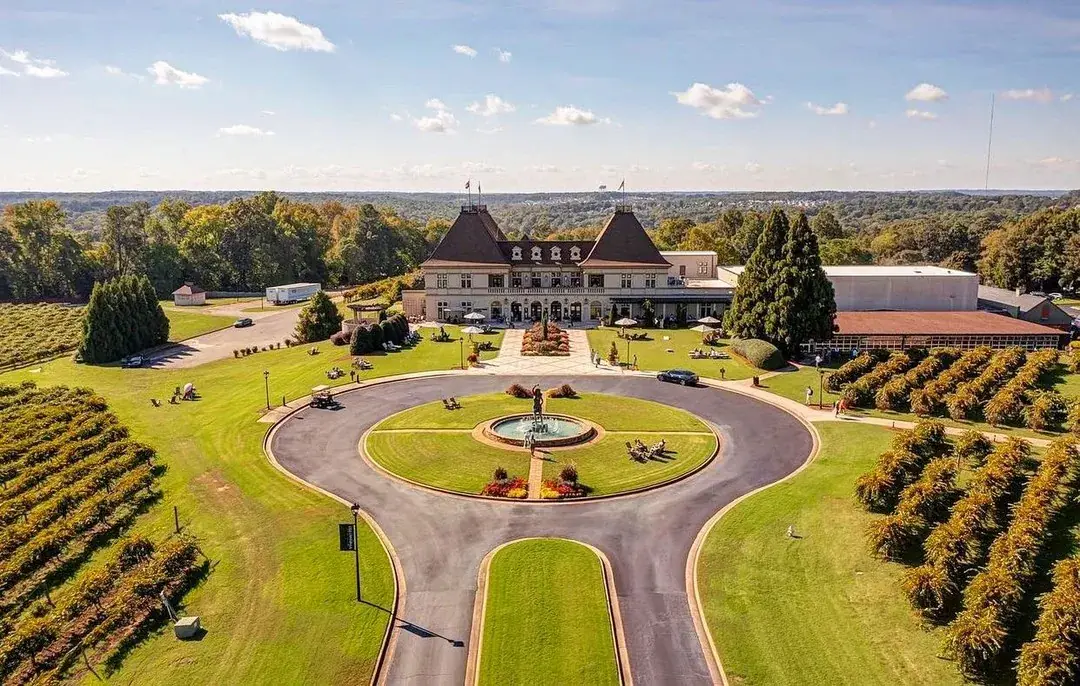
To define the best vineyard hotels in the US, one must move beyond the “Scenic Fallacy.” It is common to mistake a beautiful view of a vineyard for a high-quality vineyard hotel experience. However, a true estate hotel is distinguished by its “Operational Proximity.” This refers to how deeply the hospitality team is integrated with the viticultural team. If the concierge cannot speak to the current state of the veraison or if the restaurant list lacks library vintages from the surrounding acres, the property is merely a hotel in a field, not a vineyard estate.
From a systemic perspective, these properties face a “Dual-Mission Constraint.” They must operate as high-yield agricultural businesses while simultaneously providing a serene, quiet environment for guests. This creates a friction point: farming is loud, labor-intensive, and often involves early-morning machinery. The best hotels manage this through architectural cleverness—using topographical shields to dampen sound—and through “Service Transparency,” where the rhythms of the farm are treated as part of the guest’s education rather than an inconvenience to be hidden.
Oversimplification in this sector often leads to the “Prestige Trap,” where travelers flock to the most expensive name-brand resorts in Napa Valley, assuming cost equals quality. While several Napa institutions are undoubtedly world-class, the rapid maturation of regions like Washington’s Walla Walla Valley or New York’s Finger Lakes has introduced properties that rival California in technical execution and surpass it in intimacy. Authority in this space requires looking at the “Full Cycle Value”—how the property performs during the “quiet” months of winter pruning just as much as during the “spectacle” of the autumn crush.
The Evolution of American Viticultural Hospitality
The American Vineyard Hotel has progressed through several distinct historical phases:
The Innkeeper Era (1970s–1980s)
Early wine tourism was largely functional. Accommodations were auxiliary to the tasting room. These were “Inns” in the traditional sense—quaint, often Victorian in style, and focused on basic overnight stays for regional travelers.
The Resort Formalization (1990s–2005)
With the global explosion of California wine prestige, the “Resort” model took hold. Developers began building large-scale properties with spas, golf courses, and multiple dining outlets. During this time, the vineyard often became a backdrop—a visual amenity rather than a functional part of the guest’s stay.
The Era of “Estate Integration” (2010–Present)
The current paradigm is a return to the land, but with extreme luxury. Modern leaders in the field focus on “hyper-locality.” Architecture now emphasizes indoor-outdoor flow, and “Agri-tourism” has been rebranded as “Experiential Education.” We are seeing the rise of the “Sommelier-Led Resort,” where every staff member is a trained educator on the specific terroir of the property.
Conceptual Frameworks for Evaluating Estate Stays
When assessing the top tier of these hotels, three mental models are particularly useful:
1. The “Terroir-to-Table” Gradient
This measures the physical and culinary distance between the raw product and the guest. In a premier vineyard hotel, the produce from the estate garden and the grapes from the surrounding blocks should dictate 80% of the sensory experience. If the menu is flying in generic luxury ingredients like wagyu from Japan rather than utilizing local lamb or estate-grown aromatics, the “Sense of Place” is diluted.
2. The “Atmospheric Integrity” Framework
A vineyard is an industrial space. The hotel must balance this “Industrial Reality” with “Hospitality Serenity.” Evaluation should focus on how the hotel mitigates the noise of frost fans or harvest tractors without isolating the guest from the authentic agricultural atmosphere.
3. The “Library Access” Model
The value of a vineyard hotel is tied to its “Cellar Depth.” Does the property offer guests exclusive access to vintages that are no longer available in the retail market? A hotel that only pours its current releases is missing the opportunity to provide the “Vertical Insight” that defines a world-class wine destination.
Primary Categories of Vineyard Accommodations
The landscape of the best vineyard hotels in the US is diverse, categorized by their relationship to the vine and the scale of their operations.
Decision Logic: The “Education vs. Relaxation” Pivot
If the primary goal is technical wine education, a Monopole Estate in a region like Sonoma’s Alexander Valley offers the most depth. However, if the goal is broad relaxation with high-end amenities, a Regional Hub like the luxury resorts in downtown Healdsburg provides a better balance of wine access and urban convenience.
Real-World Scenarios: From Harvest to Dormancy
The “Crush” Experience (September–October)
Visiting during harvest provides the most kinetic energy. Guests see the sorting tables and the press in action.
-
Operational Reality: The resort is at maximum capacity; service may be slower, and traffic in the region is at its peak.
-
Strategic Adjustment: The best hotels provide “Harvest Concierges” who manage the chaos, ensuring guests can observe the work without being in the way of the cellar crew.
The “Dormant” Season (January–February)
The vines are bare, and the weather is often cool or rainy.
-
Operational Reality: Rates are lower, and the “Educational Access” is higher. Winemakers have more time for private conversations.
-
Strategic Adjustment: Focus on properties with robust indoor infrastructure—large hearths, expansive tasting libraries, and comprehensive spa facilities. This is the “Connoisseur’s Window.”
The “Bud Break” (April–May)
The vineyard is at its most delicate as new growth appears.
-
Operational Reality: High risk of frost; frost fans may run at night.
-
Strategic Adjustment: Select properties that offer “Ecological Tours” focused on sustainable farming and the biology of the vine.
Financial and Resource Dynamics of Premium Stays
The cost of staying at the best vineyard hotels in the US is influenced by “Agricultural Overhead” and “Seasonal Compression.”
Opportunity Cost: Choosing a vineyard hotel over an urban one involves a sacrifice of “Ancillary Variety.” You are trading the ability to walk to ten different restaurants for the ability to walk into a single, high-pedigree vineyard.
Strategic Tools and Support Systems for Guests
To navigate these properties successfully, guests should utilize specific “Engagement Strategies”:
-
The Pre-Arrival Sommelier Consultation: Many top-tier hotels allow you to consult with the wine director before arrival to “pre-cellar” your stay.
-
AVA Maps and Topographical Apps: Use digital mapping tools to understand the specific “Block” your room overlooks.
-
Shipping Logistics Services: For guests who purchase wine, the best hotels offer in-house shipping and “Cold Chain” logistics to ensure bottles reach home safely.
-
The “Club Member” Backdoor: Often, being a member of the winery’s club unlocks “Unlisted Suites” that are not available on the public reservation system.
-
Seasonal “Release” Calendars: Align your stay with a specific bottling release to participate in “Release Weekend” festivities.
Risk Landscape and Failure Modes in Wine Travel
The pursuit of the perfect vineyard stay is fraught with “Atmospheric Risks”:
-
The “Event Saturation” Risk: High-end vineyard hotels are prime locations for weddings. A “Peak Season” stay can be ruined by a private event that closes the flagship restaurant or fills the pool area with noise. Mitigation: Inquire about “Full-Property Buyouts” before booking.
-
The “Agricultural Hazard” Risk: Smoke taint from regional wildfires has become a significant risk in the West. Mitigation: Review the property’s “Force Majeure” or cancellation policies regarding air quality.
-
The “Disconnection” Failure: A hotel that provides a luxury room but fails to provide “Vineyard Literacy.” You leave having slept well but knowing no more about the wine than when you arrived.
Governance, Maintenance, and Long-Term Adaptation
The best vineyard hotels in the US operate under a rigorous “Governance of Terroir.” This means the hotel’s expansion cannot compromise the agricultural integrity of the vineyard.
-
Monitoring Land Use: Leading properties have strict limits on building footprints to prevent “Vineyard Erosion.”
-
Review Cycles: Properties undergo seasonal recalibrations. The transition from “Summer Service” to “Winter Comfort” is a systemic shift in the hotel’s operating manual.
-
Adjustment Triggers: If a winery increases production beyond a certain “Boutique Threshold,” the hotel must often adjust its service model to handle the increased “Commercial Traffic.”
Measurement and Evaluation of the Guest Experience
How do we quantify “The Best”? We look for specific qualitative and quantitative signals.
-
Leading Indicator: “The Staff-Vineyard IQ.” If you ask a housekeeper about the vintage and they know the answer, the property has achieved “Total Organizational Alignment.”
-
Lagging Indicator: “Library Vintage Availability.” A property’s prestige is inversely proportional to the amount of “Current Release” wine it relies on.
-
Qualitative Signal: “The Olfactory Profile.” Does the property smell like a hotel (bleach and perfume) or like a vineyard (must, earth, and oak)? The latter indicates a lack of over-processing.
Common Misconceptions and Industry Myths
-
Myth: Napa is the only place for “True” vineyard luxury.
-
Correction: While Napa set the standard, Oregon’s Willamette Valley and Washington’s Walla Walla now offer comparable—and often more intimate—luxury experiences.
-
-
Myth: You must be a “Wine Expert” to enjoy these hotels.
-
Correction: The best hotels are designed as “On-Ramps.” Their job is to educate the novice without condescension while challenging the expert.
-
-
Myth: Vineyard hotels are best in the summer.
-
Correction: Summer is often the most stressful time for the land and the staff. Fall and Spring offer more “Atmospheric Drama.”
-
-
Myth: All rooms have “Vineyard Views.”
-
Correction: Many older or “Hillside” properties have rooms that face the forest or the courtyard. Always verify “Vantage Point” during booking.
-
-
Myth: The “Tasting” is the main event.
-
Correction: In a true estate stay, the “Tasting” is just one component. The vineyard walks, the cellar tours, and the pairing dinners are equally vital.
-
Ethical and Contextual Considerations
The rise of the “Vineyard Hotel” raises questions about “Land Gentrification.” As agricultural land is converted to luxury hospitality, the cost of farming increases. The best hotels address this by being “Active Stewards.” This includes implementing sustainable water management, supporting local agricultural labor with fair housing, and ensuring that the “Hospitality Footprint” does not permanently degrade the “Viticultural Potential” of the soil. Guests should look for properties with “B-Corp” certifications or clear sustainability mandates.
Conclusion: The Future of the American Estate
The best vineyard hotels in the US are no longer just places to sleep; they are the front lines of American agricultural storytelling. As we look toward the next decade, the focus will shift even further away from “Excess” toward “Essentialism”—design that honors the earth, service that prioritizes knowledge, and a commitment to the long-term health of the vineyard.
The ultimate vineyard hotel is one where the boundary between the guest and the land is as thin as possible. It is a place where you wake up to the smell of the morning mist on the leaves and go to sleep knowing the history of the soil beneath your feet. In the landscape of American luxury, these properties represent a unique synthesis of industry and art, providing a sanctuary that is as intellectually stimulating as it is physically restorative. The future belongs to those who can master this balance, protecting the heritage of the vine while elevating the standards of the stay.