Luxury Wine Vacations America: A Definitive 2026 Editorial Reference
The intersection of high-end domestic viticulture and bespoke travel has matured into a multi-billion-dollar sector that demands more than superficial analysis. In the American context, the evolution of viticultural travel has moved away from the transactional nature of the “tasting room visit” toward a holistic, experiential model. This shift mirrors a broader movement in the global luxury market where the primary currency is no longer just access, but intellectual and sensory depth. To understand the current landscape is to recognize a sophisticated network of hospitality, agriculture, and logistical precision that defines the modern standard for domestic exploration.
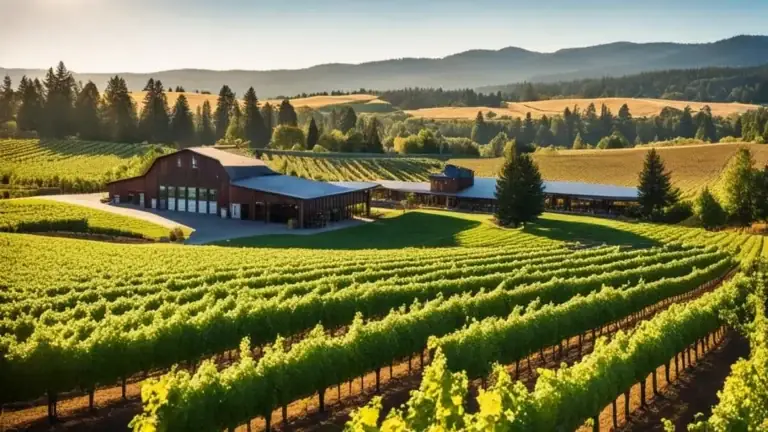
The complexity of these experiences is rooted in the immense geographical and microclimatic diversity of the United States. A high-altitude retreat in the Walla Walla Valley operates under entirely different logistical and cultural imperatives than a historic estate in the Virginia Piedmont or a modernist pavilion in the Santa Lucia Highlands. Each American Viticultural Area (AVA) presents a unique set of constraints—be it the water rights of the West or the humidity management of the East—which in turn shapes the hospitality architecture. The most authoritative travel assets are those that do not fight these regional realities but incorporate them into the guest’s narrative.
In the current market, “luxury” is increasingly measured by technical transparency. Discerning travelers are moving beyond the curated marketing scripts of the 1990s and 2000s; they are seeking a “vertical” understanding of the region. This involves an interest in soil chemistry, clonal selections, and the specific mechanics of regenerative farming. This pillar article provides a systemic deconstruction of the components that constitute excellence in this field, serving as a definitive reference for those seeking to understand the structural and philosophical underpinnings of high-fidelity viticultural travel in the United States.
Understanding “luxury wine vacations ” in America.
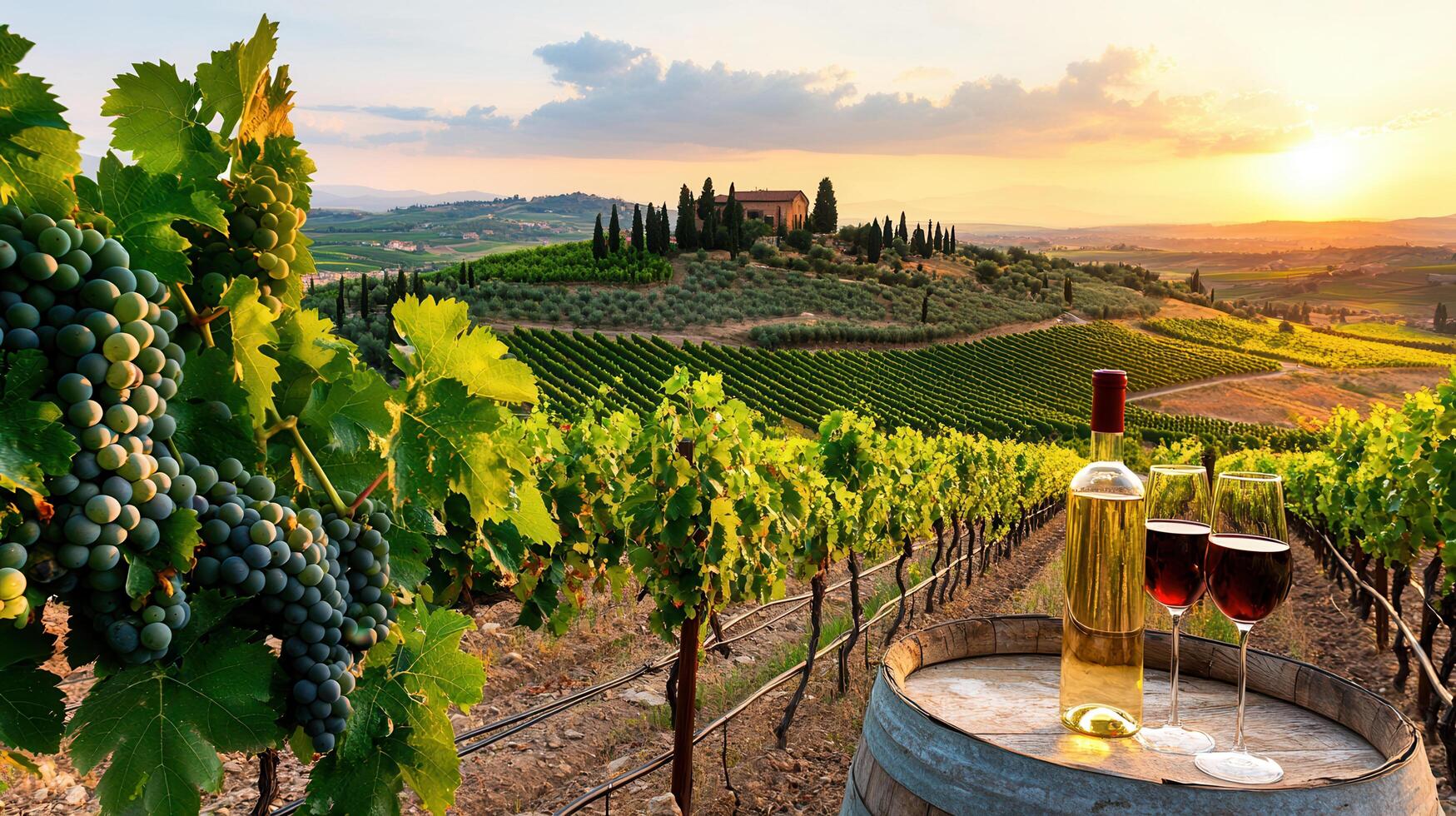
Identifying the luxury wine vacations America offers today requires a departure from traditional “star-rating” systems. A common misunderstanding is that luxury is synonymous with opulence or seclusion. In the context of viticultural travel, the opposite is often true. The most significant experiences are those that act as connective tissue between the guest and the active, often noisy, realities of a working farm.
From a multi-perspective view, these vacations must satisfy three distinct operational demands:
-
The Educational Mandate: The experience must provide technical insight that moves beyond the tasting room script. If the guest leaves without a deeper understanding of the local geology or the specific stressors of the vintage, the “luxury” is merely cosmetic.
-
The Sensory Requirement: The environment must maximize “terroir exposure”—using architecture and service to anchor the traveler in the specific micro-climate of the AVA.
-
The Agricultural Imperative: The travel infrastructure must not interfere with the vineyard’s production cycle (harvest, pruning, spraying).
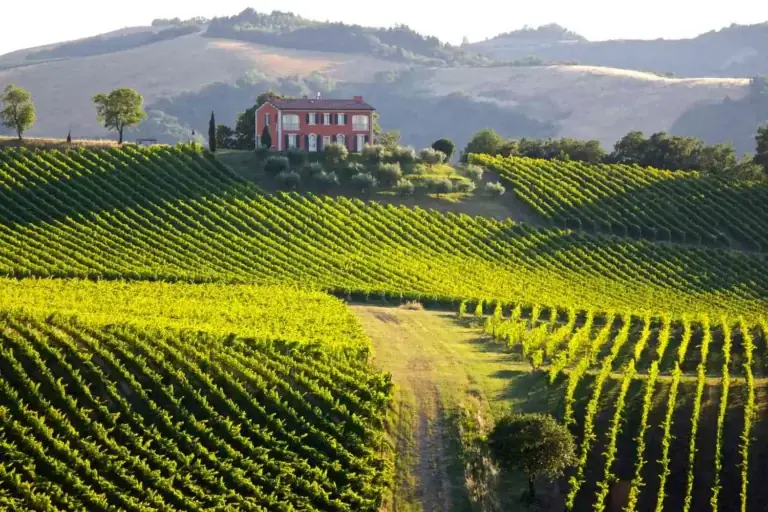
Oversimplification in this sector often leads to the “European Emulation” trap, where American properties attempt to mimic the aesthetics of Tuscany or Bordeaux regardless of local context. A true authority asset in the U.S. market embraces “vernacular honesty”—the industrial agrarianism of the Pacific Northwest, the coastal modernism of Central California, or the historic masonry of the Mid-Atlantic. To evaluate these vacations accurately, one must look at “Operational Seamlessness”: how well the itinerary manages the friction between luxury service and the dust, weather, and labor of the vineyard.
Historical and Systemic Evolution of Domestic Viticultural Travel
The trajectory of American wine travel has moved through four distinct eras, each reflecting the broader maturation of the U.S. wine industry.
The Accessory Era (1960s–1980s)
In the early days of the domestic boom, lodging was almost entirely auxiliary. Wineries maintained small cottages primarily for distributors and personal friends. The focus was 100% on the bottle; the bed was a matter of convenience. Travel was centered on the “tasting flight,” a transactional encounter that ended at sunset.
The Mediterranean Inversion (1990s–2005)
As American wine gained global parity, developers began building grand, European-style resorts. This was the era of the “Palazzo” in the valley. While these hotels brought high-end service standards, they often felt disconnected from the actual dirt. They were destination resorts that happened to have a view of grapes, rather than being “of” the vineyard.
The Boutique Integration (2006–2018)
A shift toward authenticity led to the rise of smaller, high-design properties. These destinations began to prioritize maker culture, incorporating local artisans and farm-to-table dining. This was the first time “curation” became as important as “amenity.” The travel experience began to include vineyard walks and “barrel tastings,” moving the guest from the counter to the cellar.
The Era of Contextual Immersion (2019–Present)
The current paradigm is defined by regenerative hospitality. The leading experiences are now designed as part of the ecosystem. This involves LEED-certified architecture, on-site water reclamation for vineyard irrigation, and a “transparent cellar” approach where the guest is invited into the technical labor of winemaking.
Conceptual Frameworks and Mental Models for Evaluation
To move beyond superficial reviews, one can apply specific mental models to assess the quality of a viticultural vacation.
1. The “Crush-to-Quiet” Ratio
This framework measures how a vacation manages the volatility of the harvest season. A top-tier experience provides a different, yet equally compelling, narrative during the “dormant” winter season as it does during the chaotic “crush.” If a destination feels “closed” conceptually when the vines are bare, it lacks foundational integrity.
2. The “Sommelier-as-Curator” Model
In this model, the wine program is not a list, but a narrative arc. It should include “verticals” (the same wine across different years) and “horizontals” (different wines from the same year and region). An authoritative vacation will have a wine director whose knowledge of the neighborhood’s soil chemistry matches the winemakers’.
3. The “Biophilic Boundary” Framework
Luxury in this sector is defined by how the building interacts with the outside. This framework evaluates the “liminal spaces”—patios, floor-to-ceiling glass, and outdoor showers. The goal is to minimize the psychological distance between the guest and the vineyard while maintaining thermal and acoustic comfort.
Key Categories of High-Fidelity Wine Travel
The landscape of luxury wine vacations in America can be categorized by the traveler’s relationship to the winemaking process.
Decision Logic: Technical vs. Atmospheric
When selecting a vacation, travelers must decide if they are seeking “Technical Depth” (access to labs, barrel rooms, and winemakers) or “Atmospheric Respite” (views, spas, and silence). The rarest experiences manage to provide both without one compromising the other.
Detailed Real-World Scenarios and Operational Realities
The “Harvest Intrusion”
A traveler books a flagship suite in September, expecting serenity, but is met with 24-hour tractor noise and the pungent smell of fermenting must.
-
Success Mode: The destination provides “Harvest Kits” (headlamps, refractometers) and hosts night-harvest viewing sessions, turning the nuisance into an educational asset.
-
Failure Mode: The property attempts to hide the harvest, leading to guest frustration and a “sanitized” experience that feels dishonest.
The “Micro-Climate” Failure
A property in the Willamette Valley or the Finger Lakes fails to account for the sudden, dramatic shifts in moisture and temperature.
-
Operational Reality: Top vacations utilize advanced HVAC and “mud-room” logistics that allow guests to move between the damp vineyard and the luxury interior without friction.
-
Second-Order Effect: Properties that master this “wet-weather luxury” see much higher occupancy in the shoulder seasons.
Planning, Cost, and Resource Dynamics
The pricing of high-fidelity viticultural travel is rarely a reflection of room square footage alone. Instead, it is a reflection of “Access.”
The “Allocation” Strategy: Many of the most significant properties prioritize travelers who are members of the associated winery’s “wine club.” This creates a “subscription-hospitality” model where the vacation is an extension of a long-term brand relationship rather than a one-off transaction.
Tools, Strategies, and Support Systems
To engage with these destinations at an authoritative level, certain tools and strategies are necessary:
-
Topographical Mapping: Using LiDAR-based apps to understand the slope and aspect of the vineyard before arrival.
-
The “Pre-Arrival Cellar Audit”: Communicating with the on-site sommelier 14 days before requesting specific vintages that need “breathing time.”
-
Climate Tracking: Monitoring the “Diurnal Shift” (the temperature difference between day and night) to pack for the specific thermal reality of the valley.
-
Direct-to-Consumer (DTC) Shipping Logistics: Utilizing the hotel’s specialized shipping permits to send finds back home without thermal damage.
-
Technical Vineyard Tours: Requesting a walk with the Viticulturist rather than the Hospitality Lead for a deeper understanding of soil health.
Risk Landscape and Failure Modes
The viticultural lifestyle is subject to specific systemic risks that can degrade the quality of a vacation:
-
The “Event Overlap” Risk: High-end hotels often host massive weddings. A failure mode occurs when public spaces are closed off, leaving individual travelers feeling secondary.
-
Agricultural Taint: The necessary use of organic sprays or sulfur in the vineyard can create “olfactory dissonance” for guests not prepared for the realities of farming.
-
Gentrification Burnout: When a region becomes too focused on luxury lodging, it can drive out the very workforce (cellar hands, pickers) that makes the region viable.
Governance, Maintenance, and Long-Term Adaptation
For a destination to remain in the “top” tier, it must employ rigorous long-term governance.
-
Annual Terroir Audits: Reviewing how guest foot traffic and construction are impacting the health of the vines.
-
Service Recovery Protocols: Training for natural events (wildfire smoke, frost fans running all night) to ensure guest trust remains intact.
-
Adaptive Architecture: The ability to modify buildings to account for changing climate patterns—such as increased cooling needs in regions that were historically temperate.
Measurement, Tracking, and Evaluation
How does an editorial authority measure the “quality” of a viticultural vacation?
-
Leading Indicator: The “Staff-to-Vine” literacy rate. Ask a front-desk agent about the current “phenological stage” of the grapes (bud break, flowering, veraison). Their ability to answer is a signal of deep integration.
-
Lagging Indicator: The “Re-visit Velocity.” How many guests return specifically for the dormant season versus the peak season?
-
Qualitative Signal: The “Acoustic Signature.” Does the property allow the sounds of the vineyard (birds, wind, distant tractors) to be heard, or is it muffled by generic background music?
Common Misconceptions and Industry Myths
-
Myth: The best vacations are only in Napa.
-
Correction: The most innovative “high-depth” experiences are currently emerging in the Walla Walla Valley (WA), the Blue Ridge Mountains (VA), and the Leelanau Peninsula (MI).
-
-
Myth: “Estate-Grown” on the menu means everything is from the backyard.
-
Correction: Often, this is a marketing term. A true authority vacation will provide a map showing exactly which field the carrots, honey, and grapes originated from.
-
-
Myth: You need to be a wine expert to enjoy these trips.
-
Correction: The best vacations function as “on-ramps” for knowledge. They should be able to explain complex viticulture without being patronizing.
-
Ethical and Practical Considerations
The expansion of viticultural travel brings a responsibility toward water ethics and labor integrity. The premier vacations are those that provide year-round housing and benefits for their agricultural staff, moving away from the “seasonal transient” model. Furthermore, the use of “greywater” systems to irrigate vineyards using hotel wastewater is becoming a non-negotiable standard for any property claiming “luxury” status in 2026.
Conclusion: The Synthesis of Earth and Sanctuary
The future of American wine travel lies in the move away from “hospitality as a service” toward “hospitality as an ecosystem.” The vacations that will endure are those that embrace the grit of the vineyard alongside the grace of the suite. They are the estates that teach us that a vintage is not just a liquid, but a record of a specific year’s weather, labor, and geology.
By prioritizing technical depth and regional honesty over generic luxury, these experiences ensure that the American wine country remains a site of profound cultural and sensory discovery. For the modern traveler, the ultimate luxury is not found in the silk of the sheets, but in the integrity of the soil.