Best Estate Stays United States: A Definitive 2026 Editorial Reference
The concept of the “estate stay” in the American context has transitioned from a mere hospitality sub-genre into a sophisticated expression of cultural and land-based authority. Historically, an estate was defined by its enclosure and its economic self-sufficiency—a tract of land where residence and resource management were inextricably linked. Today, the modern estate functions as a portal into “curated permanence.” These are not merely high-end hotels; they are operational landscapes where guests interact with legacy systems of agriculture, conservation, and architectural history.
Analyzing the current market requires a move beyond the superficial metrics of luxury. In the United States, the geography of prestige has expanded from the traditional Gilded Age corridors of the Northeast to include regenerative ranches in the Mountain West, viticultural compounds in the Pacific corridors, and historical agrarian enclaves in the Deep South. The complexity of these stays lies in the “Atmospheric Governance” required to maintain a sense of private sanctuary while managing the heavy industrial or agricultural logistics that keep an estate viable.
As we navigate the mid-2020s, the benchmark for excellence has shifted toward “Topical Depth.” The discerning traveler or researcher is no longer satisfied with a sanitized version of rural life. There is a burgeoning demand for “Technical Transparency”—an understanding of how the timber is managed, how the heritage livestock are bred, or how the architectural integrity of a century-old manor is preserved against the pressures of modern climate volatility. This article serves as a definitive reference for deconstructing the mechanics, economics, and philosophies behind the most significant estate-based hospitality assets in the country.
Understanding “best estate stays united states”
To accurately define the best estate stays united states, one must first dismantle the “Hotel Fallacy.” This is the assumption that an estate stay is simply a luxury hotel with more acreage. In professional editorial terms, an estate stay is an “Integrated Land Asset” where the lodging is subordinate to the land’s primary identity—be it a working vineyard, a conservancy, or a historical monument. The misunderstanding of this sector often arises from a failure to recognize the operational friction between hospitality and land management.
A multi-perspective view reveals three competing priorities that define the sector’s quality:
-
The Conservationist Perspective: The stay must facilitate the long-term health of the ecosystem. If the hospitality component degrades the soil or water table, the estate’s authority is compromised.
-
The Historical Perspective: The estate must act as a “Temporal Anchor,” preserving specific architectural or cultural narratives that cannot be replicated by new builds.
-
The Guest Perspective: The requirement for “Unseen Friction.” The guest expects the comforts of a high-end residence without seeing the labor-intensive mechanics—the manure management, the forest thinning, or the constant structural repair—that make the estate possible.
Oversimplification risks in this domain are substantial. It is tempting to rank these destinations by their nightly rate or their proximity to major cities. However, a more rigorous analysis looks at “Systemic Authenticity.” A true estate stay provides the guest with “The Keys to the Kingdom,” allowing for a level of agency and exploration that is impossible in a standardized resort environment. If the guest is restricted to a manicured “hospitality zone,” the experience is a simulation, not a true estate stay.
The Systemic Evolution of the American Estate
The trajectory of the American estate has moved through distinct phases, each leaving a fingerprint on the current hospitality landscape.
The Gilded Age Foundations (1870–1920)
This era produced the “Great Houses” of the Berkshires, the Hudson Valley, and Newport. These were statements of industrial wealth, often mimicking European aristocracies. Many of today’s premier estate stays are the result of the adaptive reuse of these properties, which survived the mid-century decline through careful transition into trust-based or hospitality-driven models.
The Rise of the Gentleman Farmer (1930–1960)
Post-Depression, a new model emerged: the productive estate. Wealthy urbanites sought “Agrarian Sanctuaries” where they could experiment with breeding programs and horticulture. This period established the “Farm-to-Table” infrastructure that many modern estates now leverage as a luxury amenity.
The Conservation and Viticultural Pivot (1970–2010)
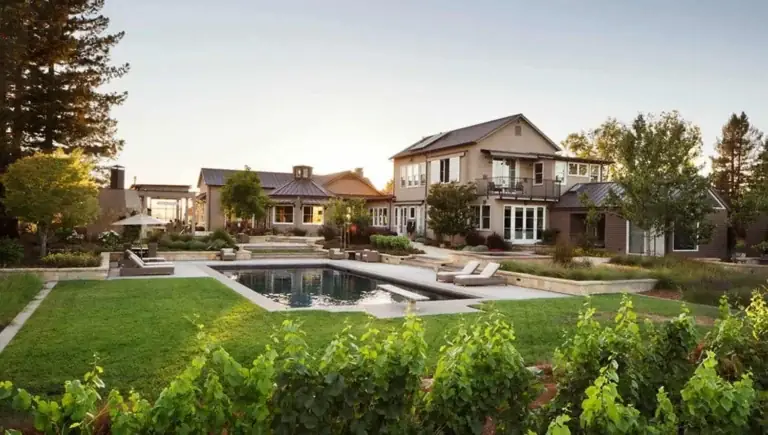
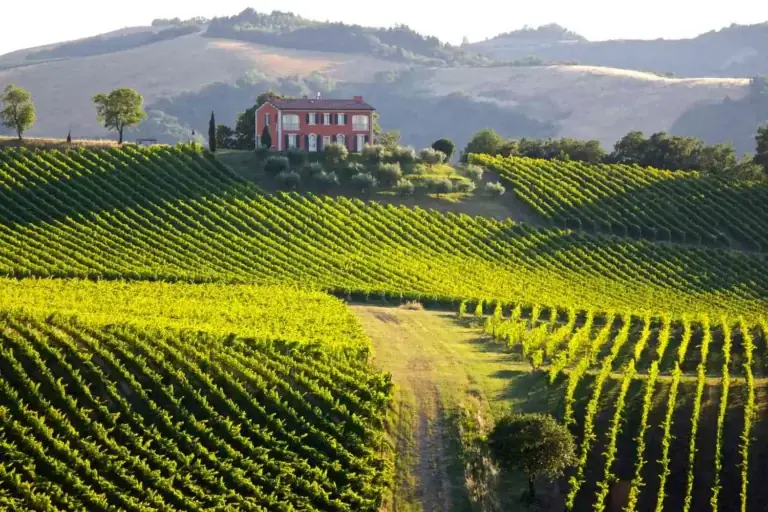
As environmental awareness grew, estates began to define themselves through their “Stewardship Footprint.” In California, Oregon, and Washington, the “Winery Estate” became the dominant model, integrating hospitality into the very rows of the vineyard. In the West, “Conservation Ranches” emerged, where the “Product” was no longer just cattle, but a restored ecosystem that guests could inhabit.
Conceptual Frameworks and Mental Models
When evaluating the sophistication of an estate stay, these frameworks help categorize the depth of the engagement.
1. The “Ownership of Experience” Model
This framework measures the degree of autonomy a guest possesses. In a “Low Agency” estate, guests are shuttled to pre-timed activities. In a “High Agency” estate—the gold standard—guests are given the resources (vehicles, maps, technical briefings) to interact with the land on their own terms, effectively “living” as the estate owner for the duration of their stay.
2. The “Biophilic Integration” Scale
This model evaluates the architectural relationship between the living quarters and the environment. Does the manor act as a fortress against nature, or is it a “Permeable Membrane”? The best estates use “Passive Engagement” strategies, such as outdoor sleeping porches, thermal stone flooring that retains the day’s heat, and olfactory gardens that bring the estate’s botanical identity indoors.
3. The “Legacy to Labor” Ratio
A mental model used to assess the “Weight of History.” An estate with a high ratio has preserved its original labor structures—stables, smokehouses, and root cellars—and utilizes them in modern hospitality. This creates a “Tactile Continuity” that newly constructed luxury resorts cannot simulate.
Key Categories of Estate Accommodations
The American landscape offers several distinct variations of the estate model, each with its own operational trade-offs.
Decision Logic: Navigating the Estate Selection
Choosing the right estate requires a “Resource Alignment” check. If the visitor seeks “Deep Silence,” a Conservation Ranch or Mountain Retreat is superior to a Working Viticultural Estate, where tractors and harvest crews operate on a 24-hour cycle. Conversely, if the visitor seeks “Cultural Density,” the Historic Manor provides a level of architectural and social history that a remote ranch cannot match.
Detailed Real-World Scenarios and Operational Realities
The “Adaptive Reuse” Structural Conflict
A 19th-century estate in Virginia is converted into a luxury stay.
-
The Constraint: Local historical societies prevent the installation of modern HVAC systems.
-
Failure Mode: Guests experience discomfort during a summer heatwave, leading to negative reviews.
-
Success Mode: The estate utilizes “Traditional Cooling”—restoring original transoms, using thick masonry for thermal mass, and educating guests on the “Rhythm of the House,” turning the lack of AC into a feature of historical authenticity.
The “Regenerative Ranch” Predator Conflict
A luxury ranch in Montana focuses on bison restoration and wolf-friendly cattle practices.
-
The Conflict: Guests expect to wander freely, but active predator management is in effect.
-
Response: The estate implements a “Safety Literacy” program, providing guests with telemetry tools to “track” the wolves from a distance, integrating the danger into a high-end educational narrative.
Planning, Cost, and Resource Dynamics
Entry into the world of elite estate stays involves high capital and significant opportunity costs.
Resource Variability: The “True Cost” of these stays is often found in the “Expertise Upsell.” While the room may have a base price, access to the “Master Falconer,” the “Lead Viticulturist,” or the “Estate Historian” is the resource that defines the authority of the stay.
Tools, Strategies, and Support Systems for Engagement
Navigating the best estate stays united states requires a specific set of engagement tools:
-
LiDAR Topographical Maps: Used by guests at large ranches to understand elevation changes for hiking and wildlife spotting.
-
Climate-Controlled Gear Lockers: Specialized storage for guests who bring their own technical equipment (fly-fishing rods, high-end optics).
-
Modern estates deploy Digital ‘Land-use’ Dashboards to stream real-time agricultural data directly to the guest. These interfaces track mower trajectories and herd movements, transforming the property’s daily labor into a transparent, navigable map.
-
Heritage Seed Libraries: Estates that allow guests to participate in horticulture through the tracking of rare cultivars.
-
Direct-to-Home “Harvest Logs”: Systems that allow guests to ship estate-grown products (wine, oil, wool) back home, maintaining the connection to the land post-stay.
Risk Landscape and Failure Modes
The “Estate Ecosystem” is fragile and subject to compounding risks that can destroy the lifestyle value:
-
The “Disney-fication” Decay: When an estate focuses too much on “Guest Experience” at the expense of its “Primary Purpose.” If a working farm stops actually farming, it becomes a theme park, losing its authority.
-
Ecological Overshoot: Managing too many guests can degrade the very land that makes the estate valuable. Compaction of soil in a vineyard or over-fishing of a private stream are common failure modes.
-
Individual vision often handicaps estate longevity. A shift in ownership eviscerates the ‘Soul’ of the property overnight unless the estate codifies its values into a permanent governance structure.
Governance, Maintenance, and Long-Term Adaptation
Long-term viability of an estate stay requires a “Multi-Layered Governance” model:
-
The Environmental Audit: Annual reviews of soil health, water purity, and biodiversity indices.
-
The Architectural Review: Monitoring the decay of historical materials and ensuring that any “Adaptive Reuse” doesn’t compromise the original aesthetic.
-
The Community Compact: Estates do not exist in a vacuum. Governance must include relationships with local labor, neighboring farmers, and regional wildlife authorities.
The Adaptation Checklist:
-
Quarterly “Friction Review” (Where do guests and farm operations clash?).
-
Decadal “Master Plan” (How does the estate respond to 50-year climate projections?).
-
Staff “Institutional Knowledge” Transfer (Ensuring the head gardener’s 30 years of experience is documented).
Measurement, Tracking, and Evaluation
How do we measure the “Excellence” of an estate stay?
-
Quantitative Signal: “Renewal of Tenancy.” The percentage of guests who book the same “Window” every year. High-end estates often have a 60% or higher repeat rate.
-
Qualitative Signal: “Staff Tenure.” In the hospitality industry, high turnover is the norm. An estate where the “Gamekeeper” or “Estate Manager” has a 20-year tenure is a sign of operational stability and deep knowledge.
-
Leading Indicator: “Bio-Diversity Index.” For a conservation-based estate, the return of a “Keystone Species” is a better indicator of success than any financial metric.
Common Misconceptions and Industry Myths
-
Myth: “The more expensive the stay, the better the service.”
-
Correction: In an estate context, you are often paying for “Privacy” and “Land Access,” not a 24-hour butler. True luxury here is often the absence of staff.
-
-
Myth: “Estates are only for the elderly or the sedentary.”
-
Correction: The modern American estate is increasingly “Active.” It is built for the “Technical Explorer” who wants to participate in the labor of the land.
-
-
Myth: “Oldest is always best.”
-
Correction: A 19th-century manor that hasn’t been technically updated can be a logistical nightmare. The best estates are those that blend “Historical Skin” with “Modern Gut.”
-
Ethical and Contextual Considerations
The rise of “Ultra-Exclusive” estate stays brings up the ethical question of “Land Concentration.” As these destinations consolidate vast tracts of land for high-end hospitality, the impact on local property taxes and housing availability can be significant. The most “Ethical” estates are those that implement “Permeable Boundaries”—offering educational programs for local schools, maintaining public access to specific trails, or functioning as regional “Climate Labs” that share their findings with the broader community.
Conclusion: The Synthesis of Heritage and Modernity
The evolution of the best estate stays united states mirrors a broader societal shift toward “Place-Based Identity.” As the world becomes more digitized and transient, the estate offers a rare commodity: a sense of belonging to a specific, well-managed piece of the earth.
The future of this sector lies in “Integrity over Iconography.” The estates that will thrive are those that reject the superficial trappings of luxury in favor of a deep, often challenging, engagement with the land. Whether it is the patient aging of a Napa Cabernet or the decade-long restoration of a prairie in Kansas, the estate stay is ultimately a testament to the power of long-term thinking. For the guest, it is an opportunity to step out of “Short-Term Time” and into the “Deep Time” of the landscape.