Top Wine Country Hotels in the US: A Definitive 2026 Editorial Guide
The American viticultural landscape has matured into a complex intersection of agriculture, architecture, and high-fidelity hospitality. For decades, the concept of a vineyard visit was centered on the tasting room—a brief, transactional encounter with a vintage. Today, the sector has transitioned into a “destination-first” philosophy. The lodging component is no longer an auxiliary service but a core atmospheric asset that defines the traveler’s relationship with the land. To analyze the premier tier of these establishments requires a look beyond simple luxury; it necessitates an evaluation of how a property integrates into the biological and economic cycles of its specific American Viticultural Area (AVA).
Complexity arises when one considers the vast geographical and climatic differences across the United States. A high-elevation retreat in the Santa Cruz Mountains operates under a different set of logistical and aesthetic imperatives than a historic estate in the Virginia Piedmont or a modernist pavilion in the Walla Walla Valley. The most authoritative properties are those that reject a standardized “resort” template in favor of an architecture that responds to the light, soil, and wind patterns of the site. This regional specificity is what separates a generic luxury hotel from a true viticultural landmark.
In the current market, “prestige” is increasingly measured by technical transparency and environmental stewardship. Discerning travelers now seek properties that offer a “vertical” understanding of the region—meaning an experience that reaches from the geological sub-layers of the vineyard up to the final culinary expression on the table. This pillar article provides a systemic deconstruction of the components that constitute excellence in this field, serving as a definitive reference for understanding the structural and philosophical underpinnings of the most significant viticultural lodging in the country.
Understanding “top wine country hotels in the US.”
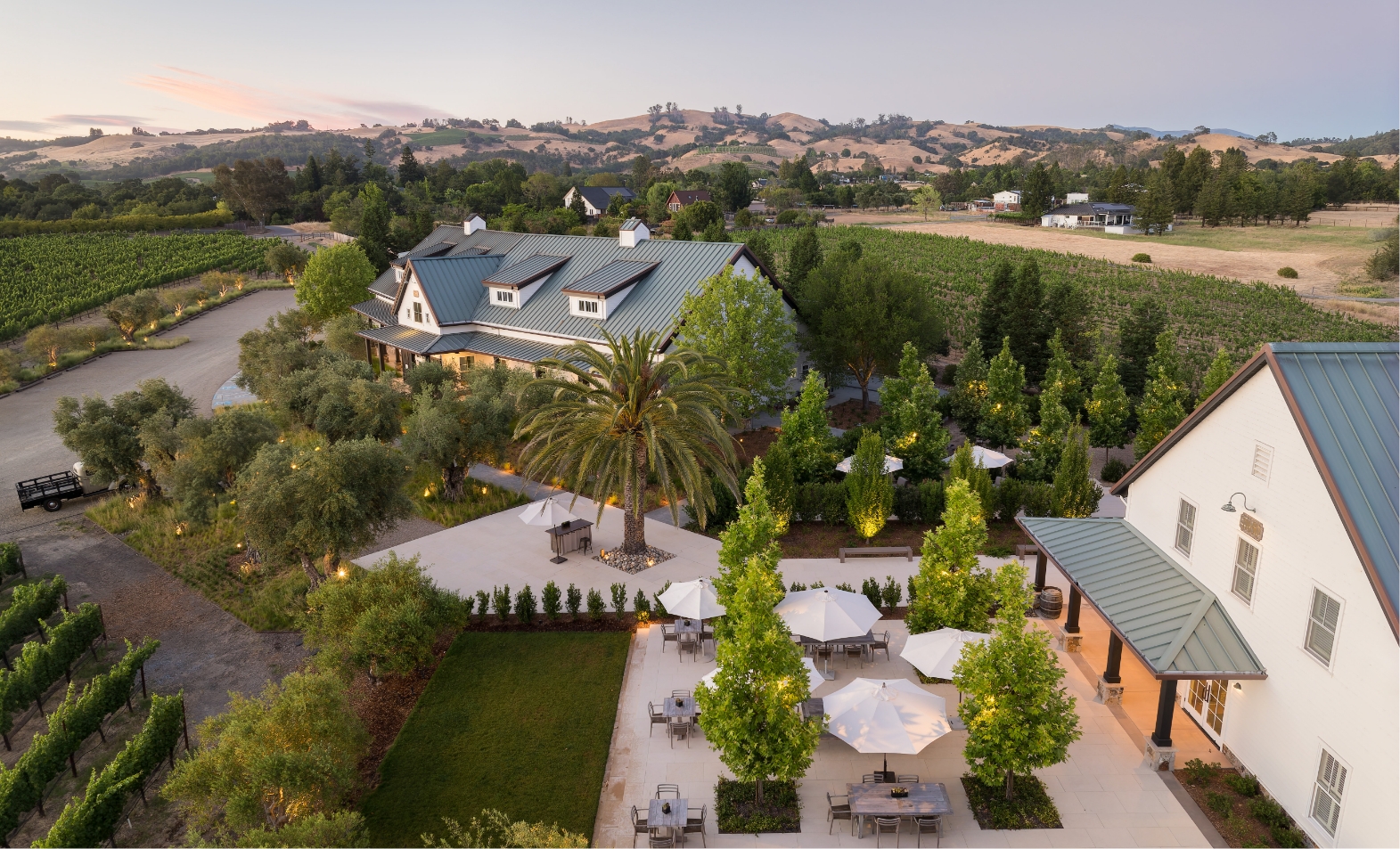
Identifying the top wine country hotels in the US requires a departure from traditional “star-rating” systems, which often prioritize redundant amenities over site-specific depth. A common misunderstanding is the “isolation fallacy”—the idea that a great hotel should be a secluded bubble. In the context of viticultural hospitality, the opposite is often true. The most significant properties are those that act as “connective tissue” between the guest and the active, often noisy, realities of a working farm.
From a multi-perspective view, these hotels must satisfy three distinct operational demands:
-
The Agricultural Imperative: The hotel must not interfere with the vineyard’s production cycle (harvest, pruning, spraying).
-
The Sensory Requirement: The architecture must maximize “terroir exposure”—using scent, light, and airflow to anchor the guest in the specific micro-climate.
-
The Educational Mandate: The property must provide a level of technical insight that moves beyond the “marketing script” of the tasting room.
Oversimplification in this sector often leads to the “Tuscan Emulation” trap, where American properties attempt to mimic European aesthetics regardless of local context. A true authority asset in the U.S. market embraces the “vernacular honesty” of its region—whether that is the agrarian industrialism of the Pacific Northwest or the refined coastal modernism of Central California. To evaluate these properties accurately, one must look at “Operational Seamlessness”: how well the hotel manages the friction between luxury service and the dust, weather, and labor of the vineyard.
Historical and Systemic Evolution of Domestic Wine Lodging
The evolution of American wine country lodging has moved through four distinct eras, reflecting the broader maturation of the U.S. wine industry.
The Era of the Accessory Guest House (1960s–1980s)
In the early days of the Napa and Sonoma boom, lodging was almost entirely auxiliary. Wineries maintained small cottages or converted farmhouses primarily for distributors and personal friends of the family. The focus was 100% on the bottle; the bed was a matter of convenience.
The Mediterranean Inversion (1990s–2005)
As American wine gained global parity, developers began building grand, European-style resorts. This was the era of the “Palazzo” in the valley. While these hotels brought high-end service standards, they often felt disconnected from the actual dirt. They were “destination resorts” that happened to have a view of grapes, rather than being “of” the vineyard.
The Boutique Integration (2006–2018)
A shift toward “authenticity” led to the rise of smaller, high-design properties. These hotels began to prioritize the “maker” culture, incorporating local artisans and farm-to-table dining. This was the first time “curation” became as important as “amenity.”
The Era of Contextual Immersion (2019–Present)
The current paradigm is defined by “Regenerative Hospitality.” The leading hotels are now designed as part of the ecosystem. This involves LEED-certified architecture, on-site water reclamation for vineyard irrigation, and a “transparent cellar” approach where the guest is invited into the technical labor of winemaking.
Conceptual Frameworks for Evaluating Estate Integrity
To move beyond superficial reviews, one can apply specific mental models to assess the quality of a viticultural hotel.
1. The “Crush-to-Quiet” Ratio
This framework measures how a property manages the volatility of the harvest season. A top-tier hotel provides a different, yet equally compelling, experience during the “dormant” winter season as it does during the chaotic “crush.” If a property feels “empty” or “closed” conceptually when the vines are bare, it lacks foundational integrity.
2. The “Sommelier-as-Curator” Model
In this model, the hotel’s wine program is not a list, but a “narrative arc.” It should include “verticals” (the same wine across different years) and “horizontals” (different wines from the same year and region). An authoritative hotel will have a wine director whose knowledge of the neighborhood’s soil chemistry matches the winemakers’.
3. The “Biophilic Boundary” Framework
Luxury in this sector is defined by how the building interacts with the outside. This framework evaluates the “liminal spaces”—patios, floor-to-ceiling glass, and outdoor showers. The goal is to minimize the psychological distance between the guest and the vineyard while maintaining thermal and acoustic comfort.
Key Categories of Wine Country Accommodations
The landscape of the top wine country hotels in the US can be categorized by their relationship to the winemaking process.
Decision Logic: Technical vs. Atmospheric
When selecting a property, travelers must decide if they are seeking “Technical Depth” (access to labs, barrel rooms, and winemakers) or “Atmospheric Respite” (views, spas, and silence). The rarest properties—the true leaders—manage to provide both without one compromising the other.
Detailed Real-World Scenarios and Operational Realities
The “Harvest Intrusion”
A guest books a flagship suite in September, expecting serenity, but is met with 24-hour tractor noise and the pungent smell of fermenting must.
-
Success Mode: The hotel provides “Harvest Kits” (headlamps, refractometers) and hosts night-harvest viewing sessions, turning the “nuisance” into an educational asset.
-
Failure Mode: The hotel attempts to hide the harvest, leading to guest frustration and a “sanitized” experience that feels dishonest.
The “Micro-Climate” Failure
A property in the Willamette Valley (OR) or the Finger Lakes (NY) fails to account for the sudden, dramatic shifts in moisture and temperature.
-
Operational Reality: Top hotels utilize advanced HVAC and “mud-room” logistics that allow guests to move between the damp vineyard and the luxury interior without friction.
-
Second-Order Effect: Properties that master this “wet-weather luxury” see much higher occupancy in the shoulder seasons.
Planning, Cost, and Resource Dynamics
The pricing of the top wine country hotels in the US is rarely a reflection of room square footage alone. Instead, it is a reflection of “Access.”
The “Allocation” Strategy: Many of the most significant properties prioritize guests who are members of the associated winery’s “wine club.” This creates a “subscription-hospitality” model where the hotel is an extension of a long-term brand relationship rather than a one-off transaction.
Tools, Strategies, and Support Systems
To engage with these properties at an authoritative level, certain tools and strategies are necessary:
-
Topographical Mapping: Using LiDAR-based apps to understand the slope and aspect of the hotel’s vineyard before arrival.
-
The “Pre-Arrival Cellar Audit”: Communicating with the on-site sommelier 14 days before requesting specific vintages that need “breathing time.”
-
Climate Tracking: Monitoring the “Diurnal Shift” (the temperature difference between day and night) to pack for the specific thermal reality of the valley.
-
DTC (Direct-to-Consumer) Shipping Logistics: Utilizing the hotel’s specialized shipping permits to send “finds” back home without thermal damage.
-
Technical Vineyard Tours: Requesting a walk with the “Viticulturist” rather than the “Hospitality Lead” for a deeper understanding of soil health.
Risk Landscape and Failure Modes
The “Wine Country Lifestyle” is subject to specific systemic risks that can degrade the quality of a stay:
-
The “Event Overlap” Risk: High-end hotels often host massive weddings. A “failure mode” occurs when the hotel’s public spaces are closed off, leaving individual guests feeling secondary.
-
Agricultural Taint: The necessary use of organic sprays or sulfur in the vineyard can create “olfactory dissonance” for guests not prepared for the realities of farming.
-
Gentrification Burnout: When a region becomes too focused on “luxury lodging,” it can drive out the very workforce (cellar hands, pickers) that makes the region viable, leading to a “hollowed-out” destination that feels like a film set.
Governance, Maintenance, and Long-Term Adaptation
For a property to remain in the “top” tier, it must employ rigorous long-term governance.
-
Annual Terroir Audits: Reviewing how guest foot traffic and construction are impacting the health of the vines.
-
Service Recovery Protocols: Specific training for “natural” disasters (wildfire smoke, frost fans running all night) to ensure guest trust remains intact.
-
Adaptive Architecture: The ability to modify buildings to account for changing climate patterns—such as increased cooling needs in regions that were historically temperate.
Layered Checklist for Excellence:
-
Does the staff know the difference between the “blocks” visible from the window?
-
Is the glassware “varietal-specific” (e.g., proper Burgundy stems for Pinot Noir)?
-
Does the hotel’s culinary program utilize “secondary” vineyard products (verjus, grape seed oil, vine cuttings)?
Measurement, Tracking, and Evaluation
How does an editorial authority measure the “quality” of a viticultural hotel?
-
Leading Indicator: The “Staff-to-Vine” literacy rate. Ask a front-desk agent about the current “phenological stage” of the grapes (bud break, flowering, veraison). Their ability to answer is a signal of deep integration.
-
Lagging Indicator: The “Re-visit Velocity.” How many guests return specifically for the “dormant” season versus the “peak” season?
-
Qualitative Signal: The “Acoustic Signature.” Does the hotel allow the sounds of the vineyard (birds, wind, distant tractors) to be heard, or is it muffled by generic background music?
Common Misconceptions and Industry Myths
-
Myth: The best hotels are only in Napa.
-
Correction: The most innovative “high-depth” hotels are currently emerging in the Walla Walla Valley (WA), the Blue Ridge Mountains (VA), and the Leelanau Peninsula (MI).
-
-
Myth: “Estate-Grown” on the menu means everything is from the backyard.
-
Correction: Often, this is a marketing term. A true authority hotel will provide a map showing exactly which field the carrots, honey, and grapes originated from.
-
-
Myth: You need to be a wine expert to stay at these properties.
-
Correction: The “best” hotels function as “on-ramps” for knowledge. They should be able to explain complex viticulture without being patronizing.
-
-
Myth: Harvest is the best time to visit.
-
Correction: Harvest is when the winemakers are busiest,t and the noise is highest. Late spring (bud break) often provides more personal access and better visual beauty.
-
Ethical and Contextual Considerations
The expansion of luxury lodging into agricultural zones brings a responsibility toward “Water Ethics” and “Labor Integrity.” The premier hotels in this sector are those that provide year-round housing and benefits for their agricultural staff, moving away from the “seasonal transient” model. Furthermore, the use of “Greywater” systems to irrigate vineyards using hotel wastewater is becoming a non-negotiable standard for any property claiming “top” status in 2026.
Conclusion: The Synthesis of Earth and Sanctuary
The future of the American wine hotel lies in the move away from “hospitality as a service” toward “hospitality as an ecosystem.” The top wine country hotels in the US are no longer just places to sleep; they are the primary interfaces through which we understand our relationship with the land and the bottle.
The properties that will endure are those that embrace the “grit” of the vineyard alongside the “grace” of the suite. They are the estates that teach us that a vintage is not just a liquid, but a record of a specific year’s weather, labor, and geology. By prioritizing technical depth and regional honesty over generic luxury, these establishments ensure that the American wine country remains a site of profound cultural and sensory discovery.