Compare Vineyard Resort Options: A 2026 Reference for Integrated Estates
The global maturation of viticultural hospitality has moved beyond the rudimentary pairing of a guest room with a tasting room. In 2026, the landscape is defined by a sophisticated architectural and biological synthesis where the resort is no longer an observer of the land, but a participant in its metabolic cycle. For the modern traveler, developer, or investor, the challenge lies in navigating the “Agricultural-Hospitality Paradox”: the inherent tension between the industrial needs of a working winery—noise, odors, and chemical interventions—and the tranquil expectations of high-end lodging.
To effectively evaluate these assets, one must adopt a perspective of “Systemic Integration.” A vineyard is, fundamentally, a manufacturing floor that operates on a seasonal and often 24-hour cycle. When we look at the premier tier of global estates, the value is not found in the superficial aesthetic of rolling hills, but in the invisible infrastructure that allows a 5-star guest experience to exist mere feet from a mechanical harvest or a high-pressure fermentation cycle. This reconciliation requires a degree of engineering and logistical foresight that is frequently underestimated in standard travel discourse.
The shift toward “Regenerative Viticulture” has further complicated the evaluation process. The most resilient resorts are no longer extractive; they are regenerative, utilizing the resort’s footprint to fund soil carbon sequestration and biodiversity corridors. As we analyze the sector, we move past the marketing gloss of “wine country” to examine the structural dependencies, risk landscapes, and governance models that separate a thematic facade from a definitive agricultural legacy. This article serves as a foundational reference for those seeking to deconstruct the operational depth behind the world’s most complex vineyard destinations.
Understanding “compare vineyard resort options”
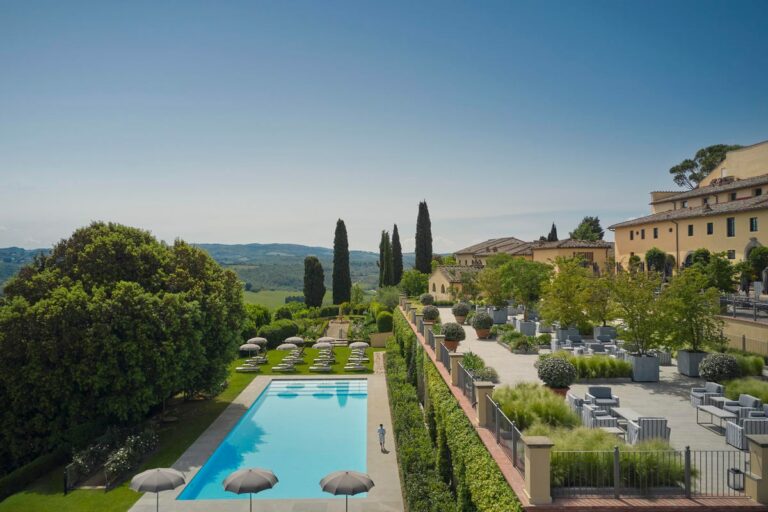
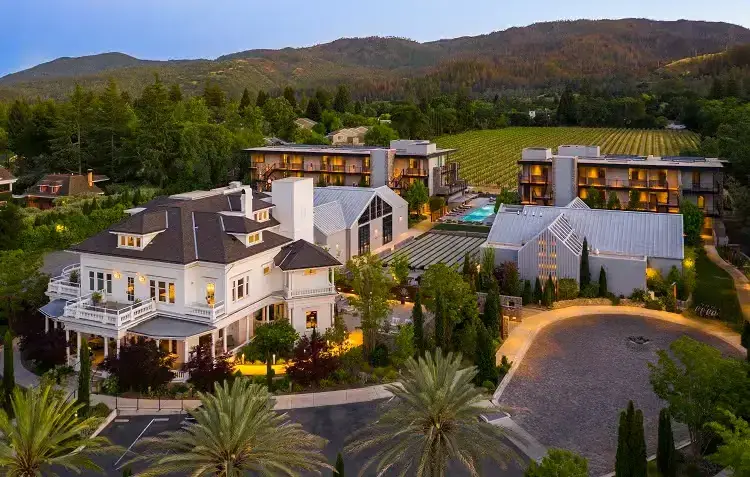
To accurately compare vineyard resort options, a fundamental distinction must be made between “Vineyard-Adjacent” hospitality and “Viticulturally Integrated” design. A vineyard-adjacent resort is a standard luxury hotel built near a wine region; it offers a visual connection to the vines but remains detached from the agricultural metabolic cycle. In contrast, an integrated resort treats the habitation as a layer within the vineyard’s own canopy or root system. For the discerning individual, the latter represents a fundamentally different engineering challenge and a higher degree of sensory authenticity.
A common misunderstanding in the selection or development process is the “Sanitization Fallacy”—the belief that luxury is achieved by hiding the “unpleasant” realities of farming. In reality, the top tier of the market utilizes “Controlled Exposure.” A sophisticated resort plan does not conceal the crush pad or the tractor sheds; it utilizes “Acoustic Shielding” and “Negative Pressure HVAC” to allow guests to observe the press cycle or the early fermentation without being overwhelmed by the industrial noise or the pungent, acidic scent of yeast metabolism.
Oversimplification in these comparisons often ignores the “Temporal Tax” of viticulture. A vineyard is a factory that operates on a 24-hour cycle during harvest. If a resort comparison focuses only on room amenities and wine lists, it fails to account for the “Noise-Shed” or the “Drift-Zone.” When you compare vineyard resort options, you are essentially comparing different strategies for managing the friction between a human sleep cycle and an agricultural harvest cycle. Authority in this sector is defined by the invisible reconciliation of these two forces.
Historical and Systemic Evolution of the Integrated Estate
The trajectory of vineyard-based lodging has moved through three distinct technological and philosophical epochs, each leaving a different structural footprint on the land.
The Agriturismo Foundation (Pre-1990s)
Initially, these were functional farmhouses where hospitality was a byproduct of the farm’s survival. The architecture was vernacular, and the sensory experience was raw. There was no “zoning”; guests lived alongside the smells of diesel and fermenting skins. While romanticized today, these lacked the thermal and acoustic comfort required for modern long-term stays.
The Tasting Room Monument (1990s–2010s)
Driven by the global wine boom, this era saw the rise of the “Brand Cathedral.” Resorts were built nearby, but rarely on the vines. The focus was on retail throughput and the “faux-chateau” aesthetic. The goal was to create a photographic backdrop rather than an integrated ecosystem. These properties often lacked a true connection to the land’s metabolic cycles, acting as parasites on the view rather than participants in the soil.
The Regenerative Nexus (2020s–Present)
The current landscape is defined by “Biophilic Integration.” Modern structures utilize IoT sensors to monitor sap flow and soil moisture, ensuring the building participates in the vineyard’s hydrological cycle. Architecture is now designed to be “non-extractive,” using subterranean mass for thermal stability and greywater recycling to sustain the very vines that provide the guests’ privacy.
Conceptual Frameworks and Mental Models
When evaluating a flagship viticultural asset, industry leaders apply specific mental models to ensure systemic resilience.
1. The “Olfactory Sound-Shed.”
This framework evaluates the site based on prevailing wind patterns and chemical drift. It dictates that guest suites must be positioned “Upwind and Upslope” from primary fermentation tanks. This ensures the pungent, acidic scent of early fermentation (esters and CO2) does not penetrate guest suites during the critical six-week harvest window.
2. The “Microbial Continuity” Model
A vineyard is a delicate microbiome. This model assesses whether hotel landscaping introduces invasive ornamental plants that could disrupt the native yeast populations required for “wild-ferment” winemaking. Top-tier properties prioritize endemic vegetation to ensure the winery’s microbial profile remains uncorrupted by non-native flora.
3. The “Gravity-Flow” Hierarchy
Borrowed from winemaking architecture, this dictates that the guest journey should mimic the wine’s journey—moving from the heights of the vineyard (check-in) down through the “aging” process (relaxation/spa) to the final “tasting” (dining/cellar). It utilizes site topography to reduce mechanical reliance and energy consumption, aligning the human experience with the physics of the land.
Key Categories of Viticultural Architecture and Trade-offs
The geography of the vineyard dictates the structural trade-offs required for a successful installation.
Realistic Decision Logic: The “Harvest Interference” Ratio
Choosing among these options requires weighing the guest’s desire for proximity against the operator’s need for efficiency. A “Dispersed Casita” model offers the highest nightly rate but makes nighttime mechanical harvesting almost impossible without disturbing guests. Conversely, a “Subterranean In-Fill” plan allows the vineyard to be farmed right up to the roofline, but it requires massive capital for waterproofing and soil-pressure management.
Detailed Real-World Scenarios: Logistics and Failures
The “Sulfur Drift” Conflict
In a luxury estate in the Douro Valley, the resort failed to account for the mandatory sulfur spraying required for organic mildew control. Because the guest balconies were directly downwind of the vineyard blocks, the hotel was forced to close for three days during the peak spring season. The second-order effect was a permanent loss of “Direct-to-Consumer” wine club sign-ups, as the most loyal customers were the ones displaced by the chemical odor.
The “Nitrogen Lock” Failure
A modernist hotel in Oregon’s Willamette Valley used heavy concrete walkways throughout the vines. The weight of guest foot traffic, combined with the concrete’s alkaline runoff, altered the soil pH. The result: the Pinot Noir vines within 30 feet of the hotel showed signs of “Nitrogen Lock,” producing fruit that was too acidic for the estate’s flagship bottling. This is why superior designs favor “Elevated Boardwalks” that allow soil to breathe.
The “Thermal Island” Effect
An estate in Napa Valley built a large white-roofed villa in the center of a premium Cabernet block. The reflective heat from the roof raised the temperature of the surrounding vines during the afternoon. This led to “shriveled fruit” and forced the winery to harvest those rows separately, resulting in a lower-tier “Bulk” wine rather than a “Reserve” bottling.
Planning, Cost, and Resource Dynamics
The financial modeling for a vineyard resort is complex because it involves “Biological Depreciation.” Unlike a city hotel, a vineyard hotel can actively reduce the value of the land’s primary agricultural output if poorly managed.
The “Lost Vintage” Opportunity Cost: To accurately compare vineyard resort options, one must calculate the revenue lost from the pulled vines over a 50-year horizon. In premium regions, a single acre of vines can generate millions in lifetime revenue. If a resort occupies three acres, the “Land Debt” is massive. The project must therefore demonstrate a “DTC Multiplier”—the ability to convert guests into wine subscribers at a rate that offsets the lost grape tonnage.
Tools, Strategies, and Support Systems for Operations
The operation of these properties is supported by an “Agritech-Hospitality” stack that bridges the gap between agricultural reality and luxury expectation:
-
Dendrometers: IoT sensors attached to the vines that feed real-time “Thirst Data” to a guest-facing dashboard, connecting the traveler to the plant’s stress levels.
-
Gravity-Flow Winery Design: Eliminates noisy mechanical pumps, moving wine through the cellar using the earth’s own gravitational force to ensure silent guest environments.
-
Fritted Glass Panels: Specialized glazing patterns that prevent bird-strike deaths—a major issue in vineyards that act as avian corridors.
-
Greywater Bioreactors: Systems that treat hotel wastewater for use in vineyard irrigation, creating a “Closed-Loop” hydrological system.
-
Automated Night-Harvest Lighting: Using “Red-Spectrum” LEDs that allow harvest crews to work at 3:00 AM without disrupting the human sleep-wake cycle of guests.
-
Negative Pressure HVAC: Prevents winery odors (sulfur, yeast, or CO2) from migrating into hospitality zones.
The Risk Landscape: Biological and Industrial Compounding
The risks in this sector are rarely structural collapse but rather “Biological Rejection”—where the farm and the hotel begin to harm one another.
Phylloxera Cross-Contamination
Guests arriving from other global wine regions may unknowingly carry pests or soil-borne pathogens on their footwear. A superior resort includes “Biosecurity Checkpoints” disguised as luxury arrival experiences (e.g., shoe-cleaning services or gravel “foot baths”).
The “Monoculture Brand” Risk
If a resort is built around a specific variety (e.g., “The Malbec Resort”), it is vulnerable to climate-driven variety shifts. Plans must be “Variety-Agnostic” to ensure long-term brand resilience. If the climate warms and Malbec is no longer viable, the architecture must still function for a Cabernet or Syrah operation.
Legal “Change-of-Use” Volatility
In many regions (particularly France and Italy), agricultural land has strict limits on non-farming activities. A property that over-hosts or builds too aggressively can face license revocation, leaving the asset stranded. Evaluating the “Agricultural-to-Hospitality Ratio” in the property’s charter is essential for long-term stability.
Governance, Maintenance, and Long-Term Adaptation
Effective governance of a vineyard resort requires a “Dual-Custody” approach where the Vineyard Manager and the General Manager have equal veto power over property operations.
The Stewardship Audit Checklist:
-
Weekly: Decibel monitoring of the bottling line to ensure guest comfort.
-
Monthly: “Soil Compaction” tests on guest-facing vineyard paths.
-
Quarterly: HVAC filter analysis for “Yeast and Spore” accumulation.
-
Annually: “Vintage Impact Review”—analyzing if the hotel’s presence affected the sugar-to-acid ratio of the nearest vine rows.
-
Adjustment Trigger: If soil moisture levels drop by more than 15% due to the hotel’s foundation shadow, the irrigation plan must be recalibrated.
Measurement, Tracking, and Evaluation of Success
How do we quantify the success of a viticultural asset? We look at leading and lagging indicators:
-
Leading Indicator: “The Biodiversity Index.” A successful plan should see an increase in native predatory insects (which replace chemical pesticides) within the hotel’s immediate landscaping.
-
Lagging Indicator: “The Subscription Conversion.” The percentage of guests who join the wine club within 90 days of their stay. This is the ultimate metric of “Topical Mastery.”
-
Qualitative Signal: “Sensory Cohesion.” Do the estate’s vegetable garden, the hotel’s air quality, and the glass of wine in the guest’s hand all share the same “Geological Signature”?
-
Operational Indicator: “Harvest Downtime.” The number of hours vineyard work was halted to accommodate guest events (lower is better for asset health).
Common Misconceptions and Industry Myths
-
Myth: “The smell of a working winery is romantic.” In reality, the fermentation process releases high levels of CO2 and pungent esters that can be nauseating. A good resort isolates these areas with industrial-grade airlocks.
-
Myth: “Modern glass architecture is the best way to see the vines.” Excessive glass creates “Light Pollution” at night, disrupting the vines’ nocturnal respiration cycles. The best resorts use “Smart Glazing” that dims at dusk.
-
Myth: “You can’t have a luxury hotel on a working organic farm.” Organic and biodynamic estates actually make for better hotels because they lack the chemical odors and “Spray Drifts” associated with conventional viticulture.
-
Myth: “The vineyard is just a backdrop.” In the best models, the vineyard is the “Lead Infrastructure.” The hotel is merely the interface through which we observe it.
Ethical, Practical, or Contextual Considerations
The expansion of vineyard resorts must be weighed against “Food Sovereignty.” When productive grape land is converted into hotel villas, we are essentially trading a long-term agricultural asset for a short-term luxury service. The most ethical resorts are those that utilize “Non-Productive Pockets”—building their structures on rocky soil where grapes won’t grow, thereby preserving the prime “Crus” for agriculture. This “Non-Extractive” approach ensures that the resort supports, rather than replaces, the local farming economy.
Conclusion: The Future of Terroir-Integrated Lodging
The ability to compare vineyard resort options with editorial precision is becoming a required skill for the modern luxury investor and traveler alike. We are moving away from “Themed Lodging” and toward “Systemic Immersion.” The properties that will survive the next two decades are those that recognize the hotel not as a competitor to the vine, but as its greatest advocate.
A successful model is one where the guest leaves with more than just a memory of a view; they leave with an understanding of the geological and biological forces that produced the liquid in their glass. When architecture and agriculture are in perfect alignment, the resulting “Terroir Interface” creates a value proposition that is resilient to both economic shifts and environmental challenges. The vineyard resort is no longer a place to stay; it is a place to participate in the endurance of the land.