Luxury Winery Resorts USA: The Definitive 2026 Guide to Estate Stays
The architectural integration of viticulture and high-end hospitality in the United States has transitioned from a niche agrarian interest to a sophisticated asset class. This evolution is not merely a matter of placing luxury accommodations adjacent to vineyards; it is the synthesis of two distinct operational philosophies. On one hand, the resort must function as a high-touch service environment, demanding silence, aesthetic perfection, and seamless logistics. On the other hand, the winery remains a gritty, industrial, and highly seasonal agricultural enterprise. The tension between these two worlds—the pristine spa and the mud-caked harvest tractor—is where the modern standard of excellence is forged.
Identifying the preeminent examples of this sector requires looking past the surface-level gloss of marketing photography. In the contemporary market, a resort’s pedigree is determined by its “Agricultural Transparency”—the degree to which the guest is invited into the authentic technical reality of winemaking without compromising the repose expected of a luxury stay. This involves complex land-use governance, specialized staff training, and an uncompromising commitment to the specific terroir of the American landscape. From the volcanic soils of the Pacific Northwest to the maritime climates of the East Coast, the diversity of these properties mirrors the complexity of the wines they produce.
As we move through 2026, the sector faces a shifting set of consumer expectations. The “Modern Enthusiast” is more educated than previous generations, often arriving with a granular understanding of soil composition, fermentation techniques, and clonal variations. Consequently, the leading properties are those that have moved beyond the “Tasting Room” model toward an “Estate Immersion” model. This article deconstructs the structural, economic, and philosophical components that define the pinnacle of this industry, serving as a definitive reference for those seeking to understand the mechanics of American viticultural hospitality.
Understanding “luxury winery resorts USA.”
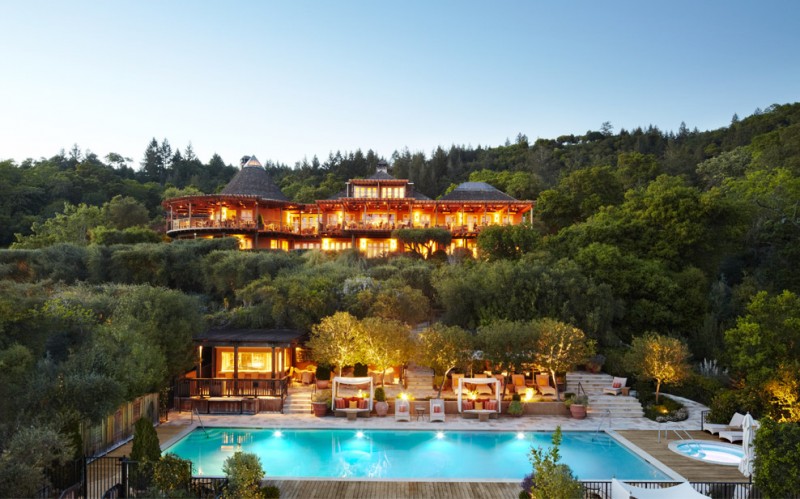
To accurately assess the landscape of luxury winery resorts in the USA, one must first dismantle the “Visual Proxy” fallacy. It is easy to assume that any high-end hotel located in a wine-producing region qualifies as a “winery resort.” However, the industry makes a sharp distinction between “Wine-Centric Hotels” (properties located in towns like Healdsburg or Napa that curate a wine list) and “Estate-Integrated Resorts” (properties where the guest rooms are situated within the working acreage of the vineyard itself).
The multi-perspective reality of these resorts involves a delicate balance of three primary stakeholders: the guest, the winemaker, and the land. For the guest, the resort is a sanctuary for sensory exploration. Through the winemaker’s lens, however, it is a potentially intrusive presence that complicates the movement of fruit and machinery. Meanwhile, from the perspective of the land, the resort represents a significant environmental footprint that must be managed to preserve the soil’s “Viticultural Longevity.”
The risk of oversimplification is highest when evaluating “Luxury.” In this context, luxury is not merely the thread count of the linens or the presence of a Michelin-starred restaurant. True luxury in a winery setting is “Access.” It is the ability to walk the rows with a vineyard manager, the opportunity to taste from barrels that will never see a retail shelf, and the quiet of a landscape that is protected from the sprawl of urban life. Understanding this sector requires an appreciation for the “Industrial Silence” that the best properties manage to curate.
The Systemic Evolution of Vineyard Hospitality
The American vineyard resort did not emerge fully formed; it is the result of four distinct developmental waves.
Phase 1: The Auxiliary Guest House (1960s–1980s)
Originally, winery accommodations were functional. They were “Guest Cottages” intended for distributors, journalists, or personal friends of the winery owner. Service was informal, and the hospitality was an extension of the family’s kitchen.
Phase 2: The European Emulation (1990s–2005)
As American wine gained global parity, developers began looking to the chateaus of Bordeaux and the villas of Tuscany. This era saw the rise of grand, often derivative architecture. The goal was to signal “Old World” prestige through stone facades and formal gardens.
Phase 3: The Wellness Pivot (2006–2018)
The realization that wine is often a component of a broader “Lifestyle” led to the integration of comprehensive spas and farm-to-table culinary programs. During this phase, the vineyard began to be treated as a “Wellness Asset”—a place for yoga and meditation as much as for viticulture.
Phase 4: The 2026 Era of “Hyper-Localism”
Today’s leading resorts reject European mimicry in favor of “Vernacular Architecture.” They use local materials, emphasize sustainability, and focus on the technical education of the guest. The resort is now seen as a “Laboratory of Terroir,” where every element of the stay is designed to explain why the wine tastes the way it does.
Conceptual Frameworks and Mental Models
When evaluating or planning a stay at a top-tier estate, these frameworks help categorize the experience:
1. The “Acreage-to-Key” Ratio
This model measures the density of the resort. A “Luxury” property typically maintains a high ratio of vineyard acres to guest rooms (keys). A high ratio (e.g., 5 acres per room) ensures that the agricultural identity of the land is never overwhelmed by the hospitality footprint. If the density is too high, the property begins to feel like a suburban hotel rather than a rural estate.
2. The “Vertical Service” Loop
In a world-class resort, the service is not horizontal (broad and generic) but vertical (deep and specialized). This means that a server in the restaurant should be able to explain the specific pruning method used in the block visible from your table. This “Vertical IQ” is a primary leading indicator of a property’s quality.
3. The “Atmospheric Buffer” Concept
A vineyard is a loud place. Frost fans, harvesters, and sulfur sprays are part of the reality. The “Atmospheric Buffer” is the architectural and operational strategy used to separate these noises from the guest. Estates deploy ‘Topographical Masking’ to embed structures into hillsides, while ‘Time-Shifting’ relegates intrusive farm work to the guest’s off-property hours.
Primary Categories and Comparative Logic
The landscape of luxury winery resorts in the USA is generally divided into several operational models, each with distinct trade-offs.
Decision Logic: The “Education vs. Effluence” Spectrum
If your goal is deep technical knowledge, a Boutique Farmstay in a burgeoning region like the Finger Lakes or Virginia’s Blue Ridge offers more direct access to the winemaking team. However, if your goal is the highest tier of service and physical luxury, the Monopole Estates of Napa or Sonoma remain the gold standard, though they often feel more “guarded.”
Real-World Operational Scenarios
The “Crush” Logistics Challenge
A guest arrives in late September. The resort is at 100% occupancy. Outside, the “Crush” is in full swing.
-
The Conflict: The guest wants a quiet pool experience, but the sound of the de-stemmer is audible.
-
Failure Mode: The resort staff attempts to “hide” the harvest, leading to guest confusion.
-
Success Mode: The resort integrates the harvest into the stay—providing guests with safety gear to observe the sorting table and offering “Fresh-Pressed Must” at breakfast.
The “Smoke Taint” Mitigation
A wildfire in a neighboring county threatens the air quality.
-
The Conflict: The vineyard is at risk, and the guest experience is degraded by smoke.
-
Second-Order Effects: Cancellations spike, but the estate must still process the fruit.
-
Management Strategy: High-end resorts now employ “Indoor Air Filtration” systems that can maintain 99% purity even in smoke events, preserving the internal “Micro-Climate” of the resort.
Economics of the Estate Stay
The ‘Opportunity Cost’ of the land governs resort pricing. Every square meter dedicated to a guest suite forfeits 50 years of viticultural production, where high-yielding vines could otherwise generate $200 bottles of wine in perpetuity.
Indirect Costs: Guests should also consider the “Logistics Premium.” These resorts are often 90+ minutes from major airports. Private transport can add $400–$800 to the total cost of the stay.
Strategies for High-Engagement Visits
-
The “Pre-Cellar” Protocol: Contact the wine director 14 days before arrival. Inquire about “Library Vintages” that can be decanted in-room upon arrival. This signals that you are a serious enthusiast.
-
Seasonal Inversion: Consider visiting during the “Dormancy” phase (January–February). Rates are 40% lower, and the winemaker is much more likely to have time for a two-hour conversation.
-
The “Single-Block” Walk: Ask for a map of the estate’s specific blocks. Spend your mornings walking the specific block that produced the wine you intend to drink that evening.
-
Leverage the “Club Backdoor”: Many of the best suites are never listed on public sites; they are reserved for top-tier wine club members. Joining the club before booking can unlock significant inventory.
-
The “Technical” Request: When booking a tour, ask for the “Production Tour” rather than the “Tasting.” This usually triggers a different level of staff—often a cellar hand or assistant winemaker.
The Risk Landscape and Environmental Variables
The success of a stay at luxury winery resorts in the USA is highly sensitive to external compounding risks.
-
Climatic Variability: A “Late Frost” can change the entire mood of a spring visit. The vineyard team will be stressed, and the physical beauty of the vines may be temporarily compromised.
-
Staff Turnover: In rural wine regions, finding high-level hospitality talent is difficult. A “Service Failure” at a $1,500/night resort is usually a symptom of local labor shortages.
-
The “Gentry” Conflict: As resorts expand, they often clash with local agricultural neighbors over water rights and traffic. A resort that is “At Odds” with its community often has a palpable tension that guests can feel.
Governance and Long-Term Adaptation
A premier estate must govern its “Brand Purity” over decades. This involves:
-
Yield Management: Ensuring that the hotel’s success doesn’t lead to “Commercial Sprawl.”
-
Environmental Stewardship: Implementing “Closed-Loop” water systems where resort greywater is treated and used for vineyard irrigation.
-
Staff Continuity: Leading resorts often provide on-site housing for staff to ensure that the “Estate Knowledge” stays on the property.
Measurement and Evaluation of the Guest Experience
How does a guest—or a critic—measure the success of a luxury vineyard stay?
-
The “Sommelier-to-Guest” Ratio: This is a quantitative signal. In the best resorts, there is one certified professional for every 10 guests.
-
The “Inventory Depth”: Look at the wine list. Does it only feature the current release? A “Master Class” resort will have at least 10 years of vertical depth for its estate wines.
-
The “Post-Stay IQ”: A qualitative signal. Do you leave knowing more about the “Geology” of the region than when you arrived? If not, the resort functioned as a hotel, not a winery estate.
Common Misconceptions and Industry Myths
-
Myth: “The best wines are in the tasting room.”
-
Correction: The best wines are usually in the “Library,” and you often have to ask for the “Reserve List” at the resort restaurant.
-
-
Myth: “Harvest is the best time to visit.”
-
Correction: It is the most exciting, but also the most chaotic. If you want relaxation and staff attention, visit in the “Silver Shoulder” (Late Spring).
-
-
Myth: “All Napa resorts are the same.”
-
Correction: The difference between a valley-floor resort and a mountain-top estate is profound in terms of climate, view, and wine style (tannin structure).
-
-
Myth: “You can’t do a luxury winery tour with kids.”
-
Correction: Many modern resorts have “Agri-Learning” programs for children focused on the botany of the vine, making it a viable family destination.
-
Ethical and Practical Considerations
The development of luxury winery resorts in the USA brings up significant questions regarding “Agricultural Preservation.” When we build a luxury suite on prime Cabernet land, we are permanently removing that soil from production. The most ethical resorts are those that build on “Non-Arable” land (rocky outcrops or hillsides) to save the “Deep Loam” for the vines. Furthermore, the use of water in drought-prone states like California is a constant ethical pivot point. Guests should look for properties that utilize dry-farming techniques or advanced water reclamation.
Conclusion: The Future of the American Estate
The trajectory of the American winery resort is moving away from the “Performance of Luxury” toward the “Integrality of Agriculture.” The next decade will likely see the disappearance of the “Derivative Style”—no more mock-Tuscan villas. In their place, ‘Of the Soil’ properties emerge. These structures utilize rammed earth for thermal mass, harvest energy through solar-integrated vine trellises, and deploy a cross-functional workforce that masters both the cellar and the dining room.
A stay at a premier vineyard resort is an exercise in “Intentional Travel.” It is about slowing down to the speed of the vine, which moves not in minutes, but in seasons. Selecting a landscape-integrated resort transcends a mere room purchase. This choice invests your capital directly into the long-term stewardship of the American terroir, transforming the guest from a consumer into a biological stakeholder. The future of these institutions lies in their ability to remain authentic to their agricultural roots while providing a sanctuary that meets the highest global standards of hospitality.