Best Valley Vineyard Stays USA: The 2026 Editorial Reference Guide
The evolution of the American viticultural landscape has reached a point of profound sophistication where the “valley vineyard” is no longer merely a site of production, but a complex intersection of agriculture, architecture, and high-fidelity hospitality. Historically, vineyard lodging was often an auxiliary afterthought—a modest farmhouse or a converted cottage intended for trade guests. Today, the sector has transitioned into a “destination-first” philosophy. The lodging component is no longer a peripheral service; it is a core atmospheric asset that defines the traveler’s relationship with the land’s geology and its vintage cycles.
Understanding the mechanics of these stays requires looking beyond the surface-level tropes of luxury. The “valley” designation is critical; it implies a specific set of micro-climatic conditions—diurnal temperature shifts, alluvial soil deposits, and air drainage patterns—that dictate both the quality of the wine and the sensory experience of the guest. To inhabit these spaces is to participate in a “Biological Calendar.” The premier establishments in this sector are those that do not shield the guest from the working realities of the vineyard but instead use architectural transparency and technical immersion to bridge the gap between consumer and producer.
As we navigate the landscape in 2026, the benchmark for excellence is “Technical Integrity.” Discerning visitors are moving away from the sanitized, resort-style veneer of the early 2000s in favor of properties that offer a “vertical” understanding of their region. This involves an interest in the carbon sequestration of the cover crops, the clonal diversity of the rootstocks, and the metabolic impact of the local terroir. This article provides a systemic deconstruction of the components that constitute authority in viticultural lodging, serving as a definitive reference for the structural and philosophical underpinnings of the most significant valley-based estates in the country.
Understanding “best valley vineyard stays USA.”
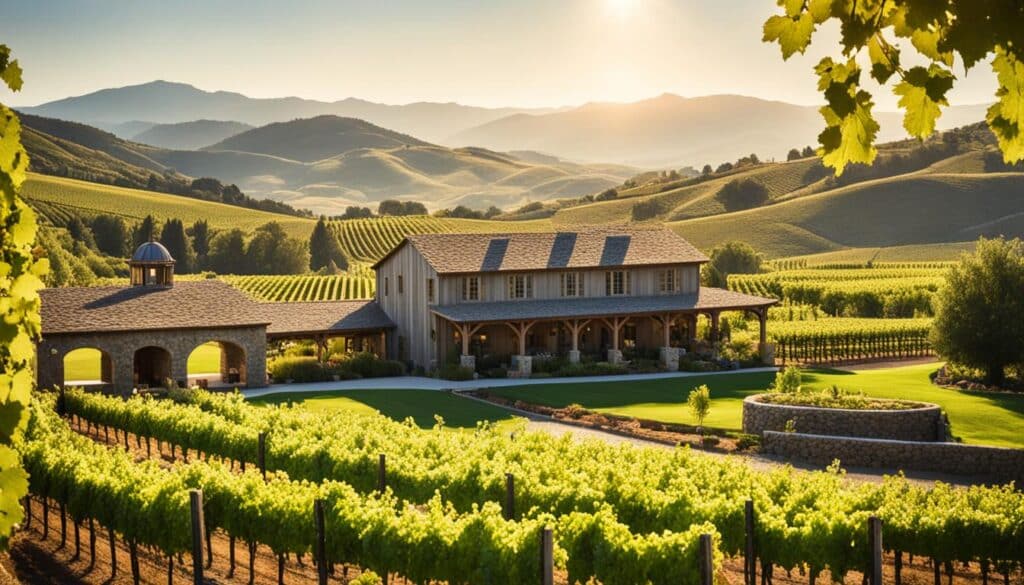
To accurately deconstruct Best Valley Vineyard Stay USAa, one must first move past the “Scenic Fallacy.” This is the common misunderstanding that a vineyard stay is defined primarily by its view. In reality, a true authority-level stay is defined by “Operational Integration.” The distinction lies in whether the hospitality asset is a separate entity overlooking the vines or a functional component of the agricultural ecosystem. If a guest cannot smell the fermentation in the autumn or hear the frost fans in the spring, they are staying at a hotel near a vineyard, not a vineyard stay.
From a multi-perspective view, these destinations must satisfy three distinct “Users”:
-
The Viticulturist: The lodging must not interfere with the industrial requirements of the farm—spraying schedules, tractor access, and harvest logistics.
-
The Guest: Seeking “Acoustic and Olfactory Harmony,” where the noise of the farm is framed as a narrative rather than a nuisance.
-
The Regional Ecologist: Monitoring the destination for its impact on the valley’s water table and soil health.
Oversimplification risks in this sector are high. It is tempting to rank these destinations by the points awarded to their wines, but points are a lagging indicator of quality. A more rigorous evaluation looks at “Atmospheric Governance”—the ability of the estate to manage the friction between luxury service and agricultural necessity. If the smell of sulfur sprays interrupts a five-course dinner, the destination has failed to achieve the “Operational Seamlessness” that defines the top tier of the American market.
The Systemic Evolution of Valley Viticulture Hospitality
The transition from “Production Site” to “Lifestyle Hub” occurred through a series of evolutionary leaps, primarily driven by the maturation of the American palate and the rise of the “Prosumer” traveler.
Phase 1: The Accessory Guest House (1970–1990)
In the early days of the Napa and Sonoma boom, hospitality was incidental. Lodging was almost entirely auxiliary, maintained for distributors and personal friends of the winery family. The “experience” was the bottle; the bed was merely a convenience.
Phase 2: The Mediterranean Inversion (1991–2010)
Following the global success of California wines, developers began building grand, European-style resorts. This era was characterized by the “Palazzo” model—grand villas that prioritized aesthetics over agricultural integration. While beautiful, these properties often functioned as “Islands,” separated from the working vineyard by manicured lawns and gatehouses.
Phase 3: The Integrated Ecosystem (2011–2026)
The current era is defined by “Vernacular Honesty.” Architects are now using local materials—Napa fieldstone, Oregon white oak, Virginia slate—to create structures that respond to the specific geology of the valley floor. The focus has shifted from the building to the “Interstices”—the spaces between the rows where the actual lifestyle happens.
Conceptual Frameworks and Mental Models for Evaluation
When evaluating or planning for high-end best valley vineyard stays usa, these frameworks help categorize the sophistication of the estate.
1. The “Terroir Intimacy” Gradient
This model measures the physical and intellectual proximity of the guest to the fruit. A high-value stay allows for “Direct-Block Engagement”—where a guest can walk from their terrace directly into a specific vineyard block and taste the wine produced from those exact vines. If there is a physical or psychological wall between the room and the rows, the intimacy is compromised.
2. The “Social Density” Gradient
This model evaluates the destination based on its “Private-to-Public” ratio. A stay that is too public feels like a tourist trap; one that is too private lacks the “Cultural Gravity” necessary to be an authority. The gold standard is a “Layered Access” model, where the general public sees the “Front of House,” but residents and guests have access to the “Sub-Cellars” and private vineyard blocks.
3. The “Metabolic Pairing” Framework
In 2026, the elite traveler views wine through the lens of wellness. This framework evaluates a stay based on its ability to align the wine program with a “Biological Clock.” Are there low-ABV sparkling wines for a morning vineyard walk? Are there high-polyphenol reds paired with specific anti-inflammatory meals? The luxury is in the “Biological Curation” of the experience.
Key Categories of Valley Vineyard Stays
The American landscape offers several distinct variations of the valley model.
Decision Logic: The “Intent-to-Asset” Alignment
Choosing between these categories requires an honest assessment of “Resource Allocation.” If the visitor’s goal is “Personal Transformation,” the Regenerative Farmstead is the logical choice. However, if the goal is “Social Prestige and Portfolio Building,” the Monopole Sanctuary offers the most direct path to that lifestyle asset.
Detailed Real-World Scenarios and Operational Realities
The “Crush” Logistics Paradox
A guest stays at a top-tier retreat in Sonoma during the peak of harvest.
-
The Constraint: Harvesting must happen at 3:00 AM for temperature control.
-
Failure Mode: The noise of the tractors wakes the guest, leading to complaints.
-
Success Mode: The estate includes a “Harvest Night” kit—night-vision goggles, a technical briefing, and a 4:00 AM “Post-Pick” breakfast with the cellar crew, turning a logistical nuisance into a lifestyle highlight.
The “Smoke Taint” Risk Management
A valley in the Pacific Northwest faces a sudden wildfire threat.
-
The Conflict: The air quality is poor, and the vineyard is at risk.
-
Response: In 2026, luxury stays must have “Air Quality Governance.” This includes medical-grade filtration and a pivot to indoor “Technical Cellar Tours” where guests learn about the science of smoke-taint mitigation, preserving the educational value of the stay despite the environmental setback.
Planning, Cost, and Resource Dynamics
The entry into a “Valley Vineyard” is a high-capital endeavor, whether as a visitor or an owner.
Resource Variability: It is critical to note that the “True Cost” of these stays is often hidden in the “Subscription Economy.” The best access is not purchased at the door but earned through long-term membership in the winery’s “Inner Circle,” which requires consistent annual wine purchases and event attendance.
Tools, Strategies, and Support Systems for Engagement
To navigate Best Valley Vineyard Stays USA effectively, guests often rely on a specific ecosystem of support:
-
Direct-to-Consumer (DTC) Concierges: Specialized advisors who manage allocations and “Secret Menu” bookings across multiple valley estates.
-
LiDAR Topographical Maps: Used by hikers and technical enthusiasts to understand the aspect and elevation of the vineyard blocks they are inhabiting.
-
Environmental Monitoring Apps: Residents use these to track “Micro-Climates” in their specific block of the vineyard in real-time.
-
Specialized Shipping Logistics: Temperature-controlled couriers who ensure that “finds” from the valley are transported without thermal damage.
-
Sommelier-on-Demand: Private professionals who curate the on-site experience for residential guests, ensuring the cellar is “rested” and ready for consumption.
Risk Landscape and Failure Modes
The “Valley” model is surprisingly fragile, subject to compounding risks:
-
The “Disney-fication” Risk: A destination that becomes too focused on “Experience” can lose its “Agricultural Soul.” If the winemaking becomes mediocre, the lifestyle brand will eventually collapse.
-
Hydrological Stress: Valleys are often the first to feel the effects of water scarcity. A stay that relies on lush, green lawns in a drought-stricken valley faces a “Social License” risk from the local community.
-
Labor Scarcity: These destinations require two very different types of labor: highly skilled hospitality staff and back-breaking agricultural labor. A shortage in either sector can cripple the estate’s ability to function.
Governance, Maintenance, and Long-Term Adaptation
For a destination to maintain its authority over decades, it must employ a “Multi-Layered Governance” model.
-
Viticultural Governance: Ensuring the soil remains healthy through organic or biodynamic practices. This is the foundation of the stay’s value.
-
Architectural Governance: Preventing “Visual Creep”—ensuring that new buildings don’t ruin the views or the agricultural utility of the land.
-
Community Governance: Active participation in local water boards and agricultural commissions to ensure the destination remains a “Good Neighbor.”
The Adaptation Checklist:
-
Annual “Terroir Audit” (Checking soil and vine health).
-
Quarterly “Service Friction” Review (Where do guests and tractors clash?).
-
Decadal “Varietal Re-assessment” (Are we growing the right grapes for the 2036 climate?).
Measurement, Tracking, and Evaluation
How do we measure the “Success” of a valley vineyard stay?
-
Quantitative Signal: “Retention of Allocation.” The percentage of club members or guests who renew their commitment each year. High turnover is a sign of a “Trendy” but shallow destination.
-
Qualitative Signal: “Staff Longevity.” In a sector defined by high turnover, a destination where the cellar master and the head concierge have been there for 10+ years is a sign of “Institutional Stability.”
-
Leading Indicator: “Bio-Diversity Index.” A healthy valley floor should see an increase in native species, beneficial insects, and soil microbial life. If the vineyard is a biological desert, the stay is not a true authority asset.
Common Misconceptions and Industry Myths
-
Myth: “The best wineries are always in Napa.”
-
Correction: While Napa is the pioneer, true lifestyle innovation is currently happening in “Challenger Valleys” like the Walla Walla (WA), the Shenandoah (VA), and the Leelanau Peninsula (MI).
-
-
Myth: “A vineyard stay is just a fancy resort.”
-
Correction: A resort is a place you visit; a vineyard stay is a place you “Inhabit.” The focus is on agricultural immersion, not just relaxation.
-
-
Myth: “Harvest is the best time to visit.”
-
Correction: It is the most chaotic. For “Deep Lifestyle” engagement, the “Silver Season” (Spring) offers more access to the winemaking team and a more tranquil environment.
-
Ethical and Contextual Considerations
The expansion of luxury stays in agricultural valleys raises significant ethical questions regarding land use. As luxury estates take over agricultural land, the price of “Productive Acreage” often skyrockets, making it impossible for small, independent farmers to compete. The most “Ethical” stays are those that implement “Incubator Programs,” allowing smaller producers to use their facilities or land, thereby preserving the region’s viticultural diversity.
Conclusion: The Synthesis of Earth and Sanctuary
The trajectory of the American valley vineyard stay is clear: the bottle is no longer the final product. The final product is the “State of Being” that the estate provides. The best valley vineyard stays usa that will survive the next quarter-century are those that treat the vineyard not as a scenery set, but as a living, breathing teacher.
We are moving toward an era of “Radical Transparency,” where guests will demand to know the carbon footprint of their stay and the labor conditions of the cellar. The destinations that can answer these questions with “Technical Honesty” while still providing an unparalleled sensory experience will become the new “Standard of Authority” in the American landscape. The future of this sector lies in the synthesis of grit and grace—the mud on the boots and the crystal in the hand.