How to Manage Alcohol Consumption During Stays: A 2026 Strategy Guide
The intersection of high-end hospitality and viticulture creates a unique physiological and social environment that often challenges a traveler’s internal regulation. In the context of a resort or winery stay, alcohol is not merely a beverage but a central pillar of the “curated experience,” woven into tastings, pairings, and social rituals. This environmental immersion often leads to a phenomenon known as “Atmospheric Tolerance,” where the aesthetic beauty and relaxed pace of a stay mask the cumulative physiological impact of consistent consumption.
Effective self-regulation in these settings requires a sophisticated understanding of how the hospitality industry’s service models interact with human metabolic processes. Unlike a routine evening at home, a destination stay often involves a continuous availability of alcohol—from the welcome drink at check-in to the bedside carafe. This “Availability Saturation” necessitates a shift from passive consumption to an active, strategic approach. To maintain sensory clarity and physical well-being over a multi-day itinerary, one must adopt a logistical mindset toward one’s own biology.
This analysis moves beyond the elementary advice of “drinking water between glasses” to explore the systemic and metabolic frameworks of long-duration stays. We will examine the impact of altitude, hydration logistics, and the “Palate Fatigue” that inevitably follows high-tannin or high-acid immersion. The objective is to provide a definitive guide on the mechanics of moderation within an ecosystem designed for indulgence, ensuring that the final days of a stay are as lucid and enjoyable as the first.
By 2026, the rise of “Wellness-Forward Hospitality” has introduced new tools for the traveler, including low-ABV (Alcohol by Volume) flight options and sophisticated non-alcoholic botanical pairings. However, the burden of governance remains with the individual. This article serves as a technical manual for the modern traveler, deconstructing the psychological and physiological traps of destination stays and providing a robust framework for sustained equilibrium.
Understanding “how to manage alcohol consumption during stays”

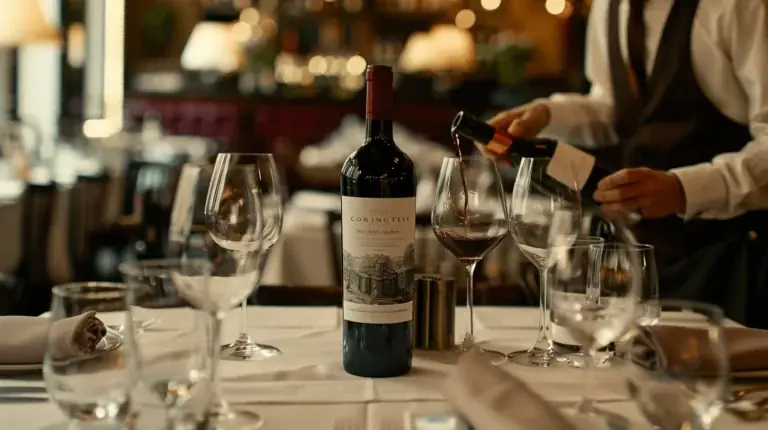
To master how to manage alcohol consumption during stays, one must first recognize the “Service Momentum” inherent in luxury environments. Hospitality staff are trained to ensure a guest’s glass is never empty; this is often viewed as the pinnacle of attentive service. However, for the guest, this creates a “Passive Consumption Loop.” If one does not explicitly intervene in the service cadence, the cumulative intake over a three-hour dinner can easily exceed double the intended amount.
From a physiological perspective, a winery stay often involves “Vertical Loading”—tasting multiple variations of the same varietal in a short window. This concentration of specific tannins and acids can accelerate gastric irritation, even if the total volume of alcohol remains moderate. A multi-perspective view reveals that management is not just about the “count” of drinks, but about the “biochemical timing” of consumption. For instance, the metabolic impact of a 14% ABV Napa Cabernet is significantly different when consumed in a dry, high-altitude environment like a mountain resort versus a humid, coastal vineyard.
Oversimplification in this area often leads to the “Spit Bucket Fallacy.” Many travelers believe that using the dump bucket during a tasting is sufficient for moderation. While this significantly reduces intake, it does not account for the “Mucosal Absorption” that occurs in the mouth, nor does it mitigate the sensory exhaustion that can lead to poor decision-making later in the evening. True authority in this space requires a “Metabolic Budgeting” approach, where the traveler treats their liver’s processing capacity as a finite daily resource to be allocated strategically across various events.
Historical and Systemic Evolution of Alcohol in Hospitality
The role of alcohol in travel has shifted from a basic caloric necessity to a high-status cultural marker.
1. The Era of Essential Sustenance (Pre-1900s)
Historically, wine and beer were safer to consume than local water sources in many travel hubs. Stays at inns involved “House Rations.” Consumption was regulated by availability and the sheer physical demand of travel. There was no “management” strategy because the alcohol was part of the baseline nutrition.
2. The Rise of the “Appellation” and Status (1970s–2010s)
With the professionalization of the sommelier and the birth of wine tourism, alcohol became an “Event.” Resorts began building their identities around their cellars. This era introduced the “Tasting Menu” with mandatory pairings, creating a systemic pressure on guests to consume high volumes of diverse wines as a prerequisite for a “complete” experience.
3. The 2026 Equilibrium: Functional Sobriety and Choice
We are currently in a period defined by “Choice Architecture.” Modern resorts now integrate “sober-curious” options that are on par with their alcoholic counterparts. The systemic evolution has moved from “Forced Pairing” to “Dynamic Hydration,” where the guest is expected to navigate a spectrum of ABV levels to suit their personal wellness goals.
Conceptual Frameworks and Mental Models
To effectively navigate a high-availability environment, apply these mental models:
1. The “Water-to-Wine” Displacement Ratio
This is a logistical framework: for every ounce of alcohol consumed, a guest should ingest four ounces of mineral-rich water. In a winery setting, this is often difficult because water is treated as a secondary accessory. The management strategy involves “Pre-loading” hydration before entering the tasting room and “Post-loading” before sleep to mitigate the diuretic effect of ethanol.
2. The “ABV-Weighted” Clock
Not all hours of the day are equal in terms of metabolic efficiency. The body’s ability to process alcohol peaks in the early evening and is at its lowest during the “Sun-Drenched Lunch.” This model suggests reserving higher ABV selections for evening meals while sticking to “Small-Producer Ciders” or “Vermentinos” (low ABV) during daylight hours.
3. The “Palate Preservation” Filter
This model treats the tongue as a delicate instrument. Alcohol, particularly high-tannin reds, numbs the taste buds over time. By managing consumption, you are not just being “healthy”; you are protecting your ability to actually taste the expensive wine you are purchasing. If you cannot distinguish the notes in the fourth glass, you have reached a “Point of Diminishing Sensory Return.”
Key Categories of Consumption Dynamics and Trade-offs
Decision Logic: The “Vertical vs. Horizontal” Choice
If a stay involves a vertical tasting (same wine, different years), the alcohol levels are often consistent. If it is a horizontal tasting (different wines, same year), the ABV can fluctuate wildly. The “Decision Logic” for a stay should favor the Vertical for consistency or the Horizontal for variety—but never both on the same day.
Detailed Real-World Scenarios and Operational Realities
The “Welcome Drink” Cascade
A guest arrives at a luxury resort in the Douro Valley. They are offered a glass of Port (high ABV/Sugar) at check-in, followed by a cocktail at the pool, and then a full dinner pairing.
-
The Failure: Starting the stay with a fortified wine sets a high glycemic and alcoholic baseline that leads to a “Sugar Crash” before dinner even begins.
-
The Management Strategy: Politely decline the welcome Port in favor of sparkling water, “saving” that alcoholic capacity for the evening meal.
The “Captive Market” Wedding Stay
A guest is at a winery for a three-day wedding. Alcohol is free-flowing and mandatory for all social events.
-
The Failure: Attempting to match the “Pace of the Crowd.”
-
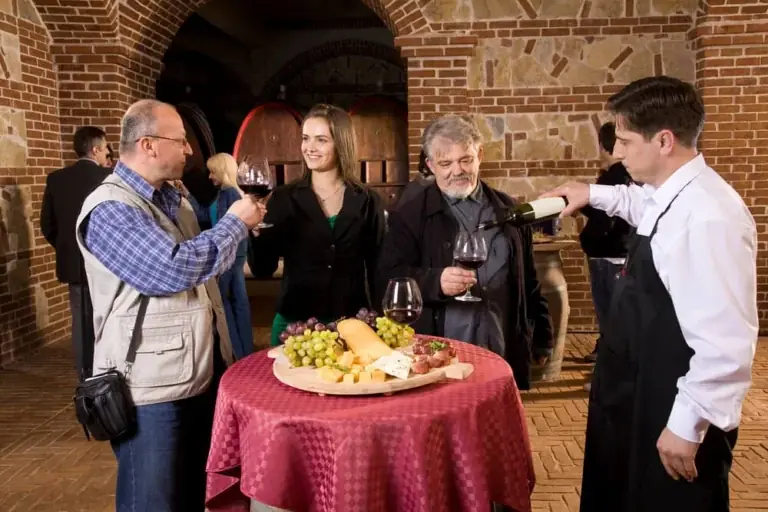
The Management Strategy: Adopt the “Glass in Hand” tactic—carrying a glass of soda water with a lime. It looks like a Gin and Tonic, preventing well-meaning but aggressive hosts from offering more alcohol.
The “Tasting Room” Saturation
A guest visits four wineries in one afternoon, intending to “make the most” of the trip.
-
The Failure: By the third winery, “Decision Fatigue” sets in, and the guest begins to consume the full pours rather than tasting and dumping.
-
The Management Strategy: Limit bookings to two wineries per day, with a mandatory 90-minute “Sober Gap” involving a protein-heavy snack between them.
Planning, Cost, and Resource Dynamics
The “Cost” of failing to manage consumption is rarely financial; it is an “Opportunity Cost” of lost time and degraded health.
The “High-ABV Tax”: Many premium red wines now exceed 15% ABV. This means a standard 5-oz pour is effectively 1.5 “Standard Drinks.” When planning a stay, look for “Cool-Climate” regions (e.g., Germany, Oregon, Coastal Chile) where the natural ABV is lower, allowing for a longer duration of enjoyment with less physiological strain.
Tools, Strategies, and Support Systems
The successful traveler in 2026 uses a “Verification Stack” to maintain balance:
-
Wearable Hydration Monitors: Devices that track skin conductivity to alert the user when “Metabolic Dehydration” is beginning.
-
ABV-Specific Glassware: Using smaller glasses for higher-alcohol wines to trick the brain into feeling satisfied with less volume.
-
The “Buffer Meal” Strategy: Never tasting on an empty stomach. A meal rich in healthy fats (olive oil, avocado) slows the absorption of alcohol into the bloodstream.
-
“Spit-and-Socialize” Etiquette: Mastering the art of the dump bucket while maintaining eye contact and conversation.
-
Curated “Dry” Hours: Explicitly scheduling “Sober Windows” from 2:00 PM to 6:00 PM to allow the liver to clear the lunchtime intake.
-
Electrolyte Supplementation: Adding high-quality electrolytes (Magnesium, Potassium) to evening water to counteract the “Leaching Effect” of ethanol.
Risk Landscape and Failure Modes
The “Risk Landscape” of a winery stay is defined by “Compounding Dehydration.”
-
The “Altitude Multiplier”: Many luxury wine regions (e.g., Mendoza, the Swiss Alps) are at high altitudes. Alcohol is processed more slowly, and dehydration occurs faster.
-
The “Heat Stroke Link”: Consuming alcohol in a sun-exposed vineyard increases the risk of heat exhaustion, as alcohol impairs the body’s thermoregulation.
-
The “Sulfite Sensitivity” Compounding: While sulfites are often unfairly blamed for hangovers, high-volume consumption of young, mass-produced wines during a stay can trigger respiratory or skin reactions that mimic intoxication.
-
The “Social Obligation” Failure: The inability to say “no” to a generous host. Management requires a polite but firm “Communication Protocol” established at the start of the stay.
Governance, Maintenance, and Long-Term Adaptation
Effective governance of alcohol intake is not a one-time event; it is a “Regulatory Cycle.”
The “Stay Governance” Checklist:
-
Pre-Stay: Establish a “Daily Max” drink count.
-
During Stay: Monitor the “Quality vs. Quantity” ratio. If the quality of the wine doesn’t justify the alcoholic “cost,” stop drinking.
-
Adjustment Triggers: If a headache or “Brain Fog” appears, initiate an immediate 12-hour “Zero-Alcohol” moratorium.
-
Post-Stay: Conduct a “Physical Audit.” How did the body respond to the cadence? Use this data to adjust the next itinerary.
Measurement, Tracking, and Evaluation
How do you determine if you successfully managed your consumption?
-
Leading Indicator: “Morning Vitality.” If you can wake up at 7:00 AM and engage in a physical activity (walk, yoga) without discomfort, your management was successful.
-
Lagging Indicator: “The Folio Audit.” Look at the number of “By-the-Glass” charges on your final bill. Does it align with your pre-stay goals?
-
Qualitative Signal: “Sensory Retention.” Can you vividly describe the flavor profile of the last wine you tasted each day?
-
Quantitative Signal: “Resting Heart Rate (RHR).” Using a smartwatch to monitor RHR, a spike of more than 10 bpm overnight indicates an “Alcohol Management Failure.”
Common Misconceptions and Industry Myths
-
Myth: “Champagne/Sparkling wine is lighter and easier to manage.”
-
Correction: Carbonation increases the pressure in the stomach, forcing alcohol into the bloodstream faster than still wine.
-
-
Myth: “The ‘legs’ on a wine show the quality.”
-
Correction: They primarily show the alcohol and sugar content. High “legs” usually mean high ABV, which requires stricter management.
-
-
Myth: “I can ‘sweat it out’ in the sauna the next morning.”
-
Correction: Saunas further dehydrate an already stressed system, increasing the risk of cardiovascular strain.
-
-
Myth: “Taking aspirin before drinking prevents a hangover.”
-
Correction: This can irritate the stomach lining and, when combined with alcohol, increase the risk of gastric bleeding.
-
-
Myth: “Red wine is healthy because of resveratrol.”
-
Correction: To get a therapeutic dose of resveratrol, you would have to consume lethal amounts of wine. The alcohol “cost” always outweighs the resveratrol “benefit” during a stay.
-
Ethical and Practical Considerations
There is a social ethic to alcohol management. An intoxicated guest is a burden on hospitality staff and a disruption to the ambiance for other travelers. Furthermore, in many viticultural regions, the “Culture of the Land” is one of agricultural hard work and technical precision. By maintaining sobriety and lucidity, a guest honors the craftsmanship of the winemaker. Practically, management also ensures safety—particularly if the stay involves navigating uneven vineyard terrain or driving between estates (where “Zero Tolerance” should always be the rule).
Conclusion: The Synthesis of Presence and Pleasure
Mastering how to manage alcohol consumption during stays is the ultimate “Luxury Skill.” It is the ability to fully inhabit the aesthetic and culinary beauty of a destination without becoming a victim of its availability. The modern traveler recognizes that the “high” of a stay comes from the connection to the place, the people, and the history—not from the chemical impact of the ethanol.
By applying the mental models of “Metabolic Budgeting” and the “Palate Preservation Filter,” you transform from a passive consumer into an active curator of your own experience. In the end, the most memorable stays are not those defined by the quantity of wine consumed, but by the clarity of the memories made. Equilibrium is the prerequisite for appreciation.