How to Manage Corkage Fees at Vineyard Hotels: A 2026 Guide
The economics of hospitality within a viticultural estate are governed by a delicate tension between the guest’s desire for exploration and the establishment’s need for revenue integrity. At the heart of this tension lies the “corkage fee”—a service charge levied on guests who wish to consume bottles purchased outside the immediate restaurant or bar environment of the vineyard hotel. While frequently perceived by travelers as a mere penalty, the corkage fee is, in architectural terms, a “service recovery” mechanism designed to offset the loss of beverage margins while maintaining the high-overhead cost of professional stemware, sommelier expertise, and cellar-grade storage.
Navigating this terrain requires more than a rudimentary understanding of restaurant policy; it demands a sophisticated grasp of “hospitality etiquette” and the underlying financial structures of wine-centric resorts. In a vineyard setting, the stakes are elevated. Bringing a bottle from a rival neighbor into an estate’s flagship dining room is not merely a financial transaction; it is a cultural one. The guest must balance the desire for personal curation with the respect due to the estate’s own production. This complexity is compounded by the varying regulatory landscapes across global wine regions, where local laws may dictate how and where “outside” alcohol can be legally served.
For the serious collector or the curious enthusiast, the objective is to maximize the utility of their personal cellar without eroding the relationship with their hosts. To achieve this, one must move beyond the transactional and toward the strategic. Understanding the nuances of vintage exclusion, the etiquette of the “offered pour,” and the tiered pricing models of global vineyard hotels is essential. This is an exercise in “Social Logistics,” ensuring that the presence of an outside bottle enhances, rather than detracts from, the dining experience.
This comprehensive analysis deconstructs the systemic logic of beverage management within the high-end viticultural sector. We will explore the frameworks that govern these fees, the real-world scenarios that challenge standard policies, and the advanced strategies required to navigate these environments with poise. The goal is to provide a definitive reference for those seeking to harmonize their private acquisitions with the curated hospitality of the world’s premier vineyard estates.
Understanding “how to manage corkage fees at vineyard hotels.”
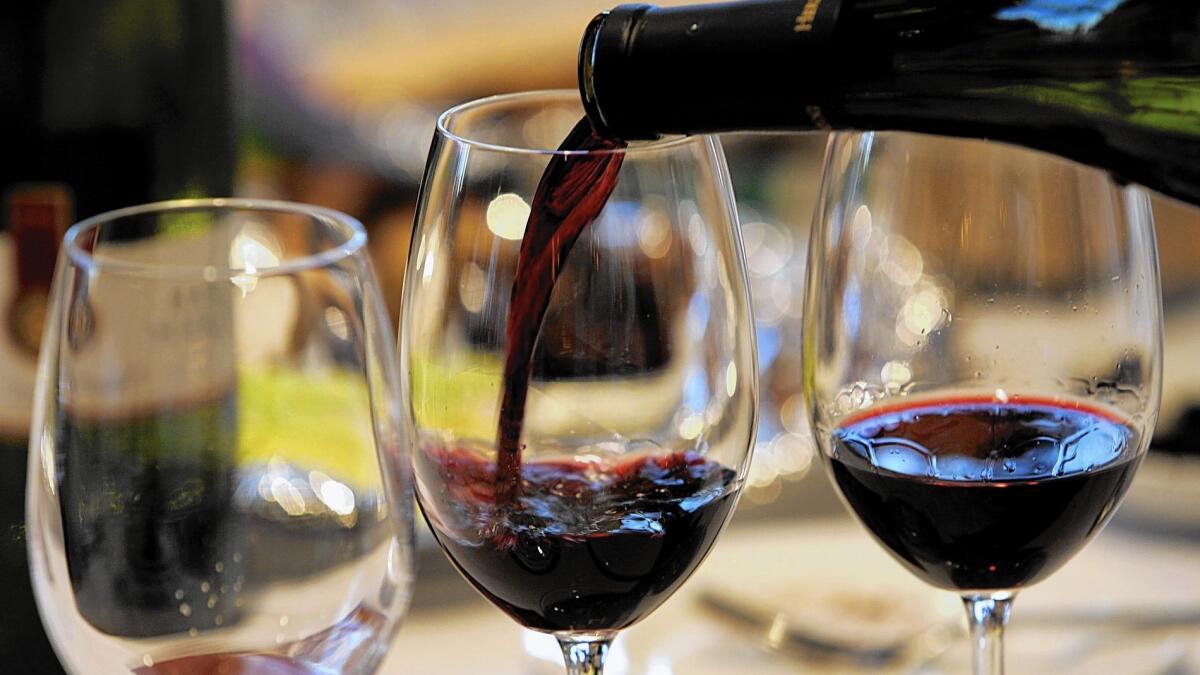
To effectively master how to manage corkage fees at vineyard hotels, one must first dismantle the “Profit-Centric Fallacy.” While it is true that beverage sales are a primary profit driver, the corkage fee also covers the “Opportunity Cost of the Seat.” In a high-demand vineyard restaurant, each chair is expected to generate a specific “Revenue Per Available Seat Hour” (RevPASH). When a guest brings their own bottle, they are effectively bypassing the establishment’s inventory while still utilizing its most expensive resources: the climate-controlled environment, the high-performance crystal (such as Riedel or Zalto), and the sommelier’s labor.
A multi-perspective view reveals that “management” in this context is a negotiation of value. From the hotel’s perspective, a flexible corkage policy is a tool for guest retention, particularly for the “Collector Class” who may be visiting the region specifically to taste rare, library vintages they already own. From the guest’s perspective, the fee is a “Premium for Autonomy.” The misunderstanding often arises when guests expect the fee to be waived simply because they are staying at the hotel. In reality, the hotel’s room rates and the restaurant’s beverage margins are often decoupled in the property’s Profit and Loss (P&L) statement.
Oversimplification risk is highest when travelers apply a “Flat-Fee Mentality” to all regions. In Napa Valley, a $50–$100 corkage fee is standard and reflects the high cost of local labor and real estate. In the Douro Valley or rural Spain, the same fee might be seen as an insult or may not exist at all, replaced instead by a “Service de Vin” charge. Authority in this space is defined by the ability to research and respect these regional variations before the first cork is pulled.
Historical and Systemic Evolution of Beverage Service Charges
The trajectory of the corkage fee has moved through three distinct evolutionary phases:
1. The Era of Proprietary Exclusion (Pre-1970s)
Historically, vineyard hotels and inns were strictly “tied houses.” You drank what the estate produced, or you drank nothing. There was no mechanism for “bringing your own” because the concept of a “wine tourist” as a collector had not yet materialized. The hospitality was an extension of the agricultural production.
2. The Rise of the “BYOB” Culture and Legal Formalization (1980s–2010s)
As wine culture became democratized, diners began seeking specific pairings not found on local lists. State and national legislatures began formalizing “Corkage Laws,” allowing licensed premises to permit outside alcohol for a fee. This era introduced the “Flat Fee” model, where the charge was often pegged to the price of the house’s cheapest bottle.
3. The 2026 Paradigm: Curated Integration and Tiered Service
We are currently in a period of “Strategic Hospitality.” Vineyard hotels now view corkage as part of a broader “Guest Experience Stack.” This involves tiered fees based on the rarity of the bottle, “corkage-free” nights for hotel guests, and “reciprocal waivers” if the guest also purchases a bottle from the estate’s cellar. The fee has evolved from a penalty into a sophisticated management tool.
Conceptual Frameworks and Mental Models
When planning a stay, utilize these mental models to evaluate the “Corkage Elasticity” of a property.
1. The “Margin-Neutral” Heuristic
This model suggests that the guest should aim to spend at the restaurant roughly what they would have spent if they had ordered from the list. If you bring a bottle and the corkage is $50, consider ordering a round of premium aperitifs or an expensive dessert wine. This maintains the “Hospitality Equilibrium” and signals to the staff that you are not merely being frugal, but are a serious enthusiast.
2. The “Rarity-to-Fee” Ratio
The ‘Rarity-to-Fee’ framework validates the corkage fee only when the private bottle’s value or rarity surpasses the estate’s available inventory. If the restaurant has the same vintage of the same wine for $120, and you pay a $50 corkage fee for a bottle you bought for $90, you have functionally overpaid for the experience of carrying your own glass.
3. The “Reciprocal Waiver” Loop
This is the most effective mental model for high-end stays. It operates on the “Buy One, Bring One” principle. Estates frequently authorize sommeliers to waive the corkage fee when a table purchases a complementary bottle from the property’s cellar. This honors the house production while allowing the guest to enjoy their private treasure.
Key Categories of Corkage Policies and Strategic Trade-offs
Realistic Decision Logic: The “Neighbor” Exclusion
A critical logistical reality in vineyard hotels is the “Proximity Clause.” Many estates will forbid corkage on bottles from their direct competitors within the same American Viticultural Area (AVA) or Appellation (AOC). If you are staying at Estate A, do not bring a bottle from Estate B (the neighbor) to dinner. Instead, bring a bottle from a different region or a significantly older vintage that Estate A does not carry.
Detailed Real-World Scenarios and Operational Realities
The “Library Vertical” Challenge
A guest brings a 1996 Bordeaux to a modern vineyard hotel in Oregon. The wine requires two hours of decanting and specialized “Burgundy” style bowls for optimal aeration.
-
The Conflict: The sommelier must dedicate significant time and “high-risk” glassware to a bottle that generates zero inventory margin.
-
The Management Strategy: Call 48 hours in advance. Offer to pay a “Service Premium” or ensure a high gratuity. This transforms a “fee” into a “labor contract.”
The “Hidden” Room-Service Loophole
A traveler buys three bottles from local wineries and consumes them in their hotel room using the provided “standard” tumblers.
-
The Conflict: The guest avoids the corkage fee but loses the “Luxury Experience” of proper service.
-
The Management Strategy: Many vineyard hotels provide a “Cellar Pack” for rooms, including proper glassware and a professional opener. Utilize these, but be aware that some properties now charge a “Glassware Cleaning Fee” instead of corkage.
The “Trophy” Bottle Etiquette
A guest brings a $2,000 “cult” wine. The sommelier is visibly impressed, but the establishment has a strict $100 corkage policy.
-
The Success Mode: The guest offers a “Taste of the Trophy” (approx. 2oz) to the sommelier.
-
Second-Order Effect: This professional courtesy often results in the fee being waived, or at the very least, the provision of the estate’s best “back-room” glassware.
Planning, Cost, and Resource Dynamics
The “Total Landed Cost” of a bottle at a vineyard hotel includes more than the fee itself.
Range-Based Variability: In 2026, we see a divergence in pricing. “Boutique” hotels in emerging regions (like Virginia or the Finger Lakes) often have fees as low as $20 to encourage tourism. Conversely, “Legacy” estates in Bordeaux or Piedmont may use a “Prohibitive Fee” ($200+) to intentionally discourage outside wine and protect the sanctity of the estate’s terroir.
Tools, Strategies, and Support Systems
To systematically optimize your stay, utilize these “Professional Protocols”:
-
The “Pre-Call” Audit: Never arrive with a bottle without a phone call. Ask specifically: “Is there a limit on the number of bottles?” and “Are there specific vintages you do not allow?”
-
Digital Menu Cross-Referencing: Use the hotel’s website to ensure your bottle is not already on their list. Bringing a bottle they sell is the primary “Etiquette Failure.”
-
The “Magnum” Multiplier: Be aware that most fees are quoted for 750ml. A Magnum (1.5L) is almost always charged at double the rate.
-
Temperature Management: Vineyard hotels are often warm. If your bottle requires specific chilling, drop it off with the concierge four hours before your reservation.
-
The “Off-Night” Tactical Booking: Corkage fees are much easier to negotiate on a Tuesday evening than on a Saturday night when the restaurant is at capacity.
-
“Corkage-Inclusive” Packages: Look for “Connoisseur Packages” when booking your room; these often include one “Free Corkage” per night as a loyalty perk.
Risk Landscape and Failure Modes
The management of these fees is subject to “Social and Financial Friction.”
-
The “Legal Barrier” Risk: In certain US states (like Utah or parts of the Southeast) and some international jurisdictions, corkage is strictly illegal regardless of hotel policy. Mitigation: Research the local “Liquor Control Board” (LCB) regulations before packing your cellar.
-
The “Stemware Scarcity” Risk: Some lower-tier vineyard hotels may charge a fee but provide subpar glassware. Failure Mode: Paying $40 for the “privilege” of drinking out of a thick-walled water glass.
-
The “Spoilage” Conflict: If your outside bottle is “corked” (TCA-taint), the establishment is still entitled to the fee because the service was performed. Mitigation: Always bring a “Backup” bottle to avoid a lost evening.
Governance, Maintenance, and Long-Term Adaptation
For the frequent traveler, maintaining a “Corkage Log” is essential for long-term adaptation.
The Annual Review Cycle:
-
January: Review the “Corkage Lists” on wine forums. Policies at major Napa and Bordeaux estates change annually with the release of the new vintage.
-
June: Check for “Summer Seasonal” waivers. Many resorts waive fees during the hot months to move food inventory when wine sales naturally dip.
-
Layered Checklist for Every Stay:
-
Verify the current fee (do not rely on last year’s data).
-
Confirm the “Buy-One-Waive-One” policy.
-
Ensure the bottle is clean and the label is intact (professionalism matters).
-
Deploy a high-quality ‘Traveler’s Decanter’ to neutralize the risk of subpar estate equipment. This maneuver ensures proper aeration regardless of the property’s local inventory.
-
Measurement, Tracking, and Evaluation
How do you determine if your “Corkage Strategy” was successful?
-
Leading Indicator: “The Reservation Tone.” If the hostess hesitates when you mention a private bottle, the property is “Corkage-Resistant.” This is a signal to pivot.
-
Lagging Indicator: “The Gratuity-to-Fee Ratio.” If your total “service spend” (fee + tip) is less than 30% of the bottle’s retail value, you have achieved high fiscal efficiency.
-
Qualitative Signal: “The Sommelier’s Return.” Did the sommelier return to your table to discuss the wine’s development? This indicates a successful cultural integration rather than a transactional one.
-
Documentation: Keep a photo of the receipt and a note on the “Glassware Quality” in a dedicated travel app. This informs whether the property is worth a repeat visit with a high-value bottle.
Common Misconceptions and Industry Myths
-
Myth: “The fee is just for washing the glass.”
-
Correction: The fee covers the insurance for the license, the breakage risk of the crystal, and the “Rent” of the table.
-
-
Myth: “They can’t charge me if I open the bottle in my room first.”
-
Correction: Most luxury properties have a “Public Consumption” policy. Bringing an open bottle into a dining room is a major etiquette breach and may still result in a fee.
-
-
Myth: “Screw-cap wines shouldn’t have a corkage fee.”
-
Correction: The fee is for the service and the space, not the physical act of pulling a cork.
-
-
Myth: “If the wine is bad, I shouldn’t have to pay.”
-
Correction: The restaurant is a service provider, not a guarantor of your private purchase. The fee stands regardless of the wine’s condition.
-
Conclusion: The Synthesis of Etiquette and Economy
Mastering how to manage corkage fees at vineyard hotels is an essential skill for the modern oenophile. It requires a transition from seeing the fee as a “tax” to seeing it as a “service contract.” When handled with professional etiquette—pre-calling, offering a taste to the staff, and reciprocating with a house purchase—the corkage fee becomes a bridge to a deeper, more personalized hospitality experience.
Ultimately, this strategy ensures that the estate treats your private collection with the same reverence as its own production, aligning professional service with your personal cellar’s value. In the high-stakes world of viticultural travel, where the terroir of the room is as important as the terroir of the glass, the ability to navigate these financial and social nuances is the hallmark of a sophisticated guest. Efficiency in planning leads to excellence in the glass.