How to Manage Wine Tasting Reservations: A 2026 Operational Guide
The hospitality sector of the wine industry has undergone a radical transformation, moving from the casual, walk-in tasting room models of the late twentieth century to a highly structured, reservation-reliant ecosystem. This shift is not merely a response to fluctuating tourism numbers, but a fundamental realignment of how estates perceive their “terroir interface.” For the modern winery, a tasting is no longer just a transaction; it is a critical point of data collection and brand immersion that requires a sophisticated logistical framework. Understanding the intricacies of this shift is paramount for any operator looking to maintain high-tier brand equity in an increasingly crowded global market.
The complexity of managing these interactions lies in the “Agricultural-Hospitality Paradox.” A winery is a production facility governed by the unpredictable cycles of biology and climate, yet the tasting room must function with the precision of a high-end concierge service. To navigate this, one must move past the idea of a simple booking calendar and toward a model of “Dynamic Throughput Management.” This involves balancing physical square footage, staff labor cycles, and inventory depletion rates against a guest’s psychological expectation of exclusivity.
As we move through 2026, the industry is seeing a transition toward “Predictive Reservation Systems” and “Guest Sentiment Modeling.” These technologies allow operators to move beyond reactive management into a proactive stance, where the reservation is the first step in a multi-year customer relationship. This article serves as a definitive reference for deconstructing the operational and philosophical layers of hospitality logistics, providing an analytical framework for those who seek to master the professionalization of the cellar door experience.
Understanding “how to manage wine tasting reservations”
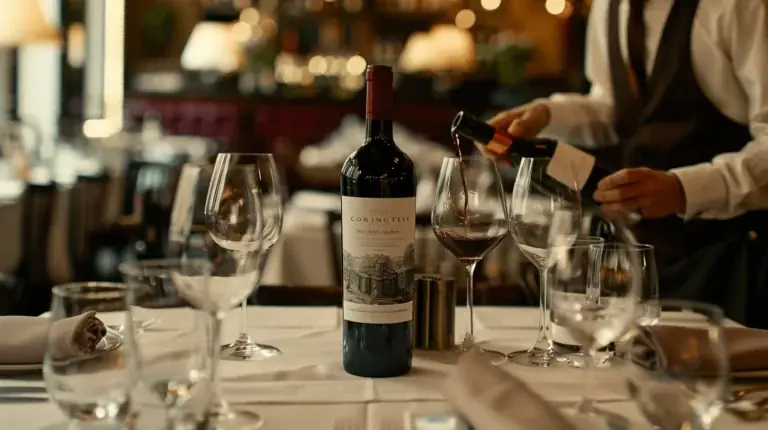
To accurately frame how to manage wine tasting reservations, it is essential to dismantle the prevailing industry conflation between “booking a seat” and “scheduling an experience.” A booking is a logistical event; a managed reservation is a calibrated psychological journey. From a multi-perspective view, the reservation serves three masters: the Guest (who seeks seamless entry and exclusivity), the Tasting Room Manager (who seeks labor efficiency and predictable flow), and the Winemaker (who seeks the preservation of bottle inventory and brand integrity).
A common misunderstanding in the selection of a management strategy is the “Capacity Fallacy”—the belief that success is measured by maximizing every available seat. In reality, the top tier of the market utilizes “Strategic Scarcity.” By deliberately limiting throughput, an estate increases the perceived value of the seat, allowing for higher tasting fees and better conversion rates into wine club memberships. Managing reservations, therefore, becomes a balancing act between the “Volume-Margin” trade-off and the “Experience-Sanctity” ratio.
Oversimplification risk lies in treating the reservation software as a passive tool rather than an active governance system. If the system does not account for the “Transit Buffer”—the time it takes for a group to move from the parking lot to the glass—or the “Fatigue Coefficient” of the staff, the model will inevitably collapse during peak harvest windows. Authority in this sector is defined by the invisible reconciliation of these forces; the guest should never see the gears of the machine, only the fluidity of the service.
Historical and Systemic Evolution of the Cellar Door
The trajectory of wine hospitality has moved through four distinct technological and cultural epochs:
The Casual Era (Pre-1980s)
Initially, cellar doors were rarely “front of house” spaces. They were functional extensions of the barn where travelers might knock on the door and sample wine directly from the barrel. There was no management of time or space; the hospitality was an informal byproduct of the agricultural cycle.
The Retail Transition (1980s–2000s)
Driven by the global wine boom, wineries began building dedicated tasting rooms. The focus was on high-volume walk-ins and “stand-up” bars. Success was measured by “pours per hour.” Reservations were reserved only for VIPs or massive tour buses, and the data collected was minimal.
The Experiential Shift (2010s–2020)
As consumer palettes became more sophisticated, the “flight” model replaced the “pour” model. Wineries started implementing rudimentary booking tools to manage seated tastings. The goal shifted from sheer volume to increasing the “Average Order Value” (AOV) per guest.
The Data-Driven Ecosystem (Present–2026)
Today, the reservation is a “Digital Passport.” It is the primary tool for customer relationship management (CRM). Systems now integrate with point-of-sale (POS) data to allow hosts to know a guest’s lifetime value before they even arrive. The reservation is the filter that separates the casual tourist from the long-term collector.
Conceptual Frameworks and Mental Models
When evaluating or designing a flagship reservation plan, industry leaders apply specific mental models to ensure systemic resilience.
1. The “Throughput-Inventory” Balance
This framework treats the reservation as a release valve for inventory. It dictates that the number of seats offered must correlate to the “Case Depletion Strategy” of the winemaker. If a specific vintage is running low, the reservation system should automatically reduce the availability of the tasting tier that features that wine.
2. The “Labor-Experience” Equilibrium
A vineyard stay or tasting is only as good as the educator. This model assesses “Staff Bandwidth” as a finite resource. It prevents “Burnout Cascades” by ensuring that no educator is assigned more than three high-intensity private bookings in a single shift, regardless of physical space availability.
3. The “Last Mile” Hospitality Model
Borrowed from logistics, this dictates that the reservation experience begins with the confirmation email and ends only when the wine is shipped to the guest’s home. It treats the physical time on-site as the “Middle Mile,” emphasizing the importance of pre-arrival communications and post-departure follow-ups as part of the reservation lifecycle.
Key Categories of Reservation Structures
The geometry of the tasting room dictates the structural trade-offs required for a successful flow.
| Category | Operational Strategy | Primary Benefit | Trade-off |
| Fixed Interval | Hard start/stop times | Maximum predictability | Feels “rushed” to guests |
| Rolling Entry | Staggered every 15 mins | Consistent staff flow | High complexity in clearing tables |
| Tiered Exclusivity | Member-only vs. Public | High club loyalty | Potential public resentment |
| Event-Based | Shared group starts | Labor efficiency | Reduced individual attention |
| Hybrid Flow | Walk-ins + Bookings | Captures impulse spend | High risk of overcrowding |
Decision Logic: The “Brand-to-Volume” Ratio
Organizers must weigh “Individual Autonomy” against “Operational Efficiency.” A rolling entry model is best for estates with large terrace spaces, while fixed intervals are mandatory for small, historic cellars where space is a critical constraint.
Detailed Real-World Scenarios and Operational Realities
The “Bus-Drop” Overload
A mid-sized estate in the Finger Lakes allows hybrid flow. A tour bus arrives with 40 unannounced guests while three high-value private reservations are in progress. The failure mode here is “Attention Dilution.” Without a “Reservation Guardrail,” the staff is overwhelmed, and the high-value collectors leave feeling ignored. A robust plan utilizes a “Soft Cap” for walk-ins that triggers automatically based on confirmed bookings.
The “Double-Booking” Data Mismatch
A winery uses two separate systems: one for the website and one for the tasting room tablets. A sync error leads to a double-booked private room at noon. The second-order effect is not just the immediate refund, but the loss of a “Collector-Level” relationship. This highlights the necessity of a “Single Source of Truth” (SSOT) architecture in reservation tech.
The “Tractor-Path” Disruption
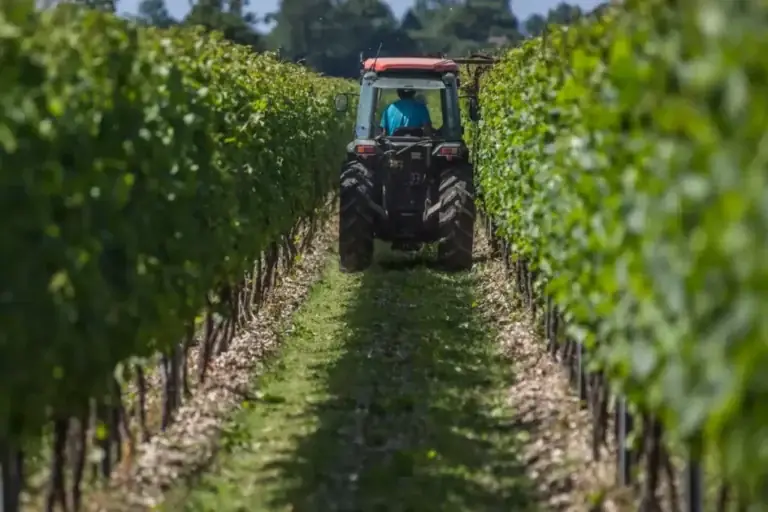
During harvest, the primary tasting terrace is unusable due to the noise and smell of the press. If the reservation system does not have a “Seasonal Siting Logic,” guests are booked into a construction-grade environment. Superior plans include “Topography Buffers” that automatically shift booking locations based on the winery’s work schedule.
Planning, Cost, and Resource Dynamics
The economics of reservation management are defined by the “Direct-to-Consumer” (DTC) Tax. Implementing a high-end system involves both capital expenditure and ongoing labor costs.
| Expense Category | Range (Per Annum) | Primary Variable |
| Software Licensing | $1,200 – $6,000 | Feature set and user count |
| Reservationist Labor | $35,000 – $65,000 | Level of manual intervention |
| Opportunity Cost | Variable | Lost revenue from empty seats |
| Data Cleaning | $2,000 – $5,000 | Managing duplicate guest profiles |
| SMS/Email Automation | $500 – $2,000 | Frequency of touchpoints |
The “No-Show” Cost: A high-end estate in Napa might charge $150 per person. A no-show for a party of six is a $900 direct loss. Robust how to manage wine tasting reservations strategies must include “Card-on-File” or “Pre-Payment” requirements to mitigate this risk.
Tools, Strategies, and Support Systems
Modern operations rely on a specific technological stack to bridge the gap between “Digital” and “Dionysian”:
-
Integrated POS/CRM: Ensures the host sees the guest’s purchase history upon check-in.
-
SMS Confirmation Channels: Significantly reduces no-show rates compared to email alone.
-
Waitlist Management Apps: Captures “Impulse Tourists” without cluttering the tasting room.
-
Table Mapping Software: Visualizes the floor plan in real-time to optimize server rotations.
-
Pre-Visit Surveys: Collect data on wine preferences or allergies before the guest arrives.
-
Post-Tasting Attribution: Tracks if a guest who reserved a spot actually purchased a case.
Risk Landscape and Failure Modes
The primary risks in reservation management are rarely technical outages, but rather “Social Friction” and “Systemic Rigidity.”
-
The “Gatekeeper” Perception: If a system is too rigid, it can alienate potential long-term customers who prefer spontaneity.
-
Data Siloing: When the reservation data doesn’t talk to the marketing data, resulting in “Blind Hospitality.”
-
Dynamic Over-Optimization: Pushing the staff to clear tables too quickly, which degrades the “Luxury Pace” expected of a vineyard stay or tasting.
-
The “Vulnerability of the One-Off”: Relying on a single person to manage the calendar. If that person leaves, the logic of the system often goes with them.
Governance, Maintenance, and Long-Term Adaptation
Effective governance requires a “Quarterly Calendar Audit” where the hospitality manager and winemaking team align on inventory and capacity.
The Stewardship Checklist:
-
Daily: Check for “Guest Notes” in the morning briefing.
-
Weekly: Analyze “No-Show” trends and adjust reminder triggers.
-
Monthly: Test the booking flow on mobile devices to ensure zero friction.
-
Seasonally: Adjust “Experience Durations” based on weather (winter tastings are often shorter than summer patio sessions).
Measurement, Tracking, and Evaluation
How do we quantify the success of a reservation plan?
-
Leading Indicator: “The Fill Rate.” The percentage of available seats booked 48 hours in advance.
-
Lagging Indicator: “The Conversion Ratio.” The percentage of reservations that result in a wine club sign-up or case purchase.
-
Qualitative Signal: “Host Readiness.” The ability of the staff to greet the guest by name without looking at a tablet.
-
Documentation Examples: Maintaining a “Guest Heritage Log” and a “System Downtime Diary.”
Common Misconceptions and Industry Myths
-
Myth: “Reservations kill spontaneity.”
-
Correction: Reservations actually enable spontaneity for the winery by allowing it to staff up for surges.
-
-
Myth: “Only high-end wineries need reservations.”
-
Correction: Small, boutique operations need them even more to ensure a single staff member isn’t overwhelmed.
-
-
Myth: “People hate paying in advance.”
-
Correction: In the post-2020 landscape, consumers equate pre-payment with “Exclusivity” and “Quality Assurance.”
-
-
Myth: “Automation makes service feel cold.”
-
Correction: Automation handles the “Boring Logistics,” freeing the staff to focus on “Human Warmth.”
-
Ethical, Practical, and Contextual Considerations
The professionalization of reservations must be weighed against “Regional Accessibility.” When every winery in a region moves to a 100% reservation model, it can create a “Barriers to Entry” issue for local, less affluent wine enthusiasts. The most ethical estates uphold ‘Community Windows’—dedicated hours where locals and walk-ins command priority. This practice stitches the winery into the land’s social fabric, preventing the estate from becoming a mere island of elite tourism.
Conclusion: The Synthesis of Hospitality and Viticulture
The ability to manage wine tasting reservations with precision is the defining characteristic of a successful modern estate. We are moving away from “Transaction-Based Pours” and toward “Relationship-Based Tenure.” A successful system is one where the guest feels expected, the staff feels supported, and the wine is given the stage it deserves.
The destinations that will dominate the next decade are those that recognize the reservation system not as a barrier, but as the “Lead Architect” of the guest experience. When data and hospitality are in perfect alignment, the resulting “Brand Interface” creates a value proposition that is resilient to both economic shifts and changing consumer habits. The reservation is no longer a tool; it is the heartbeat of the cellar door.