Vineyard Lifestyle Destinations USA: The 2026 Editorial Reference Guide
The American viticultural landscape has undergone a profound transformation, shifting from a collection of production-focused agricultural zones into a sophisticated network of multi-dimensional ecosystems. These regions no longer exist merely to facilitate the fermentation of Vitis vinifera; they have become centers of gravity for a specific type of terrestrial engagement that prioritizes permanence, sensory depth, and agricultural literacy. To study these destinations is to examine the intersection of land-use policy, regional identity, and the increasingly complex desires of a population seeking “high-fidelity” rural experiences.
Complexity in this sector arises from the inherent tension between agricultural production and the social infrastructure required to support a destination. A functioning vineyard is, fundamentally, an industrial farm—loud, dust-heavy, and governed by the rigid, often unforgiving, timeline of the seasons. The successful destination must balance this industrial reality with a hospitality architecture that feels serene and intentional. This balance is not achieved through aesthetic veneer alone, but through a deep systemic integration of the “working landscape” into the lived experience of the visitor or resident.
As we look toward the latter half of the 2020s, the criteria for “authority” in these destinations have shifted. It is no longer enough to offer a world-class tasting room or a luxury hotel. The premier destinations are now defined by their “Stewardship Integrity”—the degree to which they contribute to the biological health of their American Viticultural Area (AVA) and the intellectual enrichment of those who inhabit them. This article serves as a definitive analysis of the mechanics, philosophies, and operational realities of these premier landscapes, providing a structural framework for understanding how they function as long-term cultural assets.
Understanding “vineyard lifestyle destinations USA.”

To accurately assess vineyard lifestyle destinations, one must move beyond the “Scenic Fallacy”—the belief that a destination’s value is primarily visual. In professional editorial terms, these destinations are better understood as “Agnostic Yield Environments.” This means the land is expected to produce two distinct yields: a tangible agricultural crop (the grape) and an intangible experiential yield (the lifestyle). The failure to recognize the friction between these two yields is a primary source of misunderstanding in the market.
From a multi-perspective view, these destinations must satisfy three distinct stakeholder groups:
-
The Agriculturalist: Who requires the land to remain fertile, accessible to machinery, and economically viable for wine production.
-
The Residential Stakeholder: Who seeks “Atmospheric Stability”—a sense of place that is quiet, secure, and aesthetically consistent.
-
The Regional Economist: Who views the destination as a driver of high-value tourism and secondary industry (gastronomy, art, and conservation).
The risk of oversimplification is highest when a destination is marketed as a “resort” rather than a “lifestyle hub.” A resort is transactional and transient; a lifestyle destination is structural and enduring. The most successful American destinations—whether in the basalt-rich soils of the Pacific Northwest or the granite hills of the Sierra Foothills—are those that reject the sanitized version of the vineyard in favor of “Technical Transparency.” This involves allowing the guest or resident to witness the “Grit of the Vintage,” from the application of bio-dynamic compost to the nocturnal activity of the harvest.
The Historical and Systemic Evolution of American Viticultural Centers
The American vineyard destination has evolved through several distinct phases, reflecting changes in the domestic palate and social priorities.
The Era of Production Isolation (1960s–1980s)
During this period, the vineyard was a closed system. Lodging and social infrastructure were almost non-existent within the vineyard itself. If you visited a winery in Napa or the Finger Lakes, you stayed in a nearby town and entered the farm as a transient observer. The “Lifestyle” was purely for the growers.
The Mediterranean Emulation Epoch (1990s–2005)
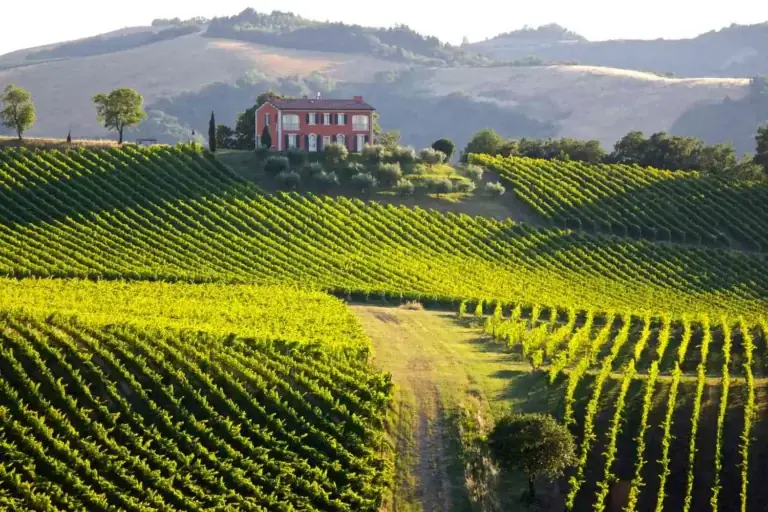
Following the global success of California wines, American destinations began to mimic European models. This era saw the rise of Tuscan-style villas and Provencal farmhouses. While these properties brought luxury to the vineyard, they were often “Architecturally Displaced”—built with materials and styles that had no geological or historical connection to the American site.
The “Terroir-First” Modernism (2006–2018)
As American winemaking matured, the architecture followed. Destinations began to prioritize local materials—Oregon white oak, Napa fieldstone, Virginia slate. The focus shifted from “Mimicry” to “Vernacular Honesty.” This phase established the vineyard as a place for high-design living that felt rooted in the specific chemistry of the local soil.
The Regenerative Hub (2019–Present)
Today’s premier destinations are “Circular Ecosystems.” They are judged by their carbon footprint, their water reclamation systems, and their ability to function as a sanctuary for both humans and local biodiversity. The lifestyle is now focused on “Agrarian Stewardship,” where the resident or visitor feels they are part of a healing land-use model.
Conceptual Frameworks and Mental Models
To evaluate the depth of a vineyard destination, one should apply the following analytical frameworks:
1. The “Vine-to-Vignette” Spectrum
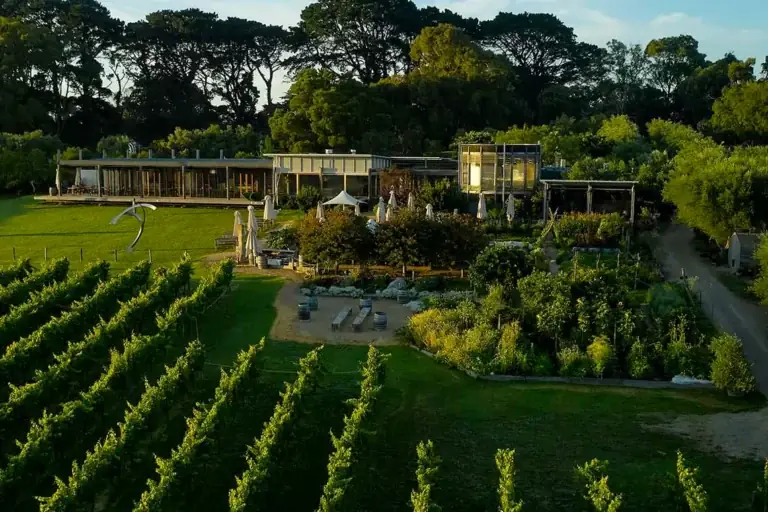
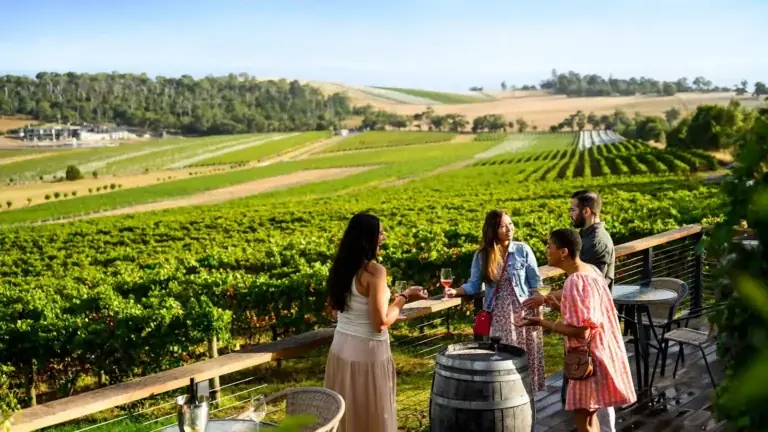
This model measures the degree of integration between the agricultural activity and the social space. On one end is the “Segregated” model (common in industrial zones), where vines are for grapes and lawns are for people. On the other is the “Integrated” model, where social spaces are embedded directly into the vineyard blocks, forcing a constant sensory interaction with the crop.
2. The “Thermal and Olfactory Mapping” Framework
A destination is not just what you see, but what you feel and smell. This framework evaluates how a site manages the “Diurnal Shift” (the temperature drop at night) and the “Fermentation Cycle.” A premier destination uses architecture to “Capture the Night”—utilizing stone and cross-ventilation to provide a specific, cool-climate lifestyle even in hot valleys.
3. The “Legacy vs. Liquidity” Trade-off
This is a mental model for land-use governance. An authoritative destination prioritizes “Legacy”—long-term soil health and architectural permanence—over “Liquidity”—the desire to maximize short-term tourist revenue through high-turnover events or density increases.
Key Categories and Variations of the Vineyard Destination
The diversity of the American landscape has created several distinct operational models for the vineyard lifestyle.
Decision Logic: Technical vs. Passive Engagement
When selecting a destination, one must choose between “Technical Immersion” (participating in blending, pruning, and soil analysis) and “Passive Appreciation” (viewing the vines as a backdrop for leisure). The most resilient vineyard lifestyle destinations in the USA offer a sliding scale, allowing the resident to move between these modes as their interests fluctuate.
Detailed Real-World Scenarios and Operational Constraints
The “Fire and Smoke” Adaptation
A destination in the Mayacamas Mountains faces the reality of increasing wildfire risk.
-
Operational Reality: The most authoritative properties have transitioned to “Hardened Architecture”—using non-combustible materials and specialized air filtration systems that allow the lifestyle to continue even during poor AQI events.
-
Failure Mode: Properties that ignore these risks face “Insurance Insolvency” and a loss of long-term residents.
The “Labor-Hospitality” Conflict
During the peak harvest in a high-density destination like the Willamette Valley.
-
Constraint: The roads are clogged with tractors and picking crews at 3:00 AM.
-
Response: Successful destinations create “Dedicated Transit Corridors,” separating the industrial logistics from the residential social zones to preserve the “Lifestyle” without hampering the “Harvest.”
Planning, Cost, and Resource Dynamics
The economics of these destinations are driven by “Allocation Scarcity.” There is only a finite amount of prime viticultural land in any given AVA.
The “Secondary Resource” Requirement: Beyond the financial cost, these destinations require “Intellectual Capital.” A resident or long-term visitor must invest time in learning the regional “Micro-Climates” to fully leverage the lifestyle.
Tools, Strategies, and Support Systems
To maximize the “Return on Lifestyle,” the following systems are essential:
-
DTC (Direct-to-Consumer) Logistics: Systems that allow residents to manage their private cellars and ship “Estate-only” vintages to their other homes.
-
Viticultural Advisory Services: Professional “Land Managers” who handle the day-to-day farming while allowing the resident to make the high-level “style” decisions.
-
Water Rights Governance: Legal and technical support to ensure the destination remains viable during drought cycles.
-
Specialized HVAC and Cellar Tech: Precision systems that maintain the “Living Library” of wines.
-
Acoustic Buffer Design: Landscaping strategies (earth berms, specific tree species) to mitigate the sound of vineyard machinery.
Risk Landscape and Failure Modes
The “Vineyard Lifestyle” is subject to several compounding risks that can degrade the asset over time:
-
The “Homogenization” Risk: When a destination becomes too popular, it attracts corporate chains that replace local artisans, turning a unique AVA into a generic outdoor mall.
-
Ecological Fatigue: Over-tourism or over-farming that depletes the groundwater or destroys the “Vibe” of the region.
-
Regulatory “NIMBYism”: New residents who buy into a vineyard destination and then complain about the noise and smells of the vineyard, leading to legal friction that stifles the agricultural core.
Governance, Maintenance, and Long-Term Adaptation
For a destination to maintain its “Authority,” it requires a “Generational Governance” mindset.
-
Agricultural Easements handcuff the land to its viticultural purpose. These legal structures prohibit residential subdivision and mandate the preservation of ‘Open Space’ in perpetuity, securing the estate’s metabolic integrity against future development.
-
Architectural Review Boards: Ensuring that new builds remain consistent with the “Vernacular Honesty” of the region.
-
The estate executes Environmental Monitoring Cycles to authenticate its regenerative claims. Monthly audits track soil pH, bird populations, and water table levels, converting ecological health into a hard data set that defends the property’s integrity.
The Resilience Checklist:
-
Is there a decentralized water source?
-
Is the community “Soil-Literate”?
-
Does the hospitality model support, rather than hinder, the winemaking team?
Measurement, Tracking, and Evaluation
How do we quantify the success of a vineyard destination?
-
Leading Indicator: “The Biodiversity Index.” A healthy, authoritative destination will see an increase in native species within the vineyard rows over time.
-
Lagging Indicator: “Resale Velocity.” Does property in the destination hold its value during market downturns? In elite AVAs, the land often behaves like a “hard asset” similar to gold or art.
-
Qualitative Signal: “Staff Longevity.” Do the winemakers and vineyard managers stay for decades? High staff turnover is a signal of a “shallow” destination that prioritizes marketing over substance.
Common Misconceptions and Oversimplifications
-
Myth: “The best vineyard lifestyle is always in Napa.”
-
Correction: While Napa is the pioneer, regions like the Santa Lucia Highlands (CA), the North Fork of Long Island (NY), and the Texas Hill Country (TX) are offering more “Innovative” and “Accessible” lifestyle models in 2026.
-
-
Myth: “Living on a vineyard means you get free wine.”
-
Correction: The “Lifestyle” is about the access to the process, not just the product. You are paying for the education and the environment.
-
-
Myth: “Vineyards are quiet.”
-
Correction: They are farms. They involve trucks, fans to prevent frost, and seasonal labor. The “Luxury” is found in the rhythm of the noise, not the absence of it.
-
Ethical and Practical Considerations
The expansion of vineyard lifestyle destinations in the USA must be weighed against the needs of the local labor force. A destination that builds $5 million villas but has no affordable housing for the pickers and cellar hands is structurally unstable. The most “Ethical” and “Resilient” destinations are those that integrate “Workforce Housing” and “Social Infrastructure” into their master plans, ensuring the community that supports the wine also thrives within the lifestyle.
Conclusion: The Synthesis of Earth and Ethos
The American vineyard lifestyle has transitioned from an aspirational dream into a rigorous, data-driven reality. The destinations that stand as “Pillar Assets” are those that refuse to compromise on their agricultural soul. They understand that the “Lifestyle” is a byproduct of the “Land”—and if the land is not healthy, the lifestyle is a facade.
In the coming decades, the authority of a destination will be found in its “Silence and Soil.” As the world becomes louder and more digital, the ability to inhabit a landscape that is productive, quiet, and biologically diverse will be the ultimate measure of luxury. For those navigating the vast array of vineyard lifestyle destinations in the USA, the goal should be to find a place where the vintage in the glass is a true reflection of the integrity of the ground beneath their feet.